

























































How Much Does a 2-Car Asphalt Driveway Cost in Minnesota?
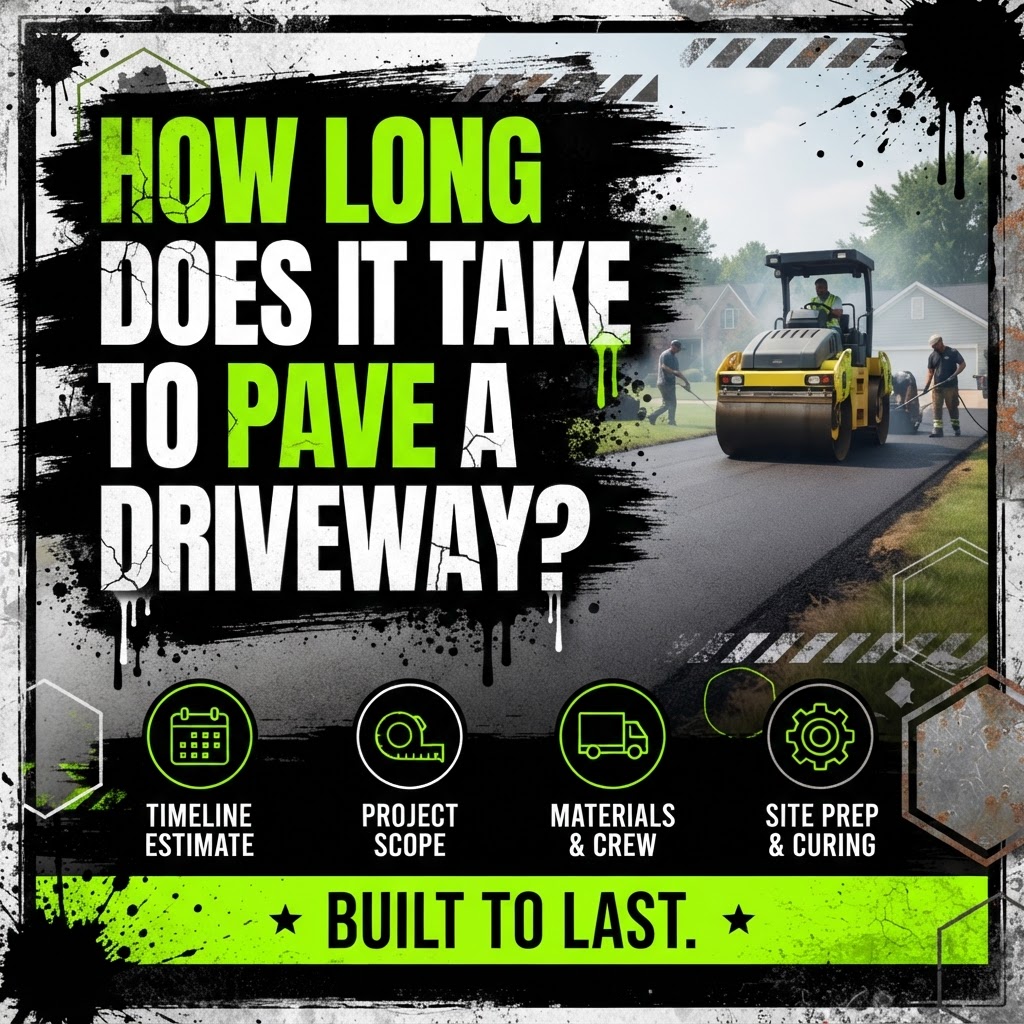
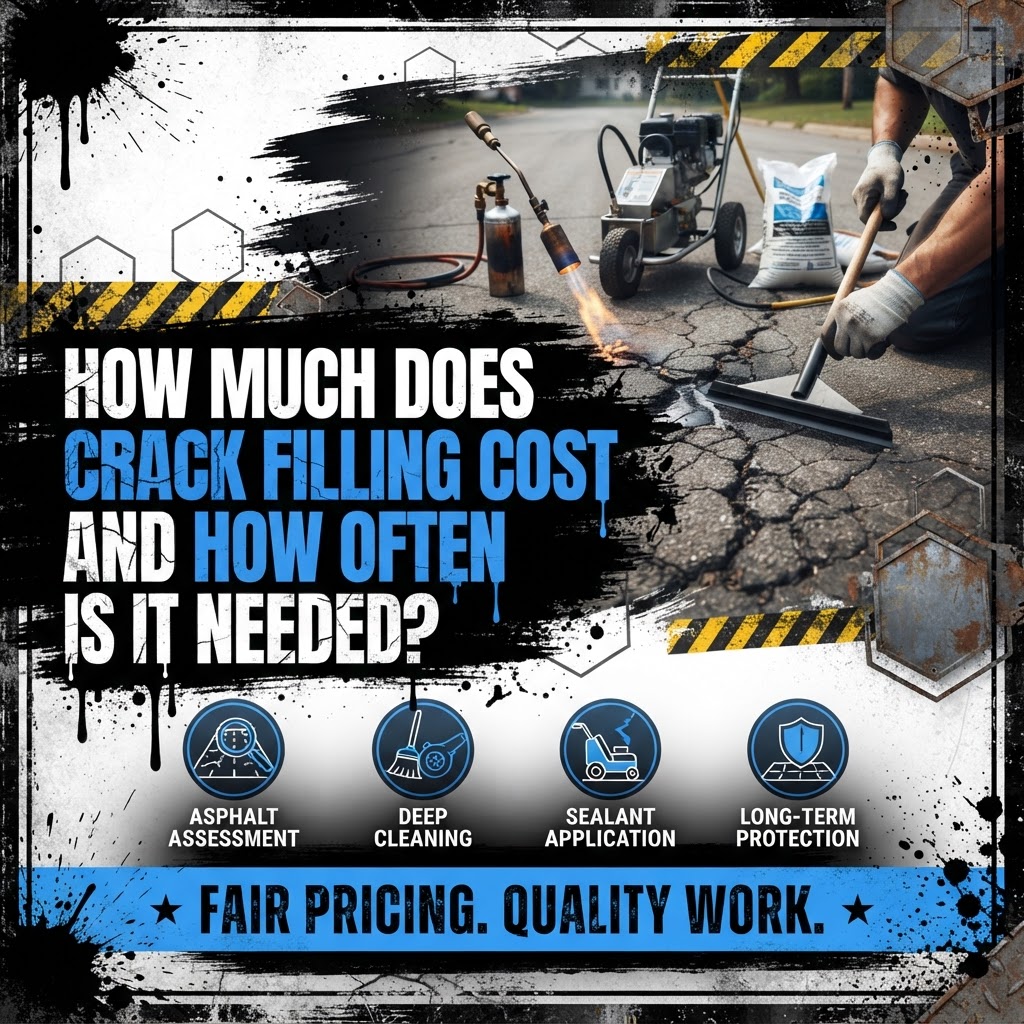
A standard two-car asphalt driveway in Minnesota typically runs between $3,000 and $6,000 depending on size, base condition, and site access.
As Minnesota's trusted asphalt contractor, we hear the same questions from homeowners, property managers, and business owners across the Twin Cities and greater Minnesota. Whether you're considering a new driveway, need repairs, or want to understand how to protect your investment, we've compiled the 20 most common questions — with detailed, expert answers.
This comprehensive guide covers everything from cost and lifespan to maintenance, sealcoating, and choosing the right contractor. Use the table of contents below to jump to any question, or read through for the full picture. Have a question that's not answered here? Contact us or check our FAQ page for more.
Table of Contents
- 1.How Much Does a New Asphalt Driveway Cost in Minnesota?
- 2.How Long Does an Asphalt Driveway Last?
- 3.How Long Before I Can Drive on New Asphalt?
- 4.Should I Sealcoat My New Driveway?
- 5.How Often Should I Sealcoat My Driveway?
- 6.What's the Difference Between Asphalt and Concrete Driveways?
- 7.Can Asphalt Be Installed in Winter?
- 8.How Do I Fix Potholes in My Driveway?
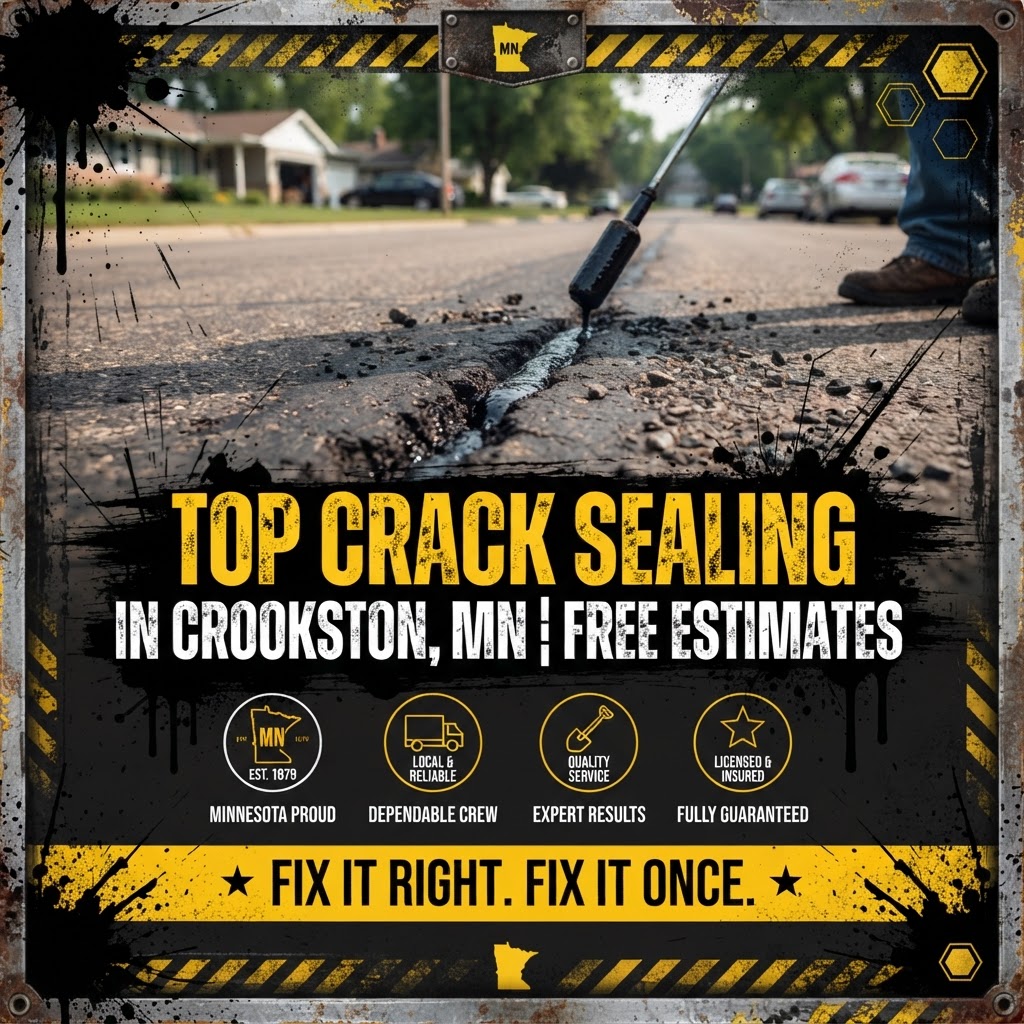
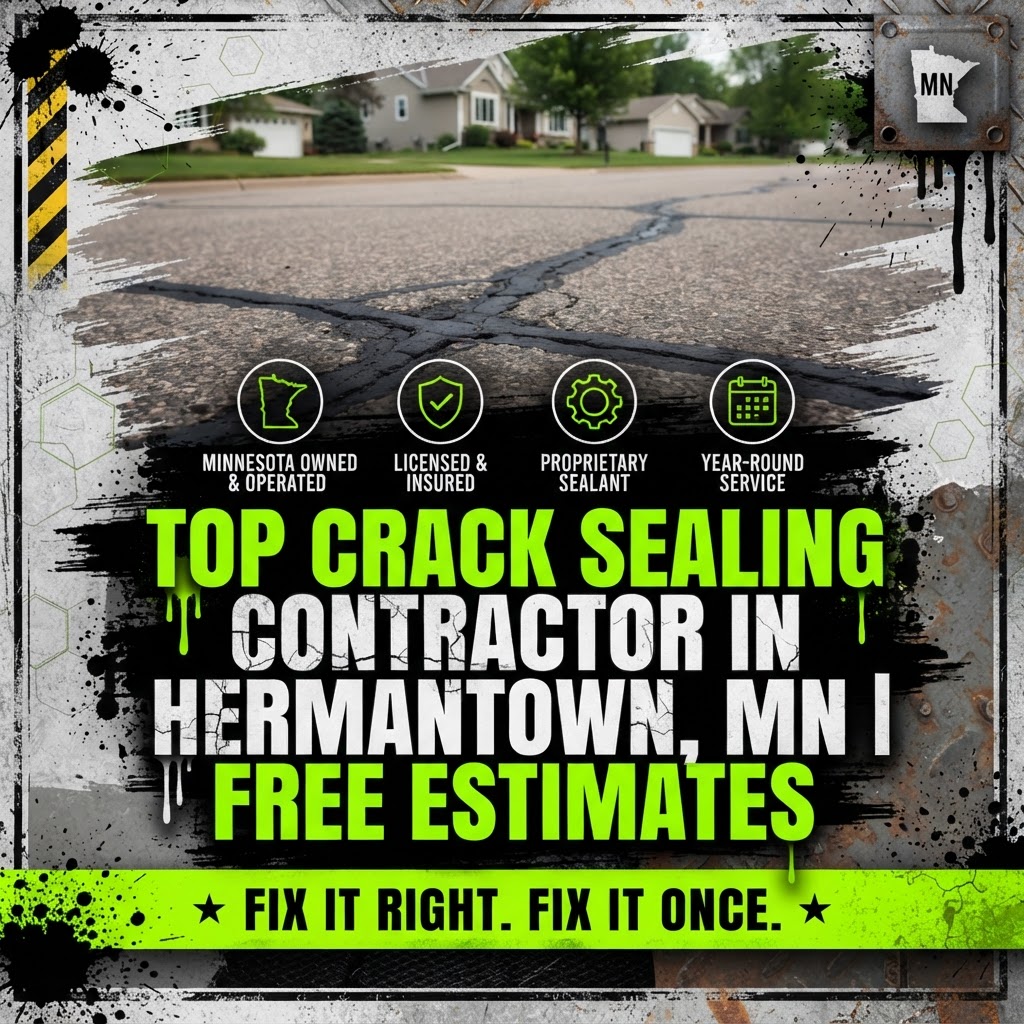
- 9.What Causes Cracks in Asphalt Driveways?
- 10.How Do I Maintain My Asphalt Driveway?
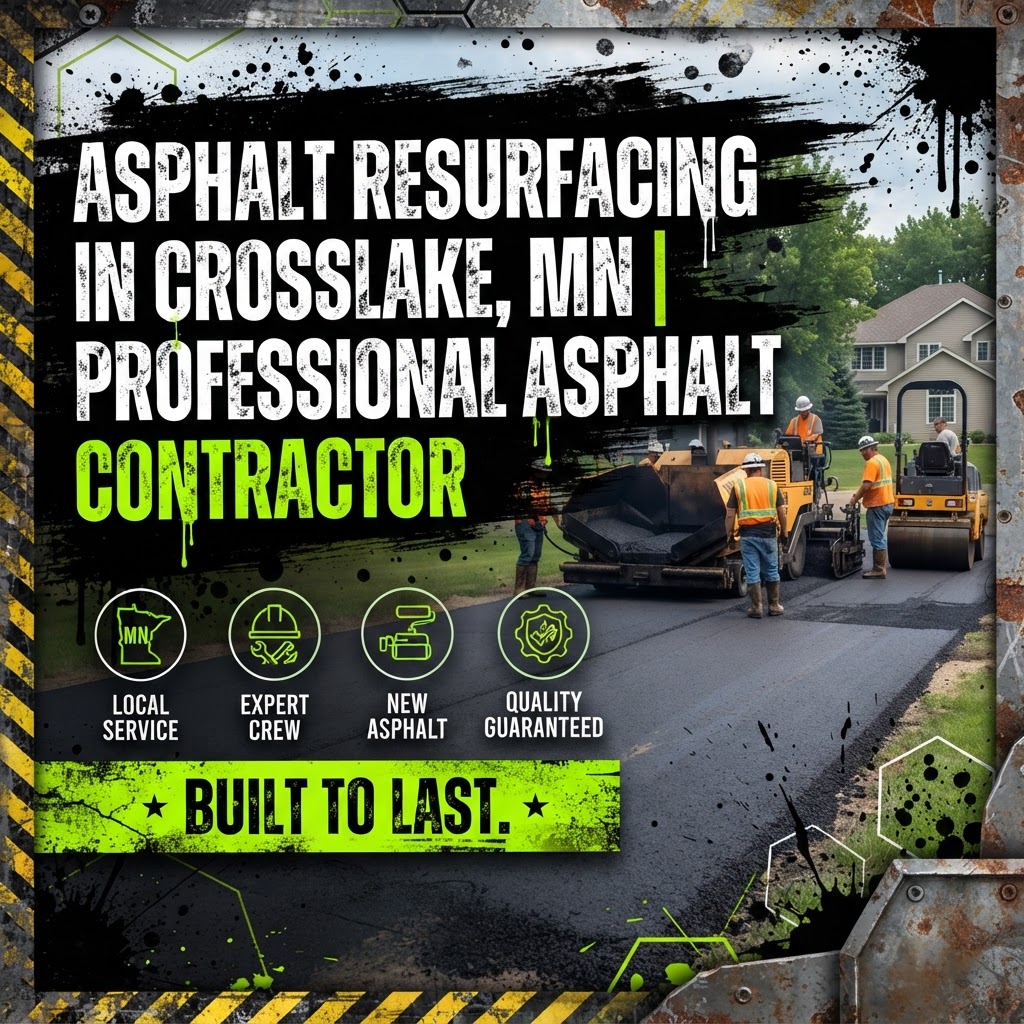
- 11.What Is Asphalt Resurfacing vs. Full Replacement?
- 12.How Thick Should an Asphalt Driveway Be?
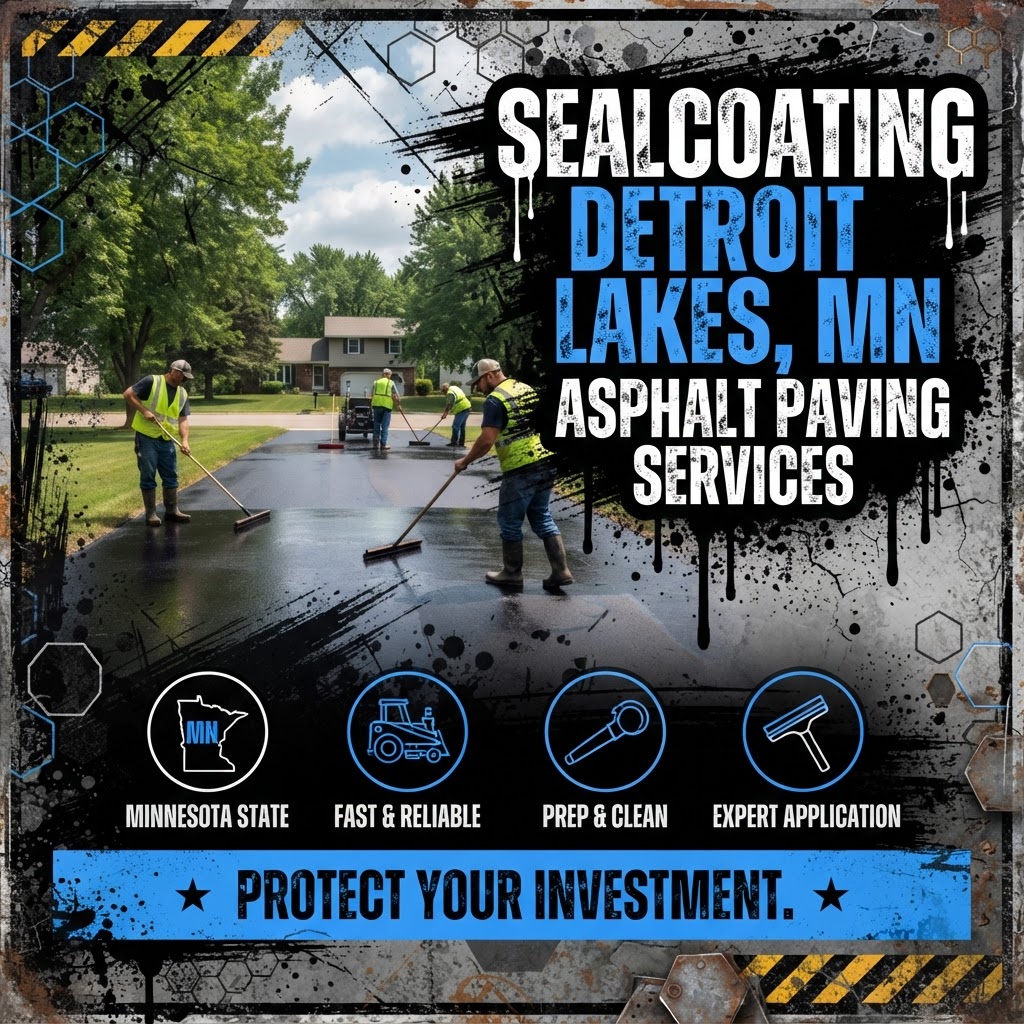
- 13.What Is Sealcoating and Why Is It Important?
- 14.Can You Pave Over Existing Asphalt?
- 15.How Do I Prepare My Driveway for Paving?
- 16.What Is the Best Time of Year to Pave in Minnesota?
- 17.How Do I Clean Oil Stains from Asphalt?
- 18.What Are Asphalt Millings and Can I Use Them?
- 19.How Long Does Sealcoating Last?
- 20.Do You Offer Warranties on Asphalt Work?
How Much Does a New Asphalt Driveway Cost in Minnesota?
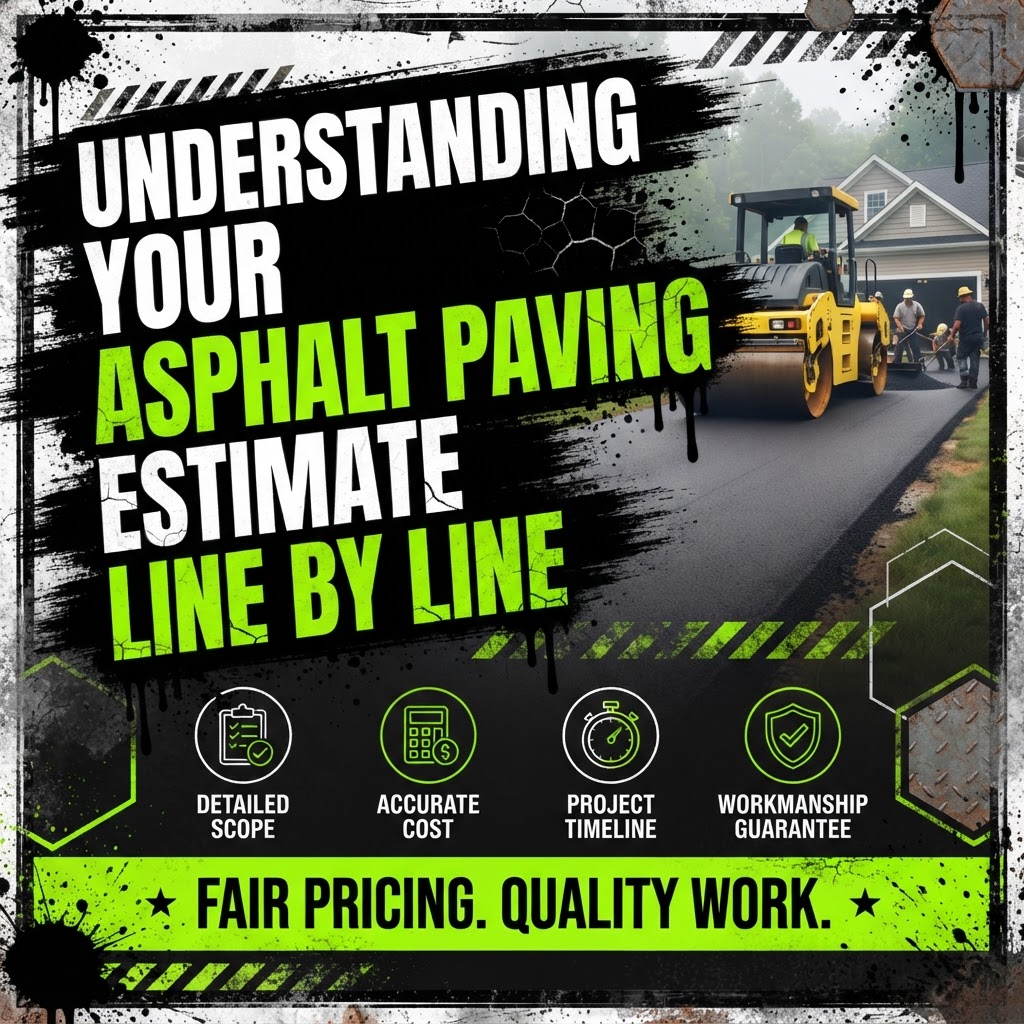
The cost of a new asphalt driveway in Minnesota typically ranges from $4 to $8 per square foot, depending on site conditions, access, and the amount of base preparation required. For a standard residential driveway of about 600 square feet, most homeowners invest between $2,400 and $4,800. Larger driveways or those requiring significant grading, tree removal, or base work will push the total higher.
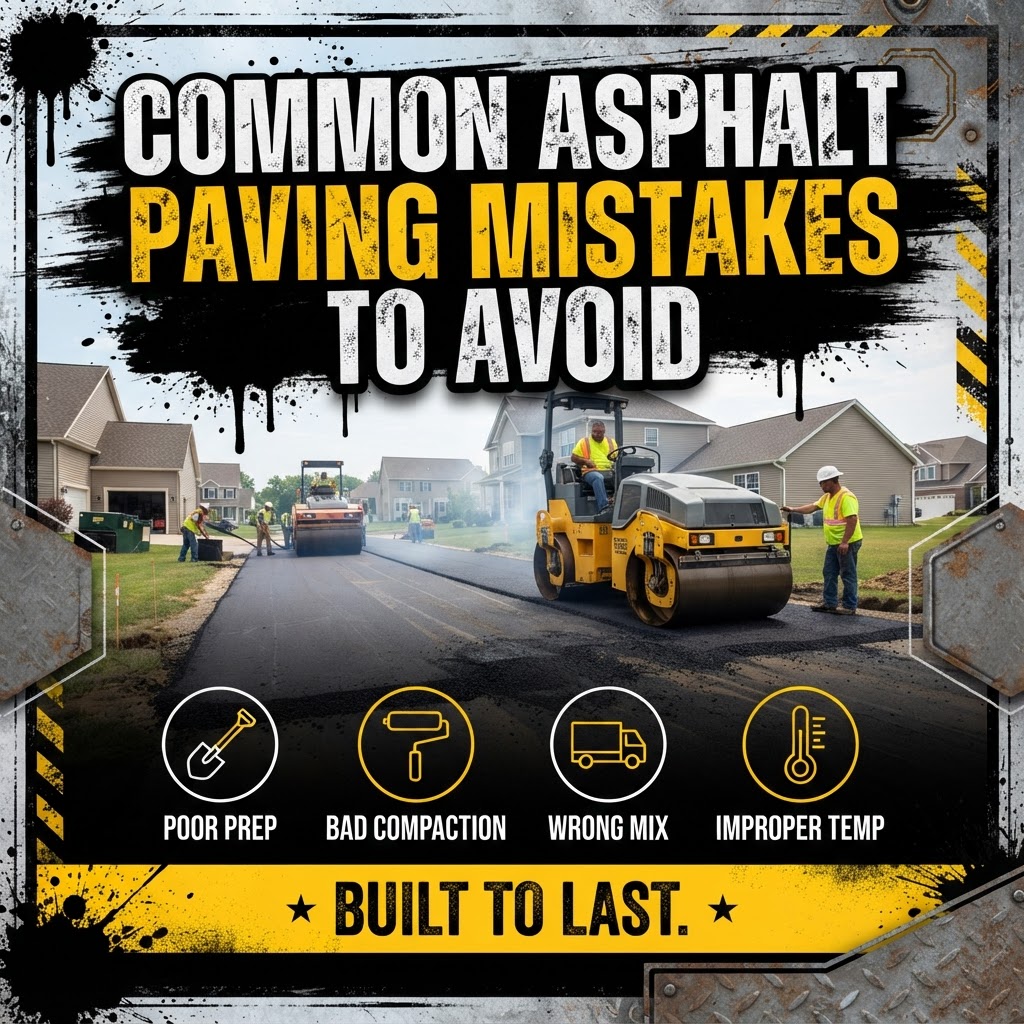
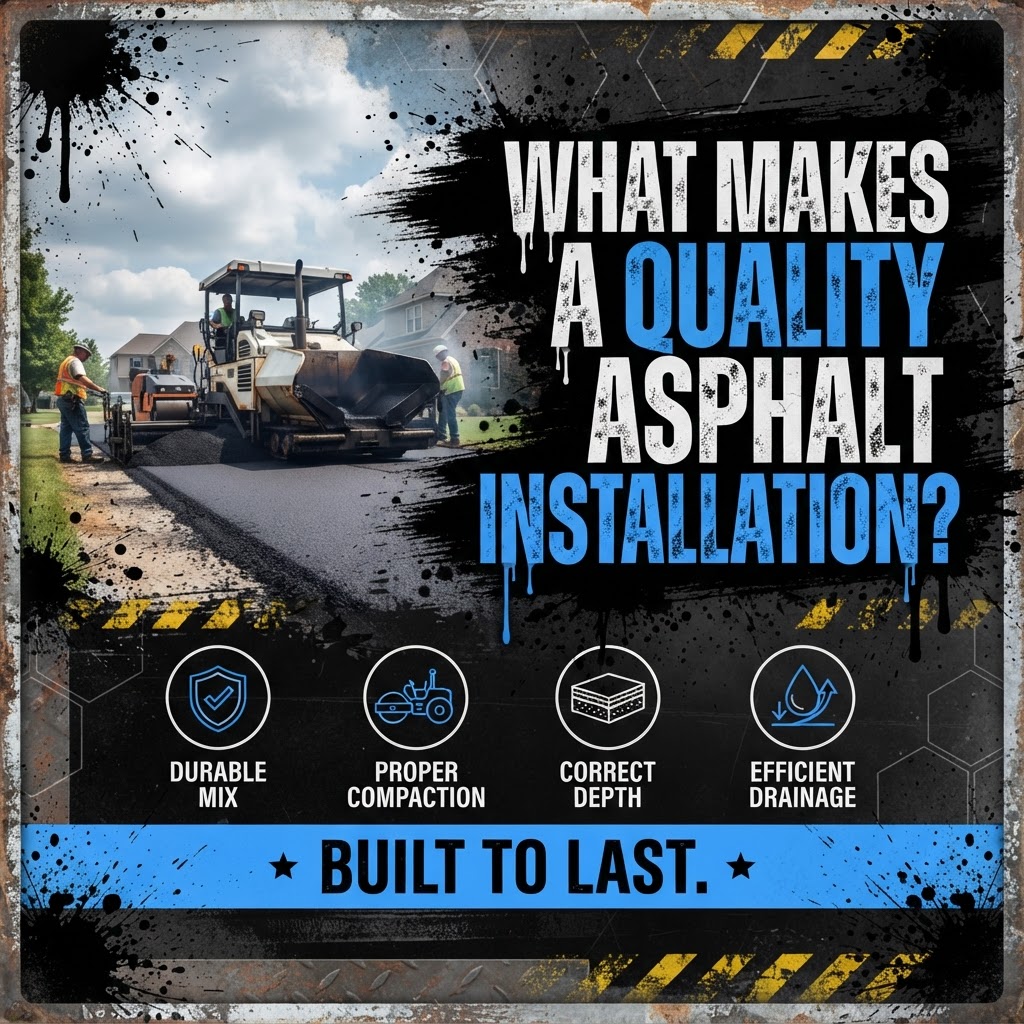
Several factors influence the final price: the condition of your existing base, whether old pavement needs to be removed, drainage requirements, and the thickness of the asphalt layer. A proper residential driveway should have at least 2 inches of compacted asphalt over a well-prepared gravel base. Commercial driveways and parking lots may require 3 to 4 inches or more to handle heavier vehicles and traffic loads.
At Minnesota's Best Asphalt, we provide free, no-obligation estimates so you know exactly what your project will cost before any work begins. We also offer a cost estimator tool that gives you a ballpark figure based on your driveway size and condition. There are no hidden fees and no surprise charges — just honest, transparent pricing from a local team that stands behind its work.
If you're comparing quotes, make sure each contractor is bidding on the same scope: same asphalt thickness, same base preparation, and same drainage solutions. The cheapest bid often cuts corners on base prep or asphalt thickness, which leads to premature cracking and costly repairs down the road.
How Long Does an Asphalt Driveway Last?
A properly installed and maintained asphalt driveway typically lasts 15 to 25 years in Minnesota's climate. The exact lifespan depends on the quality of installation, the thickness of the asphalt and base, drainage, and how well the driveway is maintained over the years.
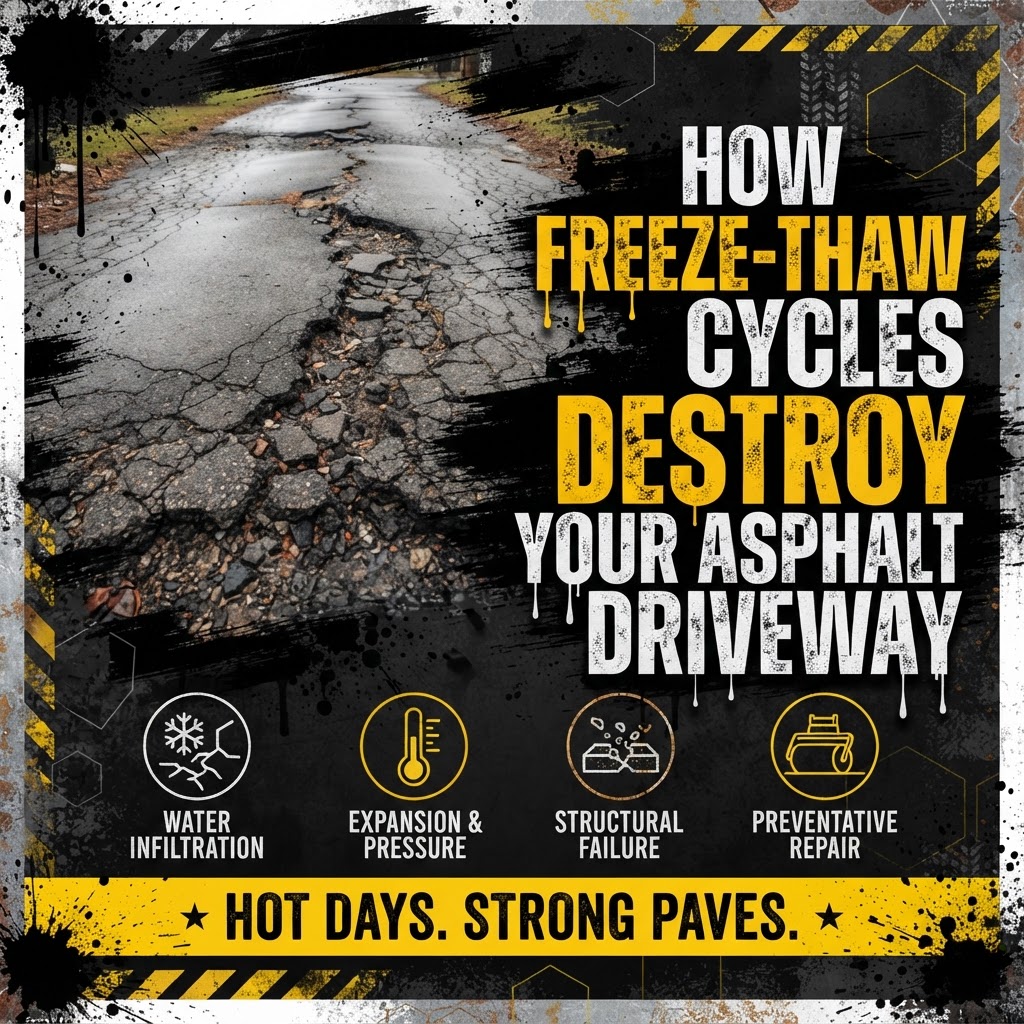
Minnesota's freeze-thaw cycles are tough on asphalt. Water that seeps into small cracks expands when it freezes, widening those cracks and eventually creating potholes. This is why sealcoating and prompt crack repair are so important — they keep water out and dramatically extend the life of your pavement.
Driveways that receive regular sealcoating every 2 to 3 years, have cracks filled promptly, and are kept clean of oil and chemical spills can easily reach the 25-year mark. Neglected driveways may begin showing serious deterioration in as little as 8 to 10 years.
Commercial parking lots and roadways, which handle heavier traffic, typically have a design life of 15 to 20 years with proper maintenance. The key to maximizing lifespan is a combination of quality initial installation and a consistent maintenance plan.
How Long Before I Can Drive on New Asphalt?
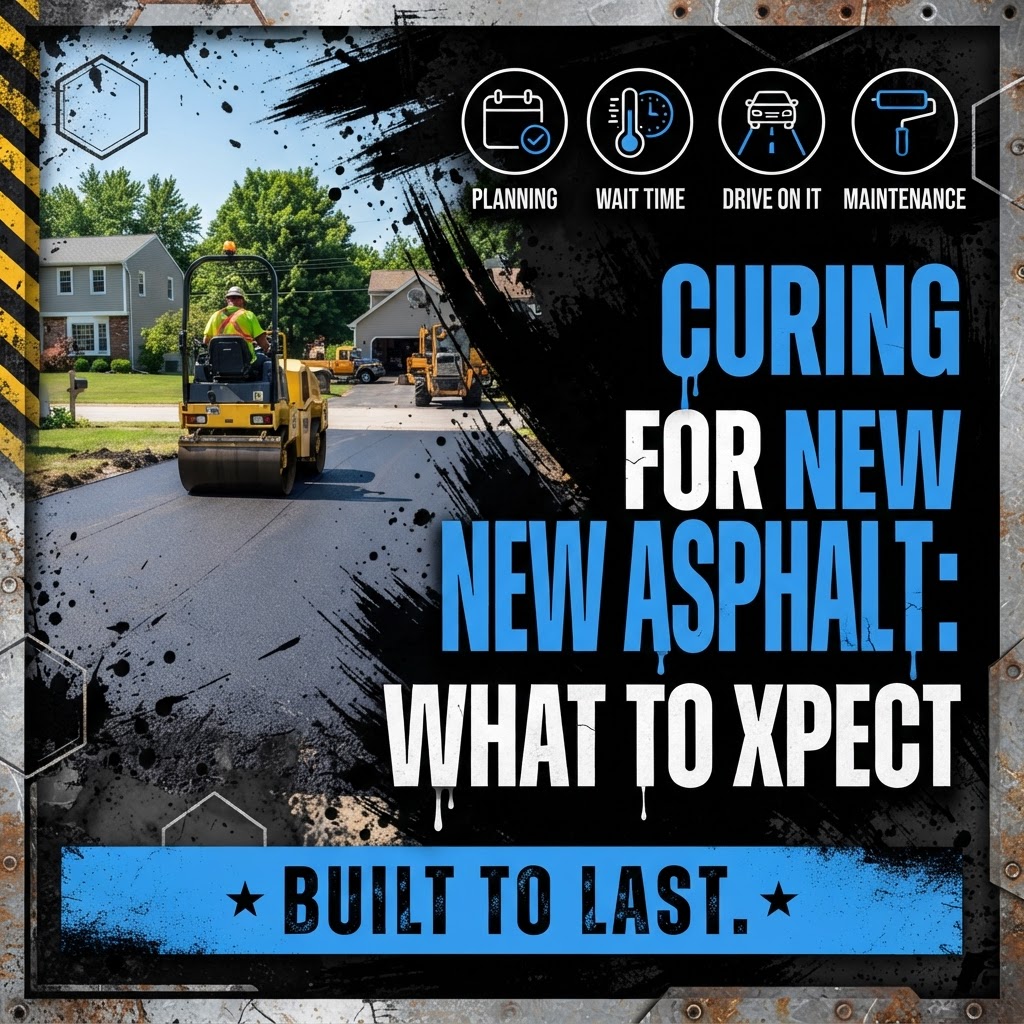
You should wait at least 24 to 72 hours before driving on newly installed asphalt, depending on the weather. In hot summer weather, asphalt takes longer to cool and cure, so you may need to wait the full 72 hours. In cooler fall temperatures, 24 to 48 hours is often sufficient.
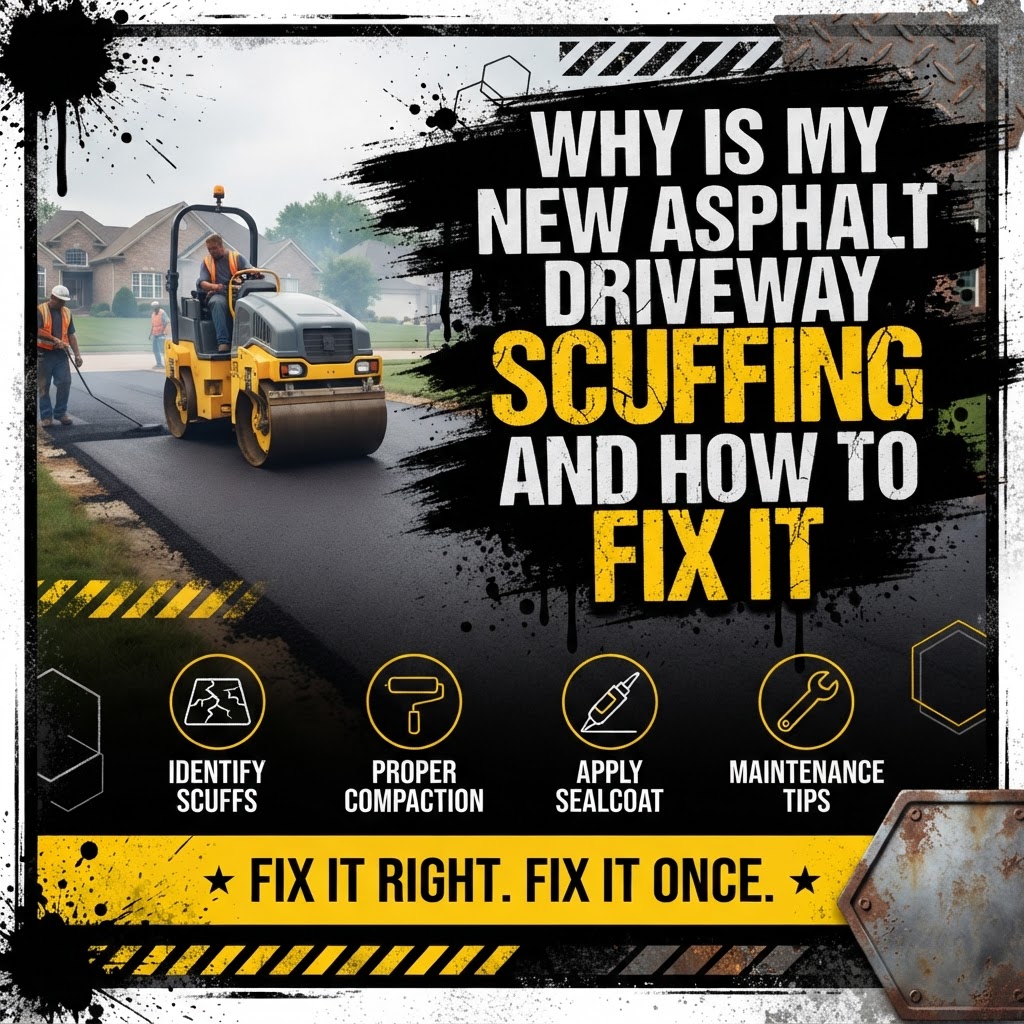
Asphalt doesn't fully cure for 6 to 12 months — it goes through a process called oxidation where the oils in the asphalt gradually harden. During this initial curing period, the surface is more susceptible to scuffing, marking, and indentation, especially from sharp turns, power steering turns while stationary, and heavy vehicles.
To protect your new driveway during the first few months, avoid parking in the same spot every day, don't turn your steering wheel while the car is stopped, keep heavy trucks and trailers off the surface, and don't place sharp objects like motorcycle kickstands or lawn chairs directly on the asphalt without a protective pad.
Avoid spilling gasoline, oil, or other petroleum products on new asphalt — these solvents can dissolve the asphalt binder and cause permanent damage. If a spill does occur, clean it up immediately and consider having the area sealcoated once the driveway has cured for 90 days.
Related Links:
Should I Sealcoat My New Driveway?
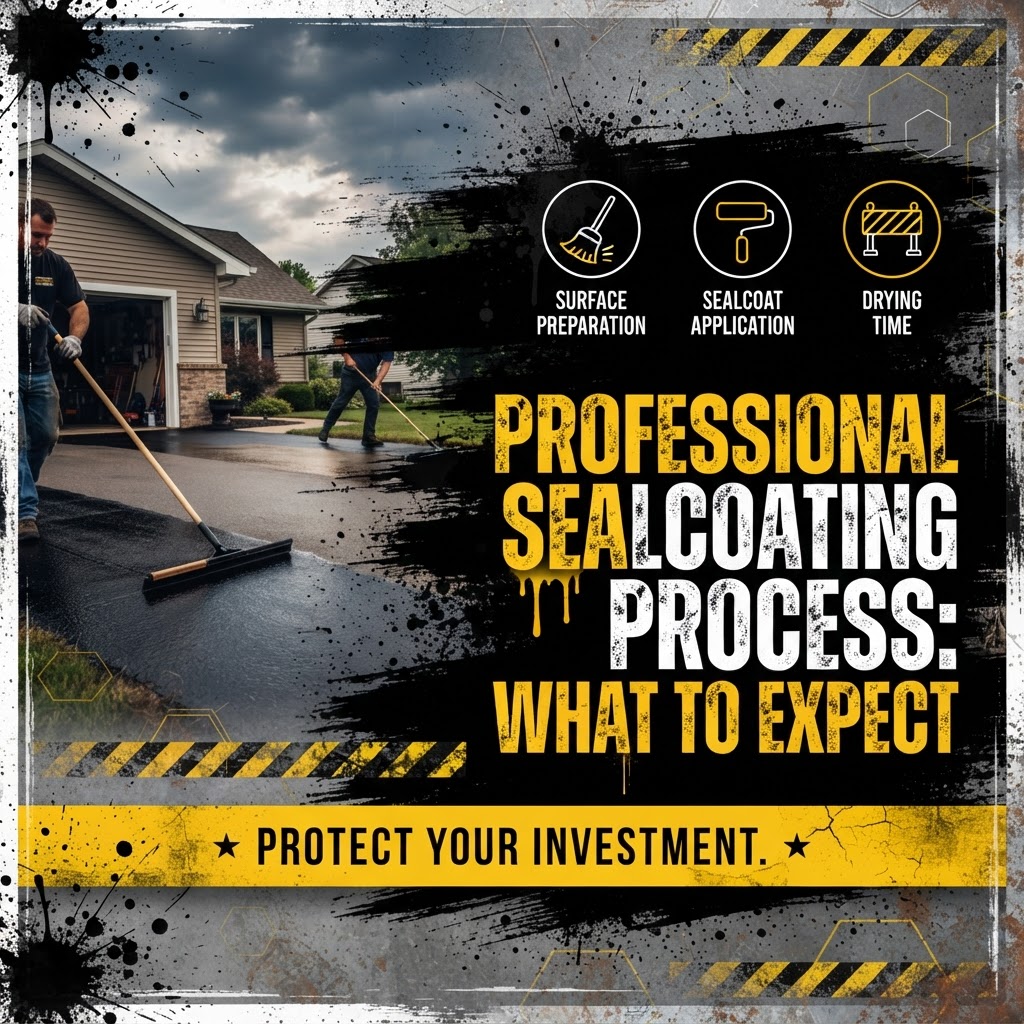
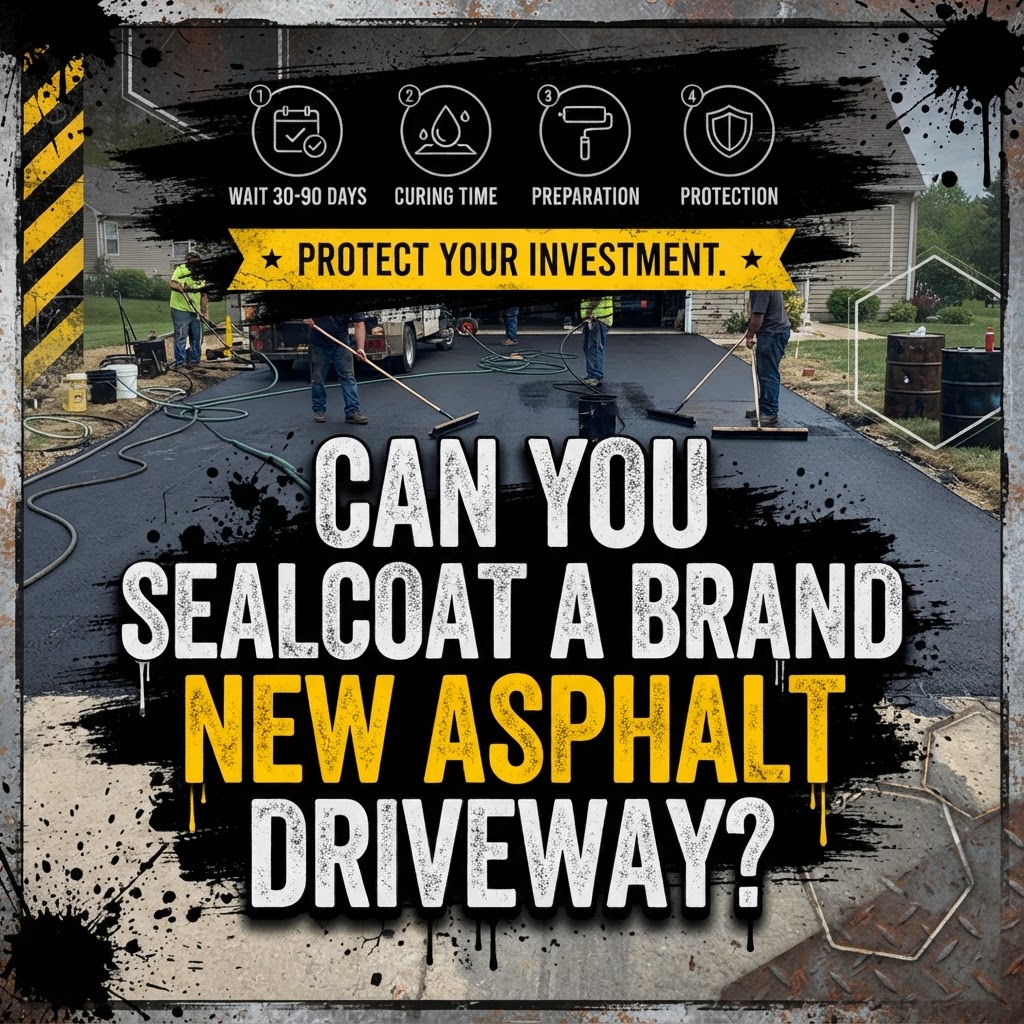
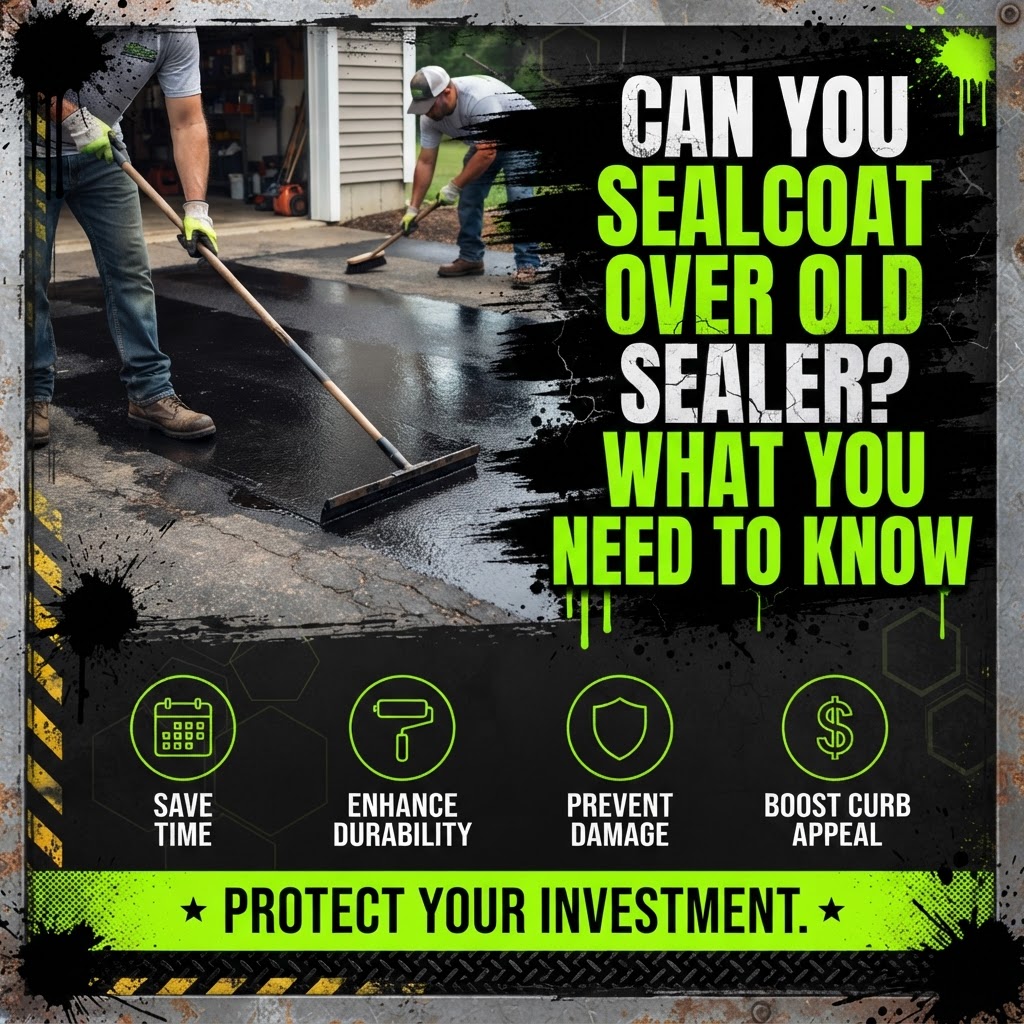
Yes — but not right away. A new asphalt driveway should cure for 90 to 120 days before the first sealcoat is applied. This allows the surface oils to evaporate and the asphalt to harden properly. Sealcoating too soon traps those oils in, which can actually make the surface softer and more prone to damage.
Sealcoating is one of the most cost-effective ways to protect your investment. It shields the asphalt from UV rays, water penetration, oil spills, and the chemicals that break down the asphalt binder over time. A properly sealcoated driveway lasts significantly longer than one that is left untreated.
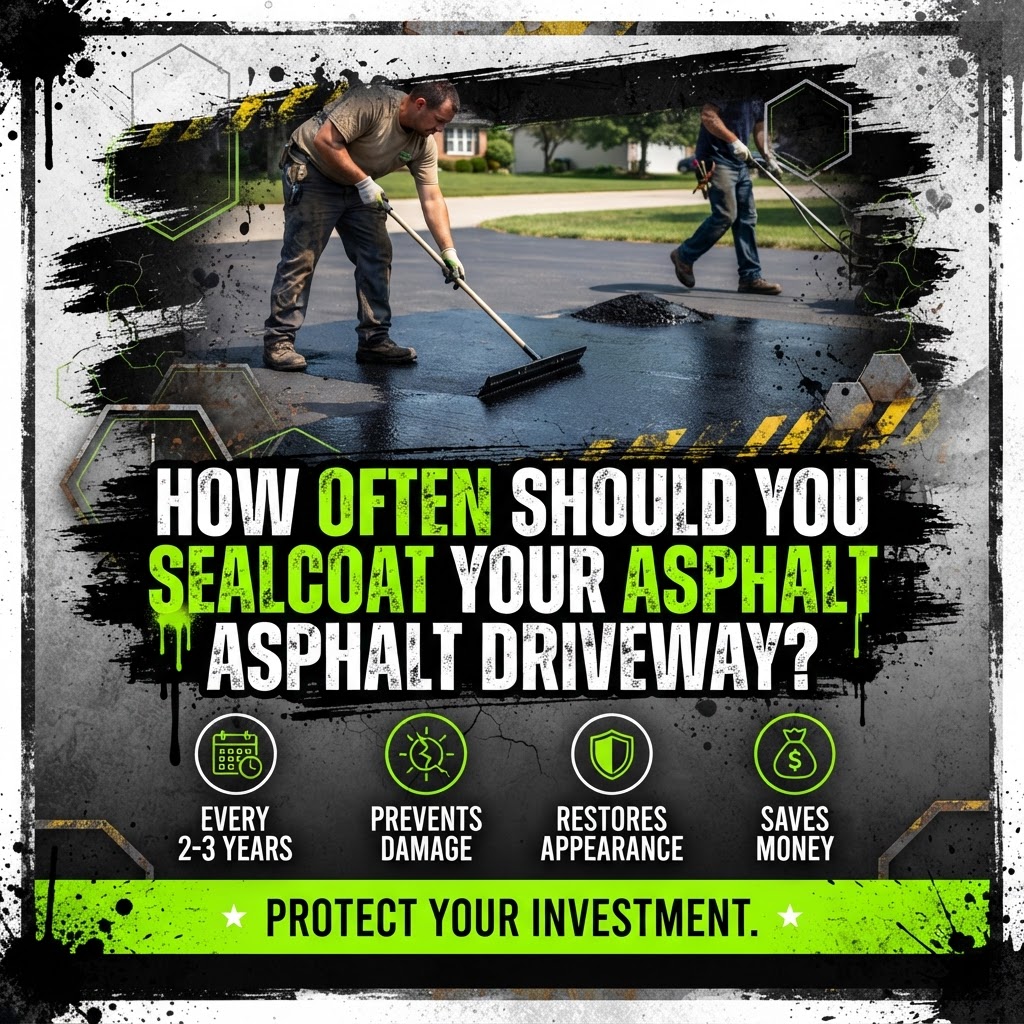
After the initial sealcoat, you should reapply every 2 to 3 years. Sealcoating too frequently can lead to buildup and cracking, while waiting too long leaves the asphalt exposed to the elements. The right interval depends on traffic, weather exposure, and the condition of the surface.
Professional sealcoating includes crack filling, edge trimming, and a uniform application of high-quality sealer. DIY sealcoating kits are available, but the results rarely match the durability and appearance of a professional application — and mistakes can be costly to fix.
Related Links:
How Often Should I Sealcoat My Driveway?
Most asphalt driveways should be sealcoated every 2 to 3 years. The exact frequency depends on several factors: the amount of sun exposure, traffic volume, weather conditions, and the quality of the previous sealcoat application.
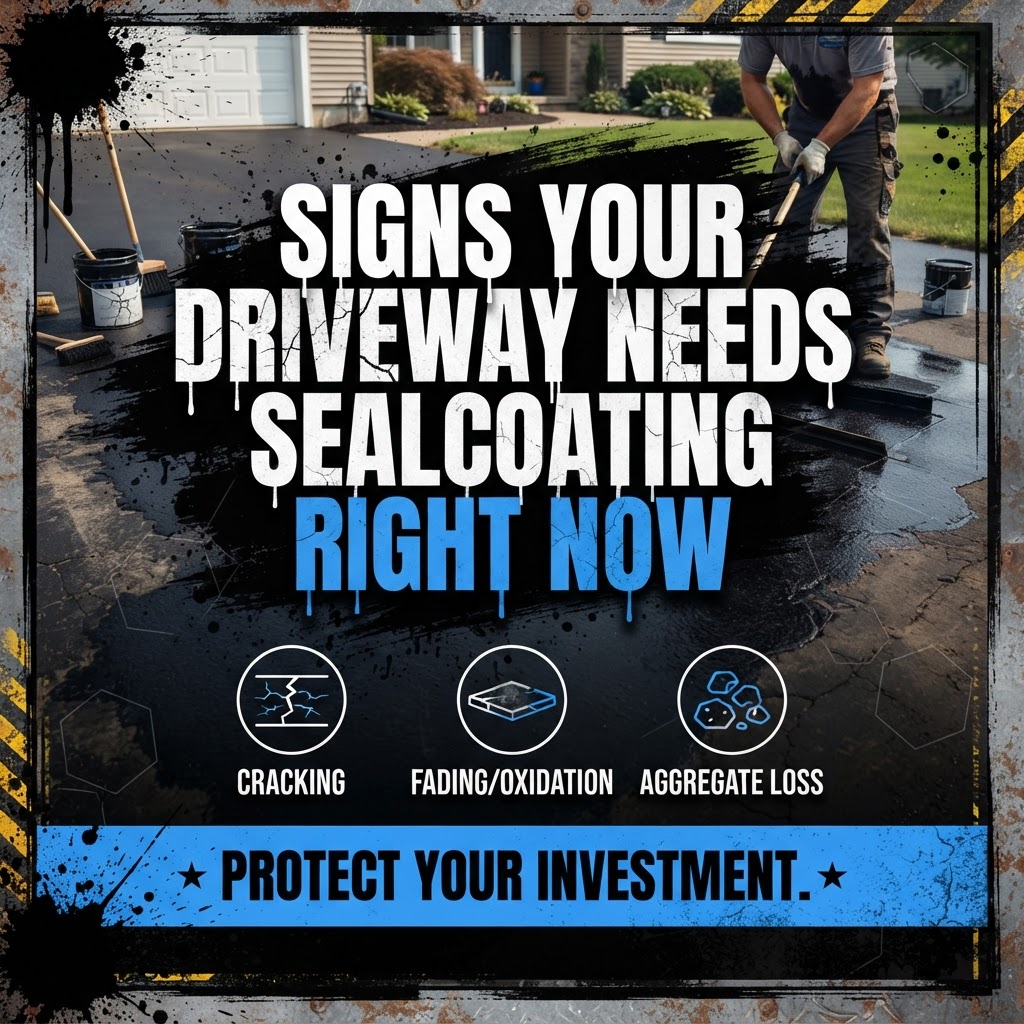
Signs that your driveway needs sealcoating include: the surface color fading from black to gray, visible hairline cracks, water no longer beading on the surface, and the texture becoming rough or gritty. If you notice any of these signs, it's time to schedule a sealcoating.
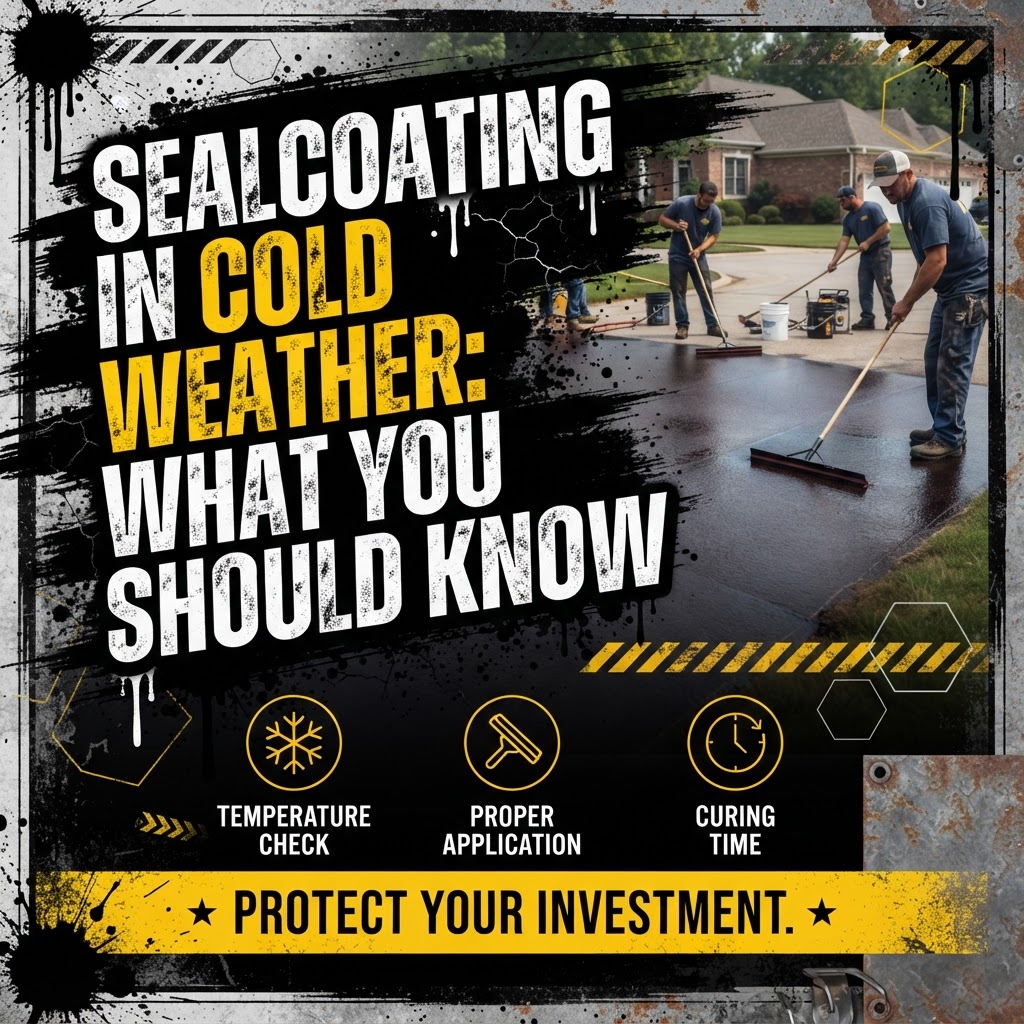
In Minnesota, the best time to sealcoat is between late spring and early fall when temperatures are consistently above 50°F and there's no rain in the forecast for at least 24 hours. Sealcoating in cooler or damp conditions prevents proper curing and can result in a poor finish.
Over-sealcoating is a real problem. Applying sealer too frequently causes it to build up and crack, which actually traps moisture under the surface and accelerates deterioration. Stick to the 2 to 3 year cycle and have a professional assess the condition before each application.
Related Links:
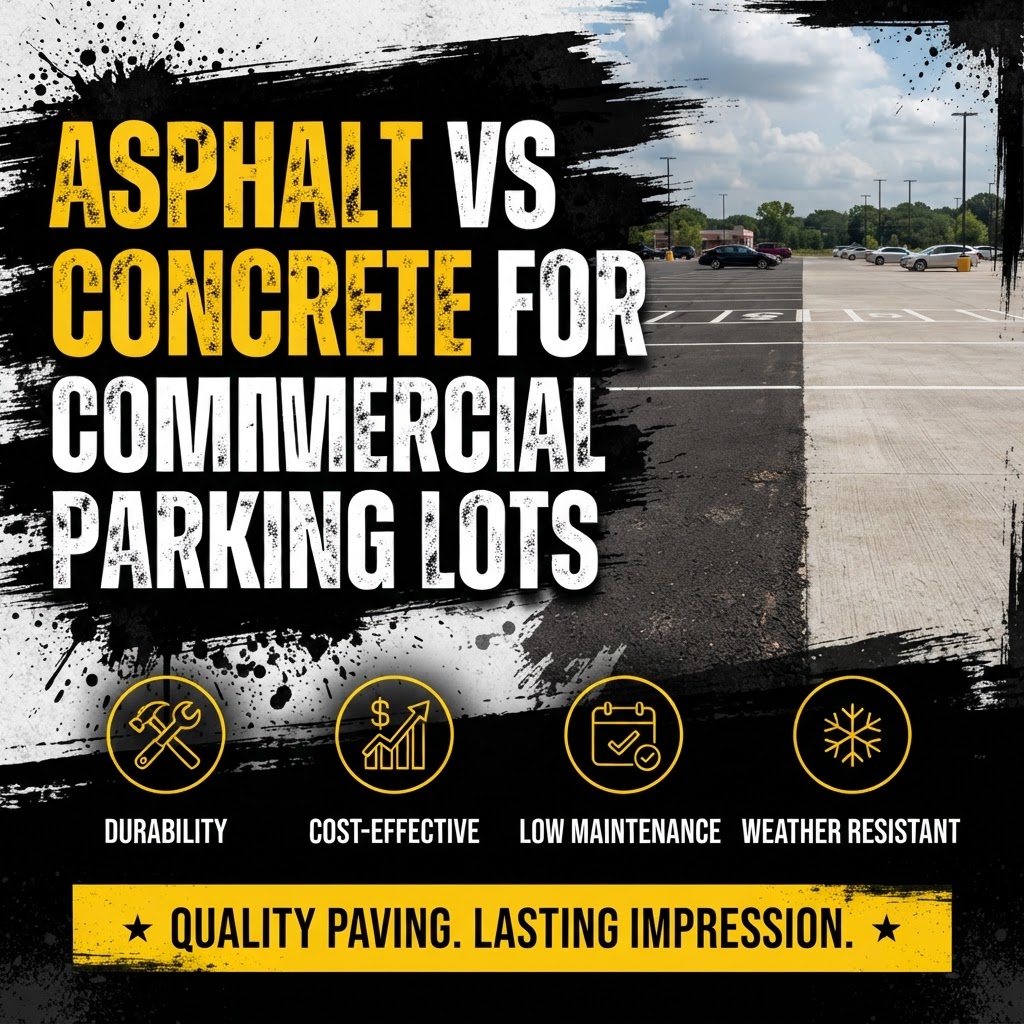
What's the Difference Between Asphalt and Concrete Driveways?
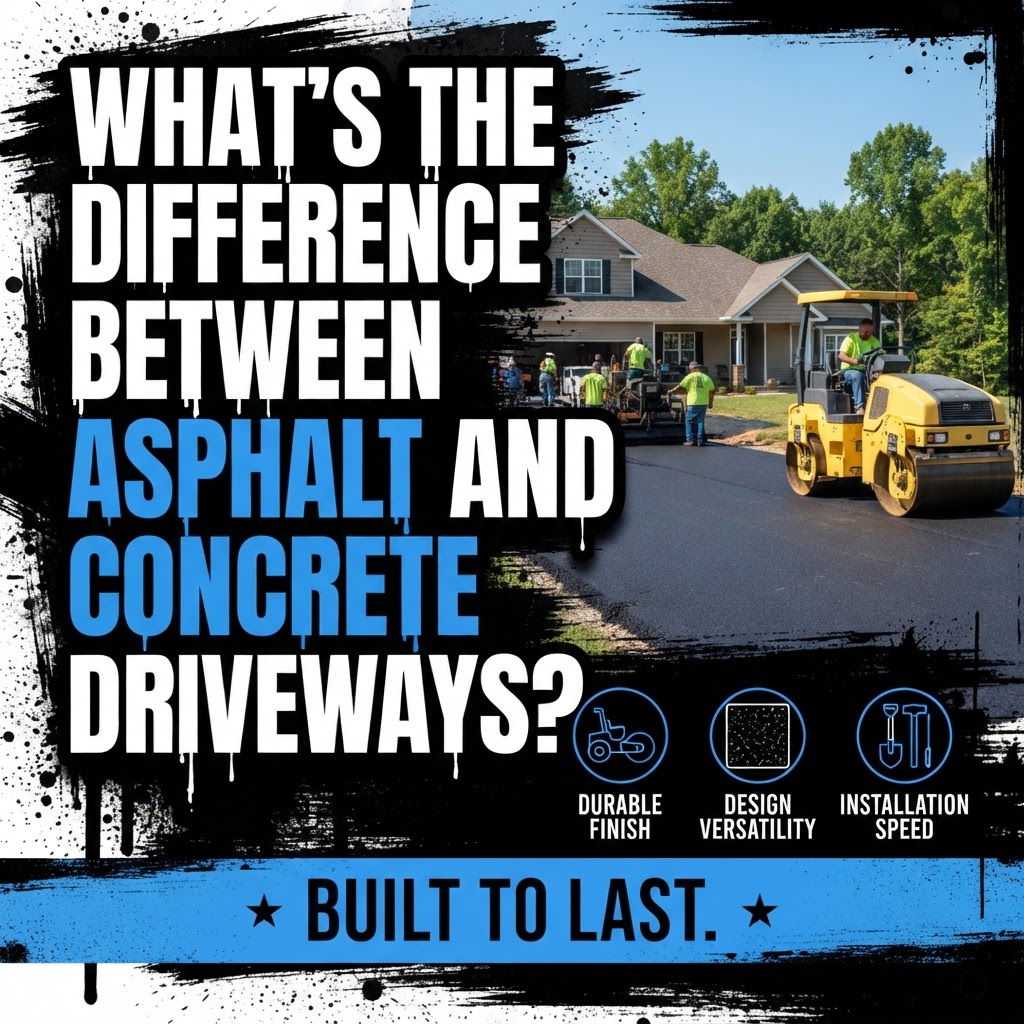
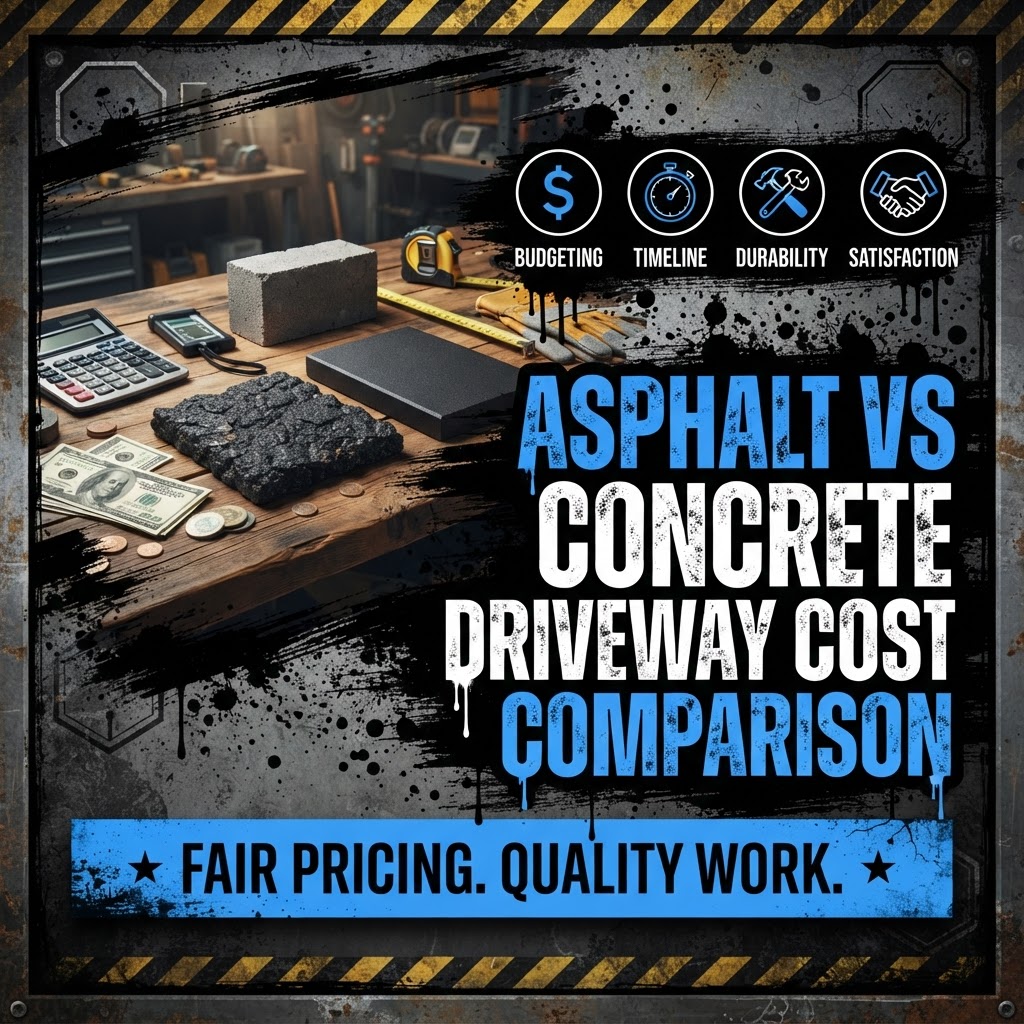
Asphalt and concrete are the two most common driveway materials, and each has distinct advantages. Asphalt is generally less expensive, installs faster, and handles freeze-thaw cycles better than concrete. Concrete is lighter in color, lasts longer with minimal maintenance, and offers more decorative options like stamping and coloring.
In Minnesota, asphalt has a significant advantage: it flexes with freeze-thaw movement, while concrete is rigid and more prone to cracking when the ground shifts. Asphalt also absorbs heat and melts snow faster, which is a major benefit during Minnesota winters. Concrete's light color reflects heat, meaning snow and ice linger longer.
Cost-wise, asphalt typically runs $4 to $8 per square foot, while concrete ranges from $6 to $15 per square foot. Decorative concrete can exceed $20 per square foot. Asphalt repairs are also generally cheaper and easier — cracks and potholes can be patched, while concrete repairs often require replacing entire slabs.
For most Minnesota homeowners, asphalt is the practical choice: lower upfront cost, better cold-weather performance, easier maintenance, and a clean, dark surface that enhances curb appeal. For commercial applications, both materials have their place depending on traffic, aesthetics, and budget.
Can Asphalt Be Installed in Winter?
Asphalt paving is best done in warm weather, but it can be installed in cooler temperatures under the right conditions. The general rule is that asphalt should be installed when the ground temperature is above 40°F and the air temperature is above 50°F. Below these temperatures, the asphalt cools too quickly to compact properly.
In Minnesota, the paving season typically runs from May through October. However, we can sometimes push into early November if the weather cooperates. Winter installations are generally not recommended because the ground may be frozen, which prevents proper compaction of the base and asphalt layers.
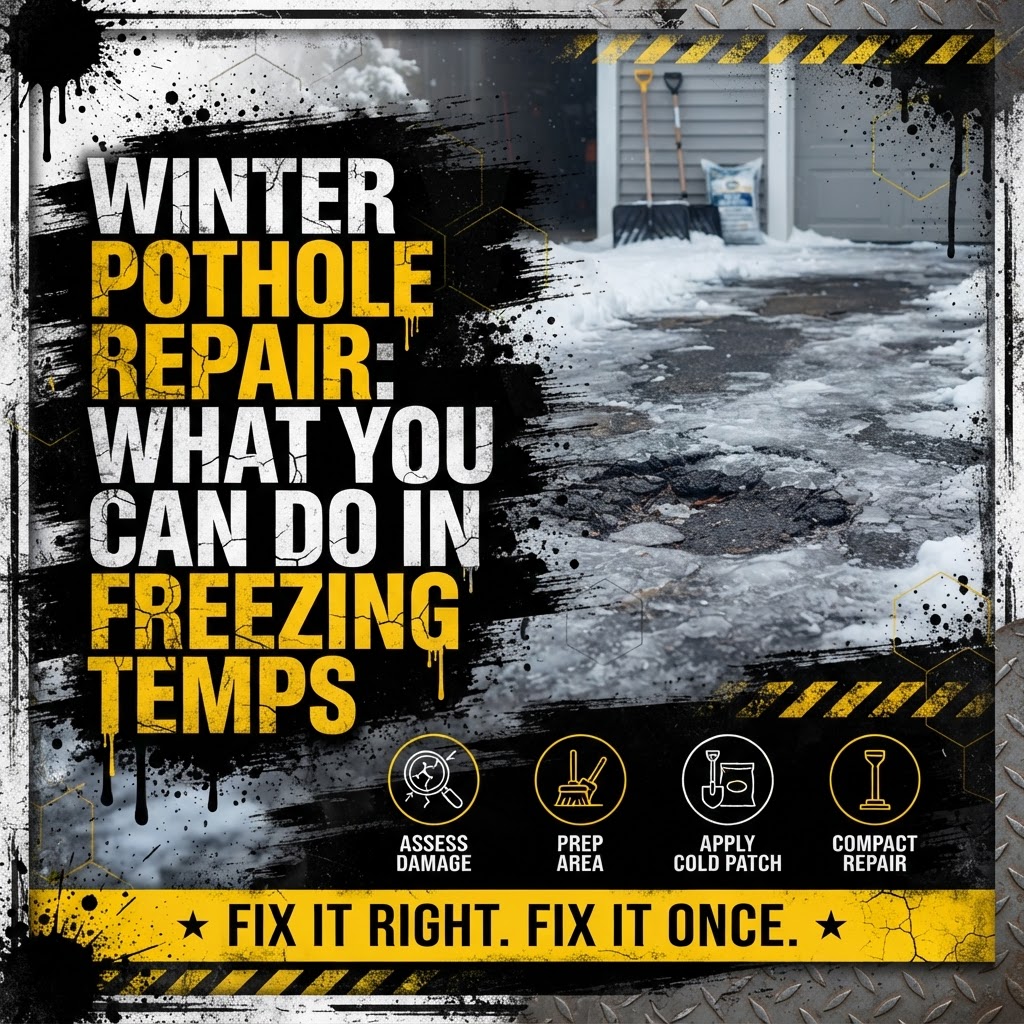
If you need asphalt work done in winter, the best options are cold-mix asphalt for temporary pothole repairs and emergency patching. Cold-mix can be applied in below-freezing temperatures and provides a temporary fix until warm weather allows for a permanent hot-mix repair.
Planning ahead is key. If you know your driveway or parking lot needs work, schedule it for spring or summer to ensure the best results. We book projects throughout the paving season and can help you plan the right timeline for your project.
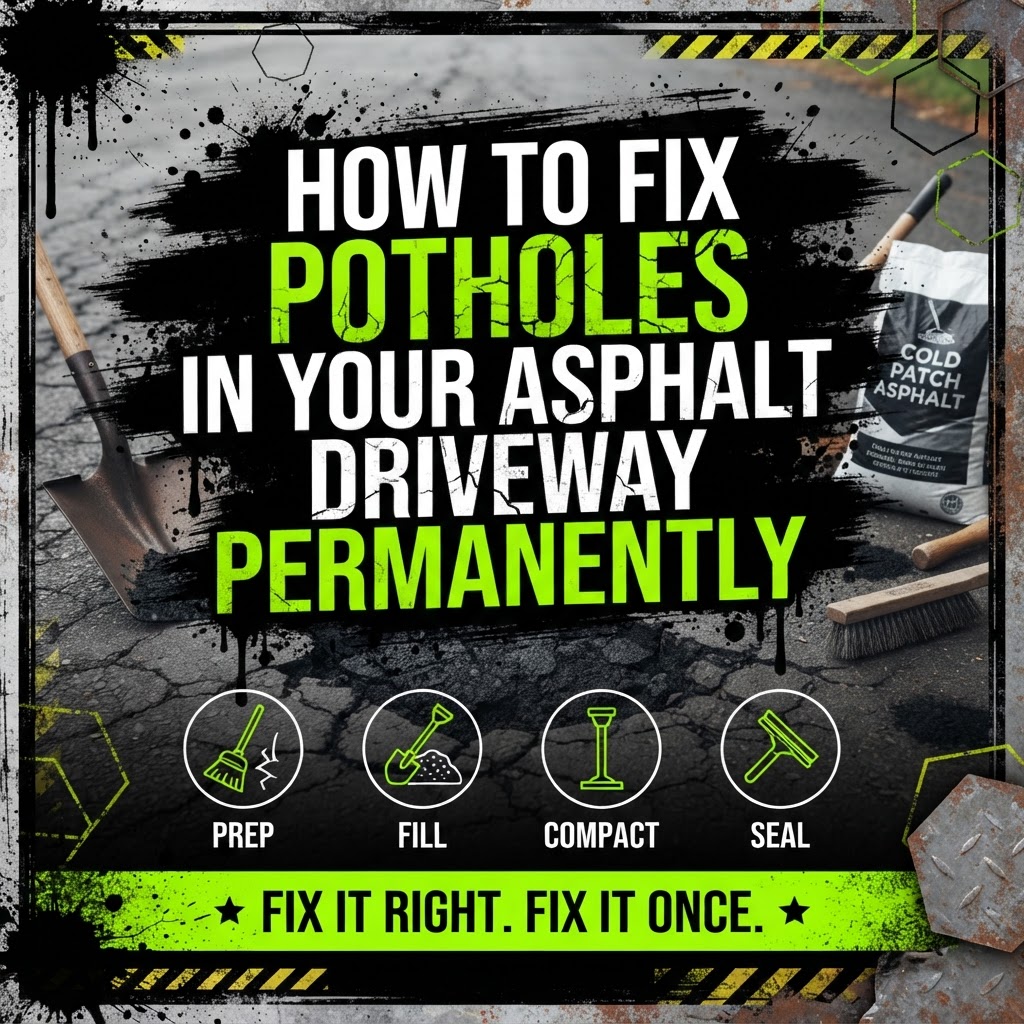
How Do I Fix Potholes in My Driveway?
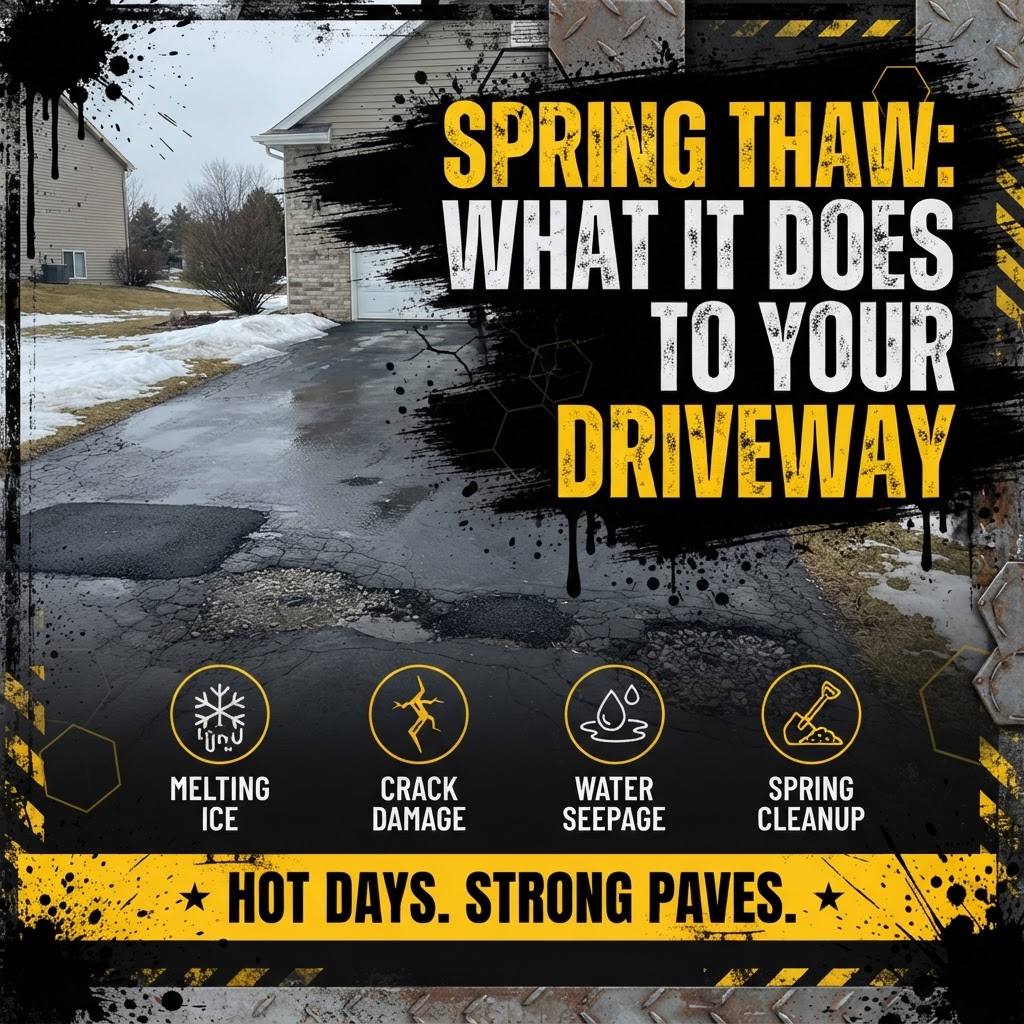
Potholes form when water seeps into cracks in the asphalt, freezes, and expands, breaking apart the pavement from beneath. In Minnesota's harsh winters, potholes are a common problem. The good news is they can be repaired effectively with the right materials and techniques.
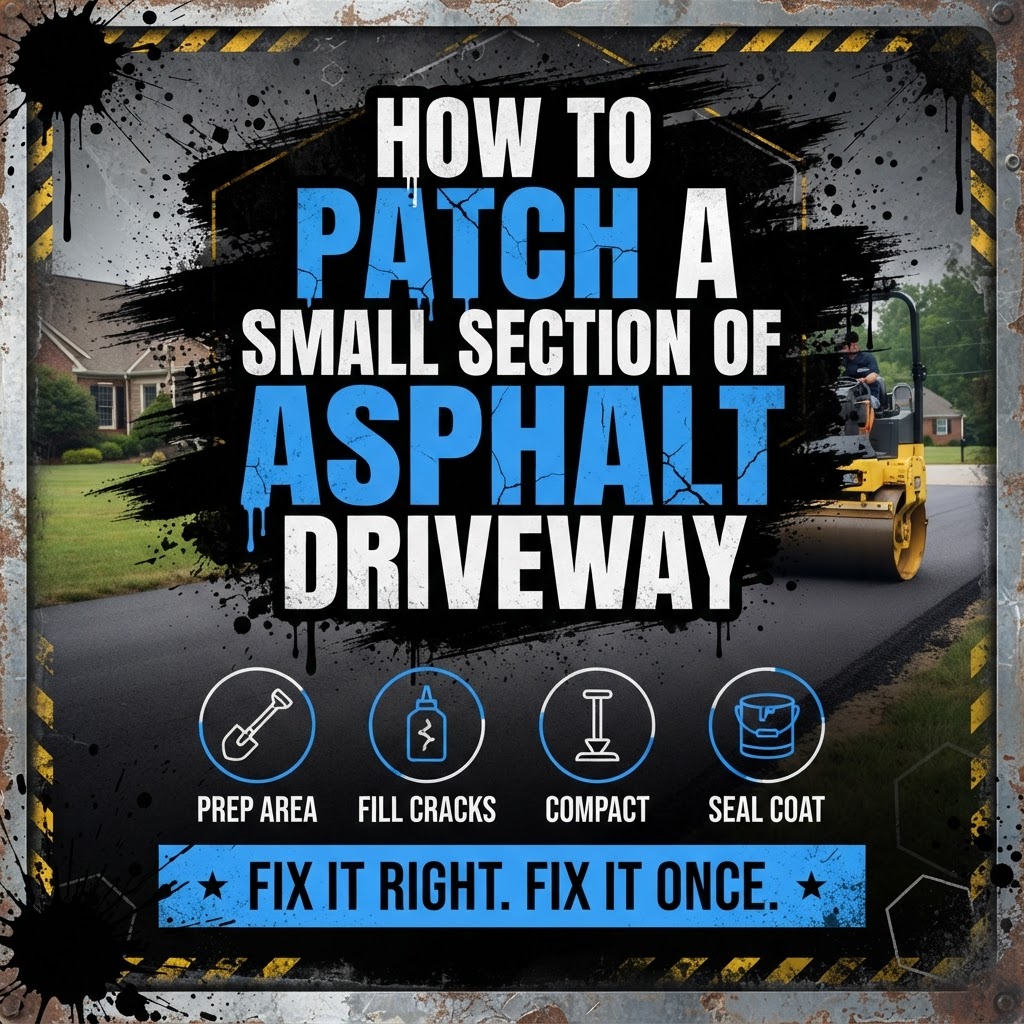
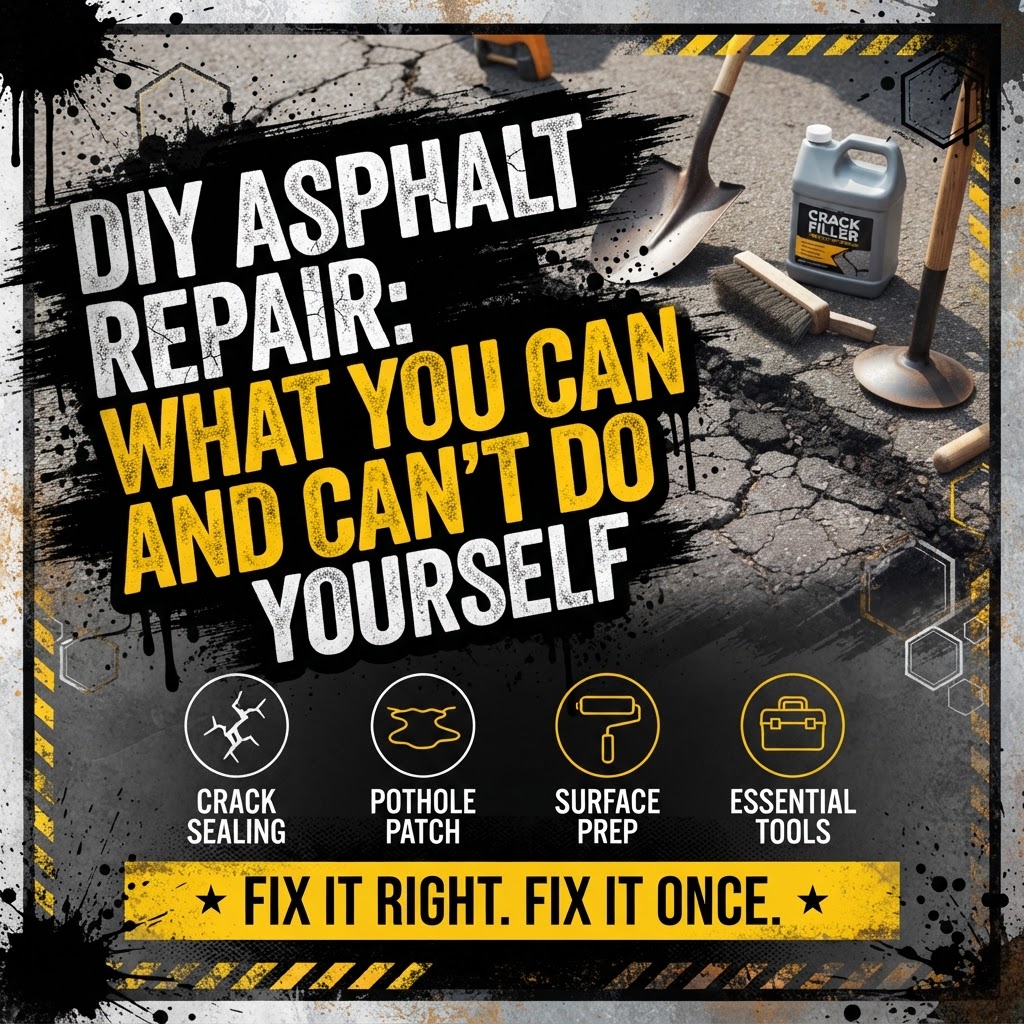
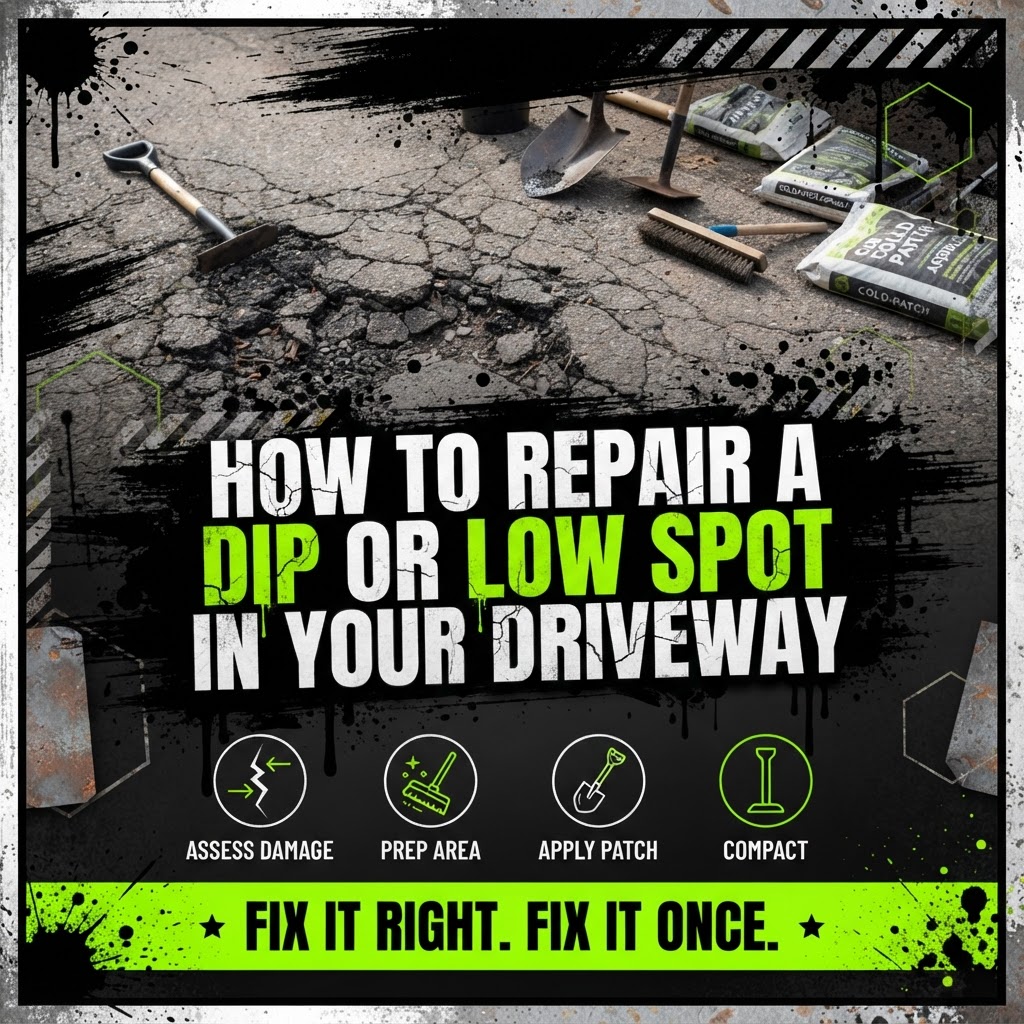
For small potholes (under 2 feet wide), a cold-mix asphalt patch can be used as a DIY fix or a temporary repair. Clean the pothole of debris, apply a tack coat, fill with cold mix, and compact it with a tamper or by driving over it. However, cold-mix patches are temporary and typically last only one season.
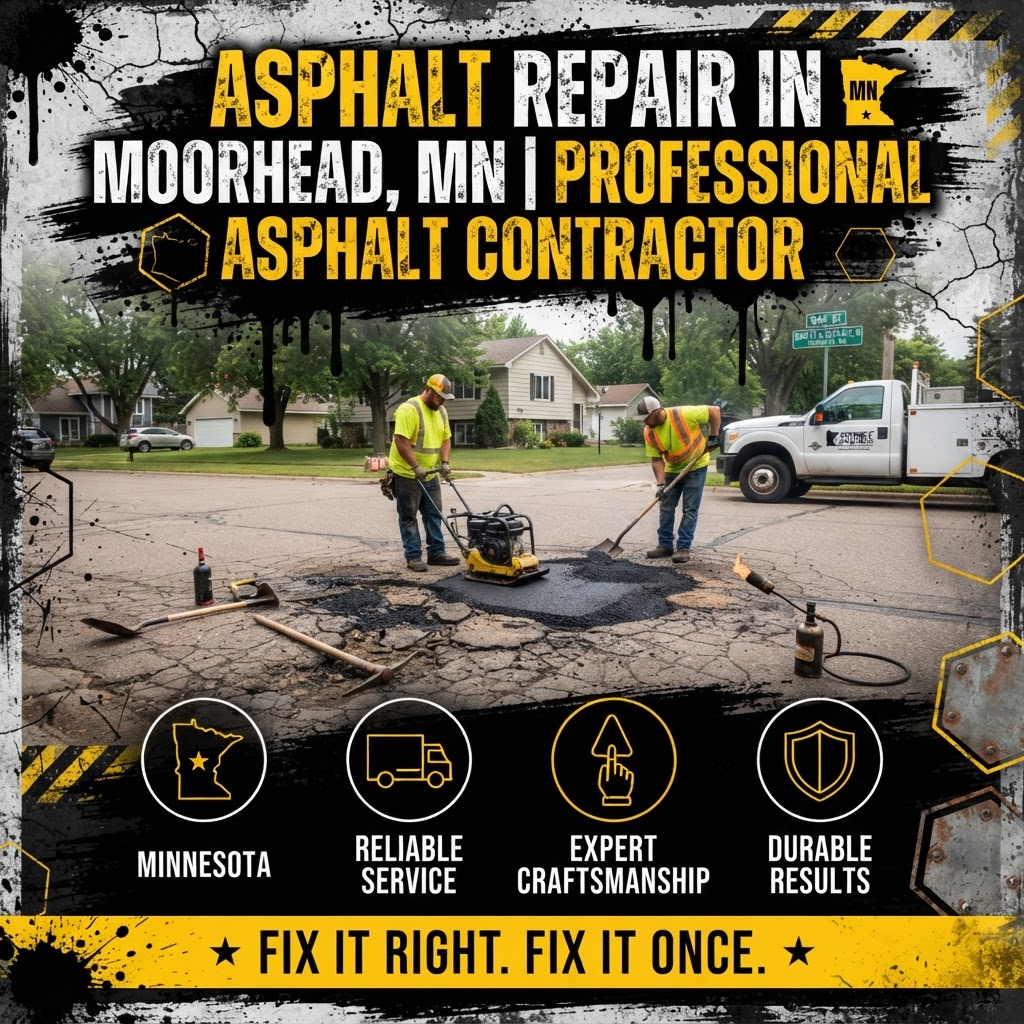
For a permanent repair, hot-mix asphalt is the best option. The damaged area is cut out, the base is inspected and repaired if needed, tack coat is applied, and hot-mix asphalt is installed and compacted to the proper density. This type of repair blends seamlessly with the surrounding pavement and lasts for years.
The best way to prevent potholes is through regular maintenance: sealcoating every 2 to 3 years, filling cracks promptly before water can penetrate, and ensuring proper drainage so water doesn't pool on or under the surface. If you have a pothole, don't wait — it will only get bigger and more expensive to fix.
Related Links:
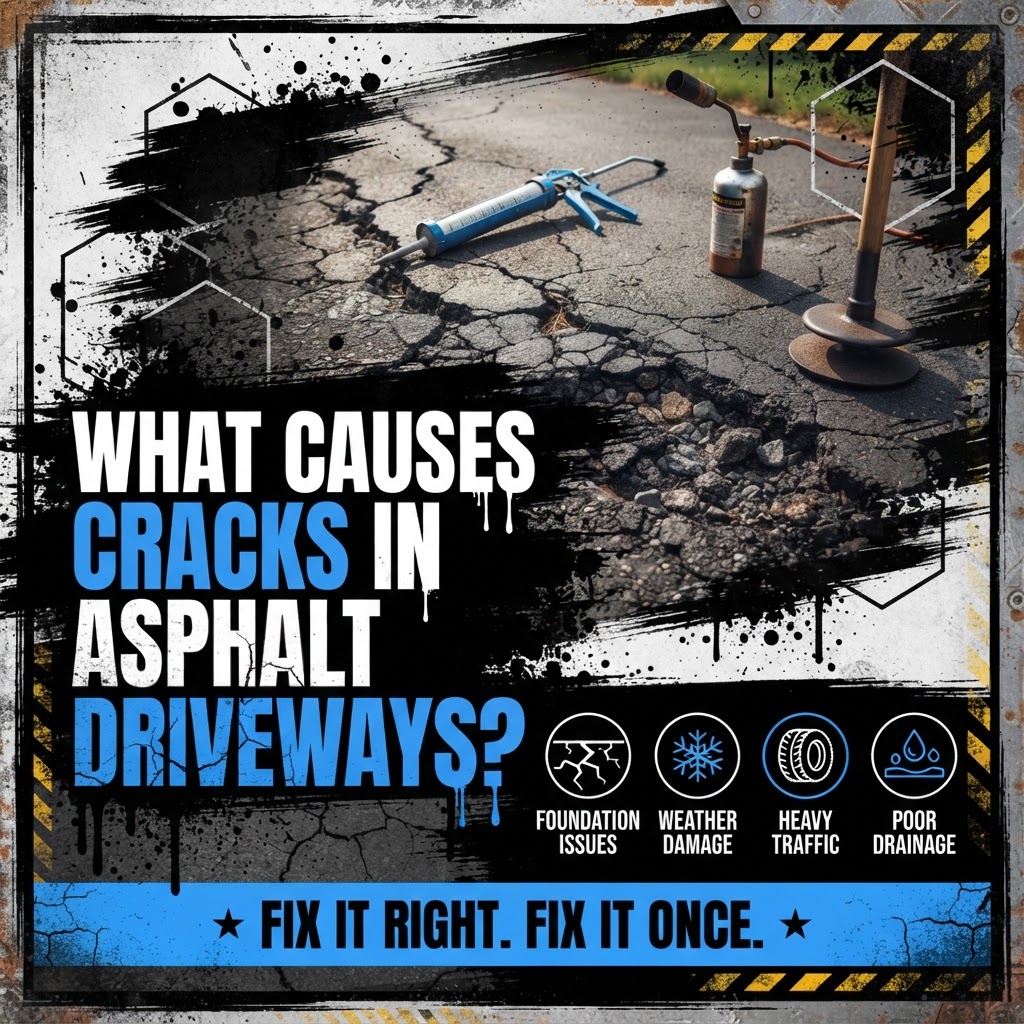
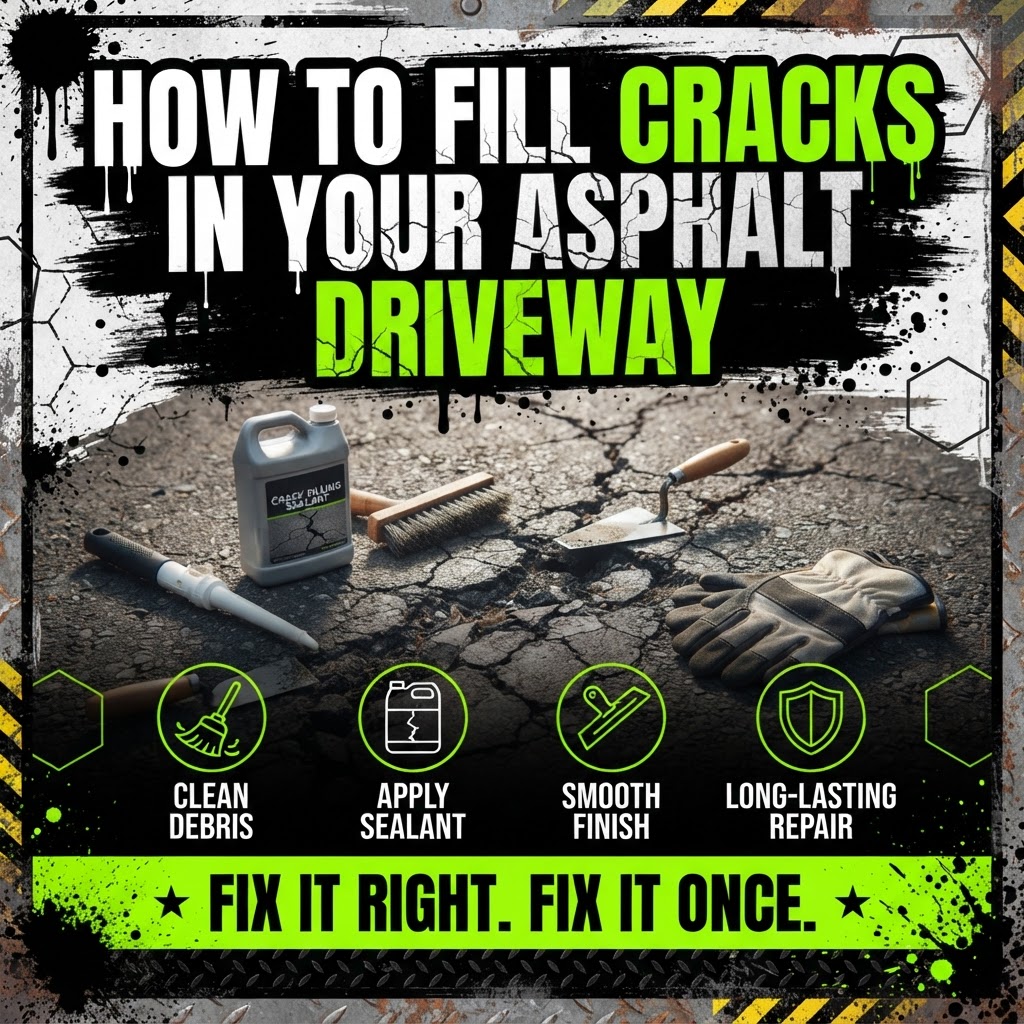
What Causes Cracks in Asphalt Driveways?
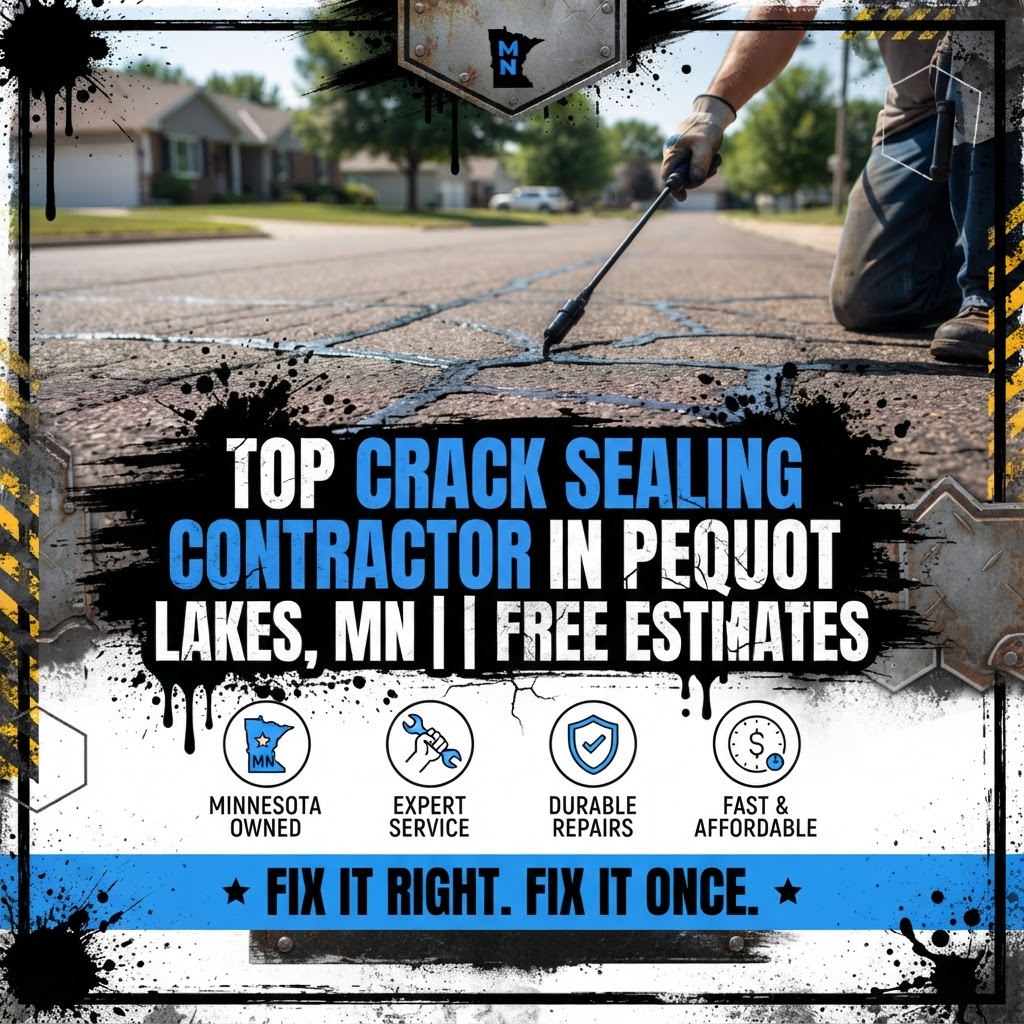
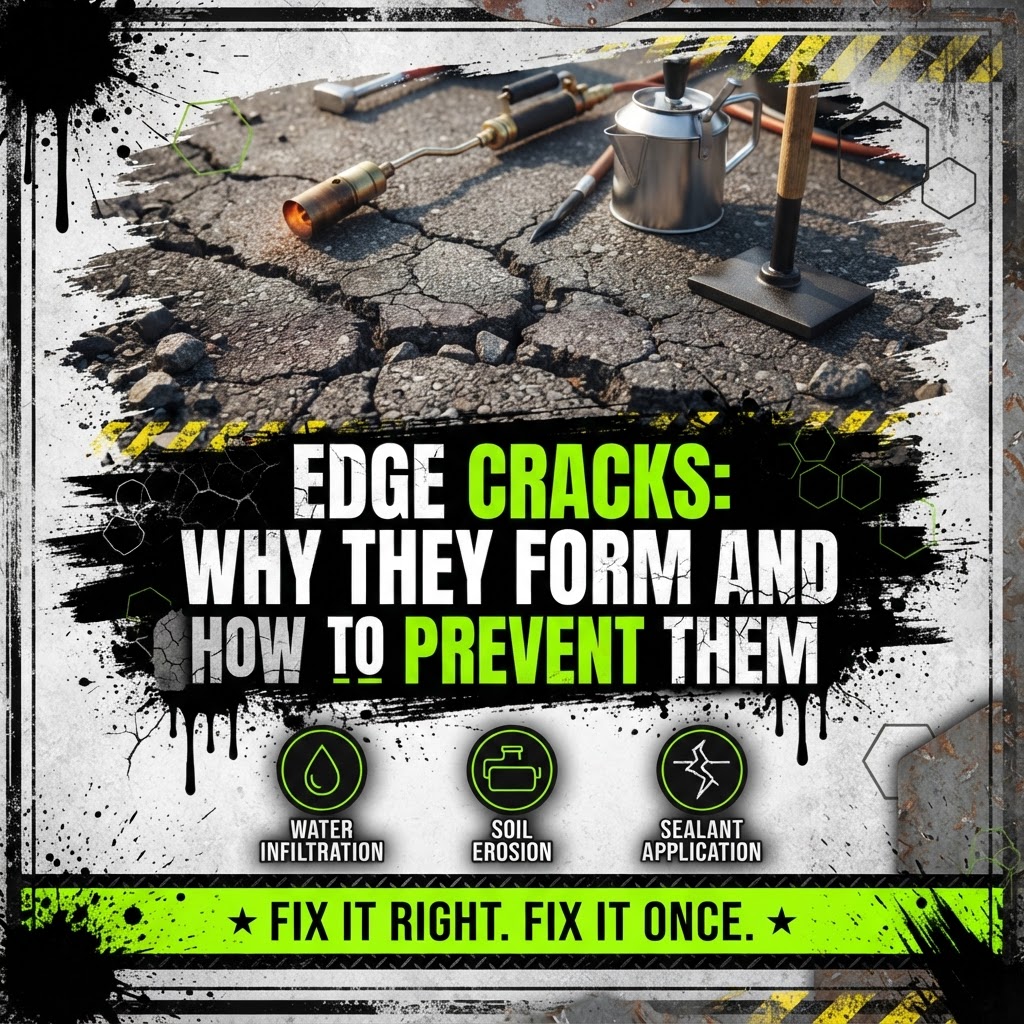
Cracks in asphalt are caused by a combination of factors: water penetration, freeze-thaw cycles, UV damage, poor drainage, heavy loads, and inadequate base preparation. Understanding the cause helps determine the right repair and prevention strategy.
In Minnesota, freeze-thaw cycles are the primary culprit. Water enters small surface cracks, freezes, and expands by about 9%, widening the crack each time. Over a single winter, a hairline crack can become a quarter-inch gap. This is why crack filling before winter is so critical.
UV rays from the sun oxidize the asphalt binder, making it brittle and prone to cracking. This is what causes the surface to fade from black to gray over time. Sealcoating blocks UV rays and keeps the asphalt flexible.
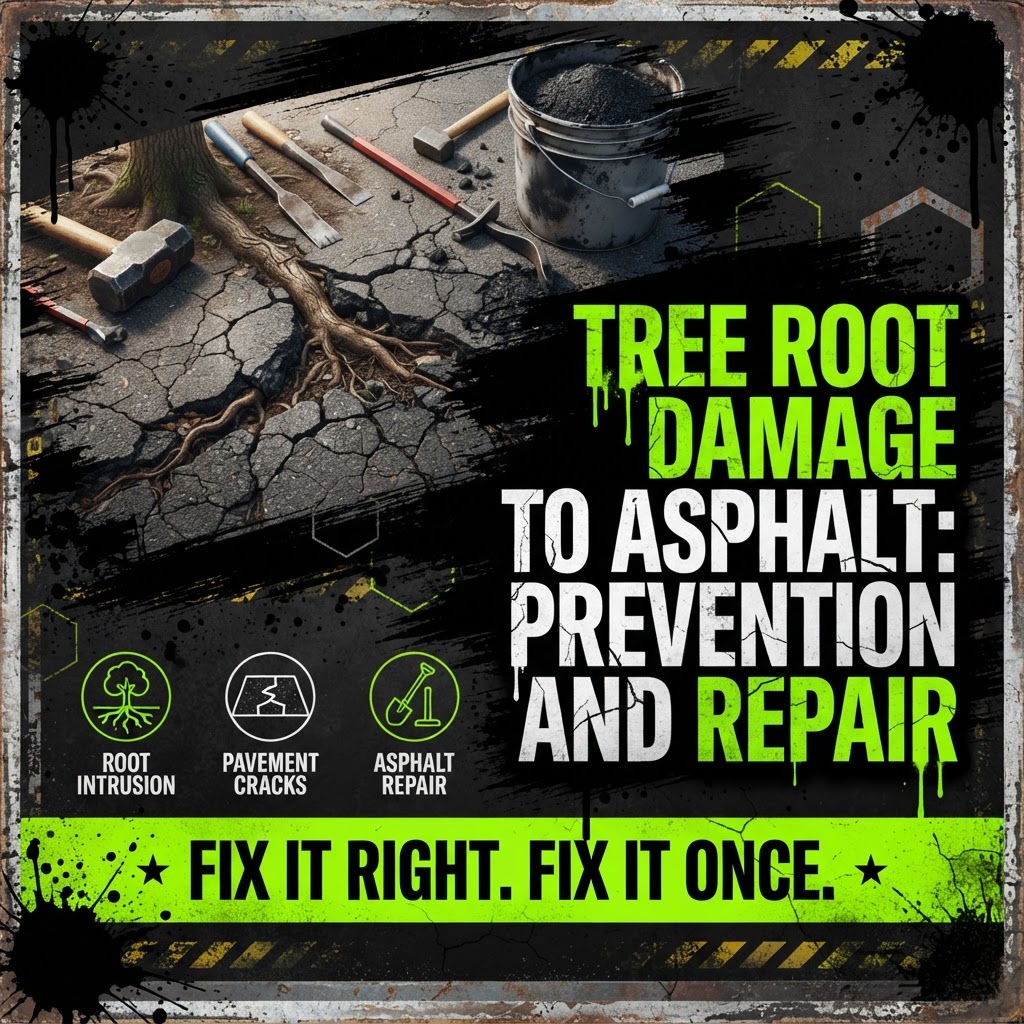
Other common causes include: tree roots growing under the driveway, heavy vehicles exceeding the design load, poor drainage causing water to pool and undermine the base, and improper installation with insufficient base thickness or compaction. Identifying and addressing the root cause is essential — simply filling cracks without fixing the underlying issue will only provide a temporary fix.
How Do I Maintain My Asphalt Driveway?
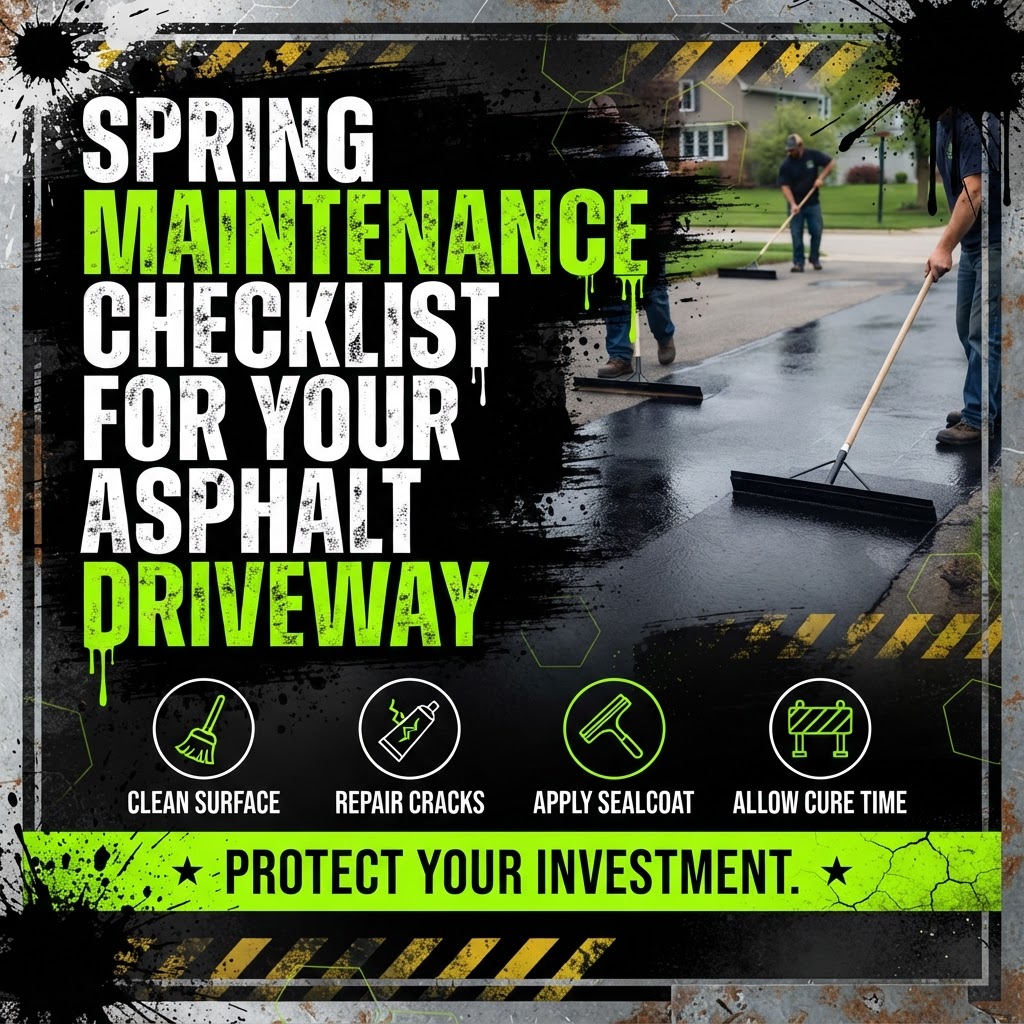
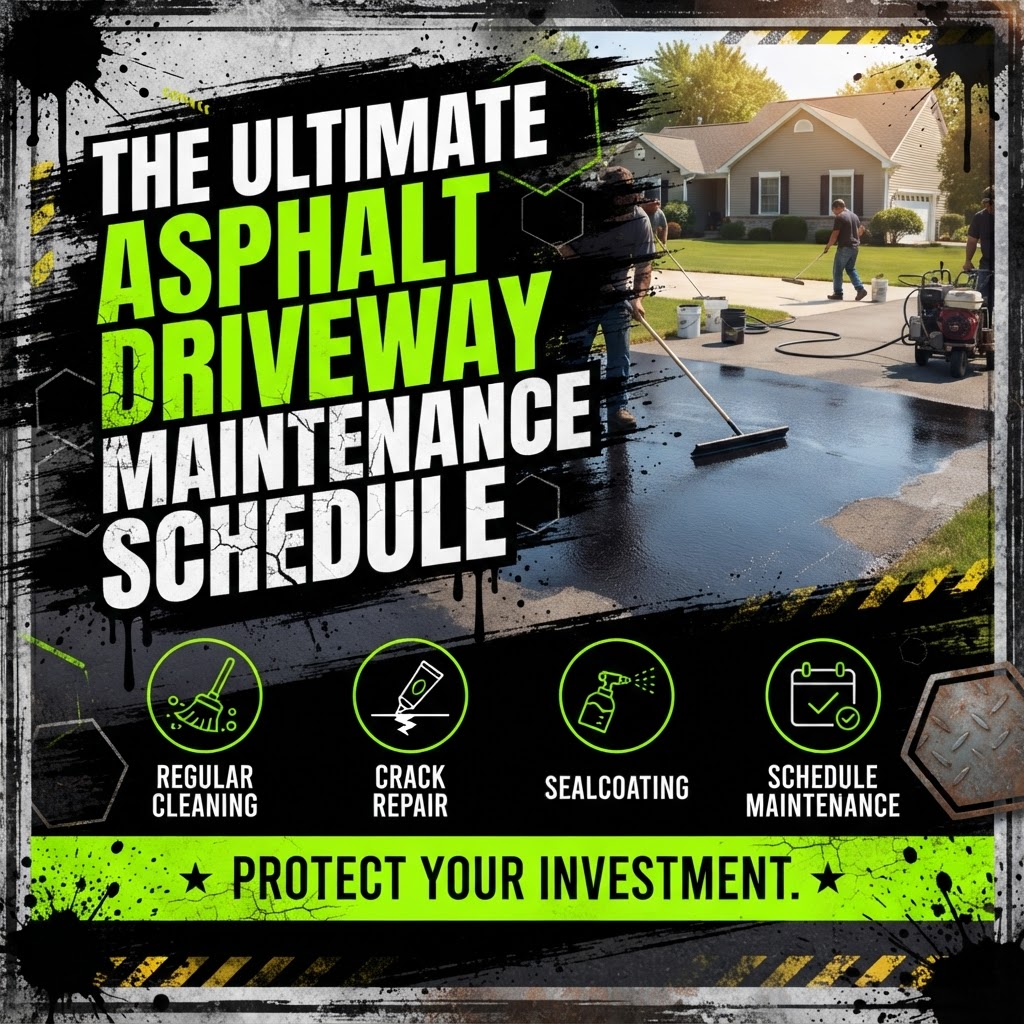
Proper asphalt maintenance extends the life of your driveway by 5 to 10 years and saves you thousands in premature replacement costs. A good maintenance plan includes four key elements: sealcoating, crack filling, cleaning, and drainage management.
Sealcoat every 2 to 3 years to protect against UV damage, water penetration, and chemical spills. Fill cracks as soon as they appear — even hairline cracks let water in, and in Minnesota, that water will freeze and expand, turning small cracks into big problems. Use a professional crack filling service for the best results.
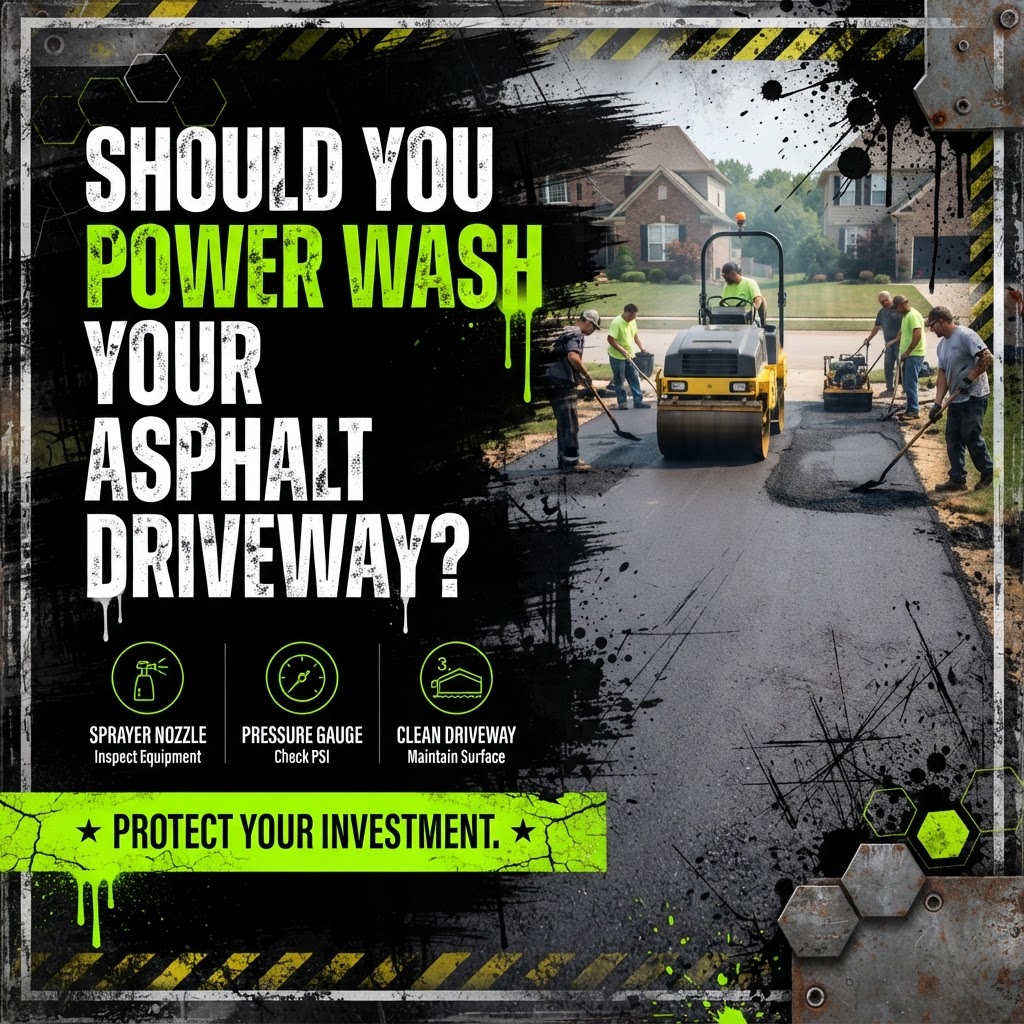
Keep the surface clean by sweeping debris and washing away oil, gas, and other automotive fluids. Petroleum products dissolve the asphalt binder, so clean spills immediately with a degreaser and water. Avoid using harsh chemicals that can damage the sealer.
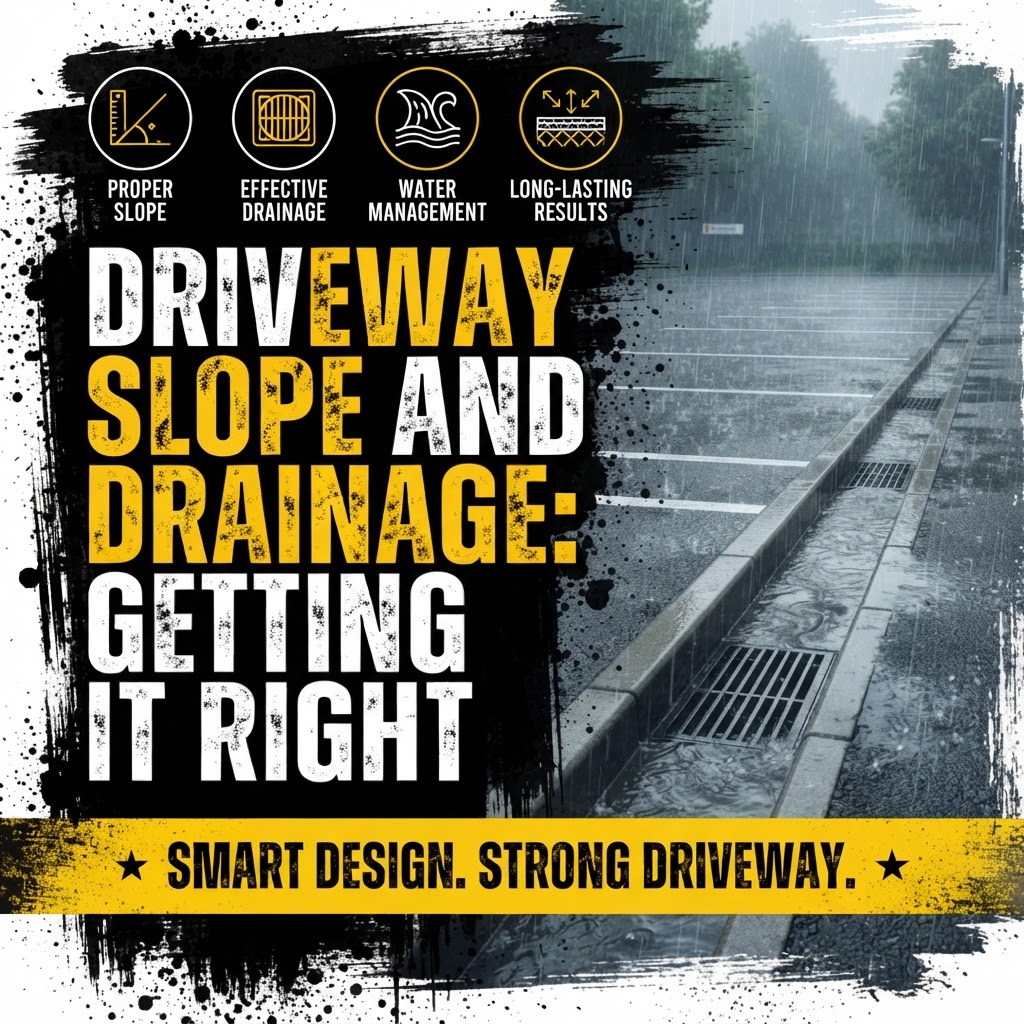
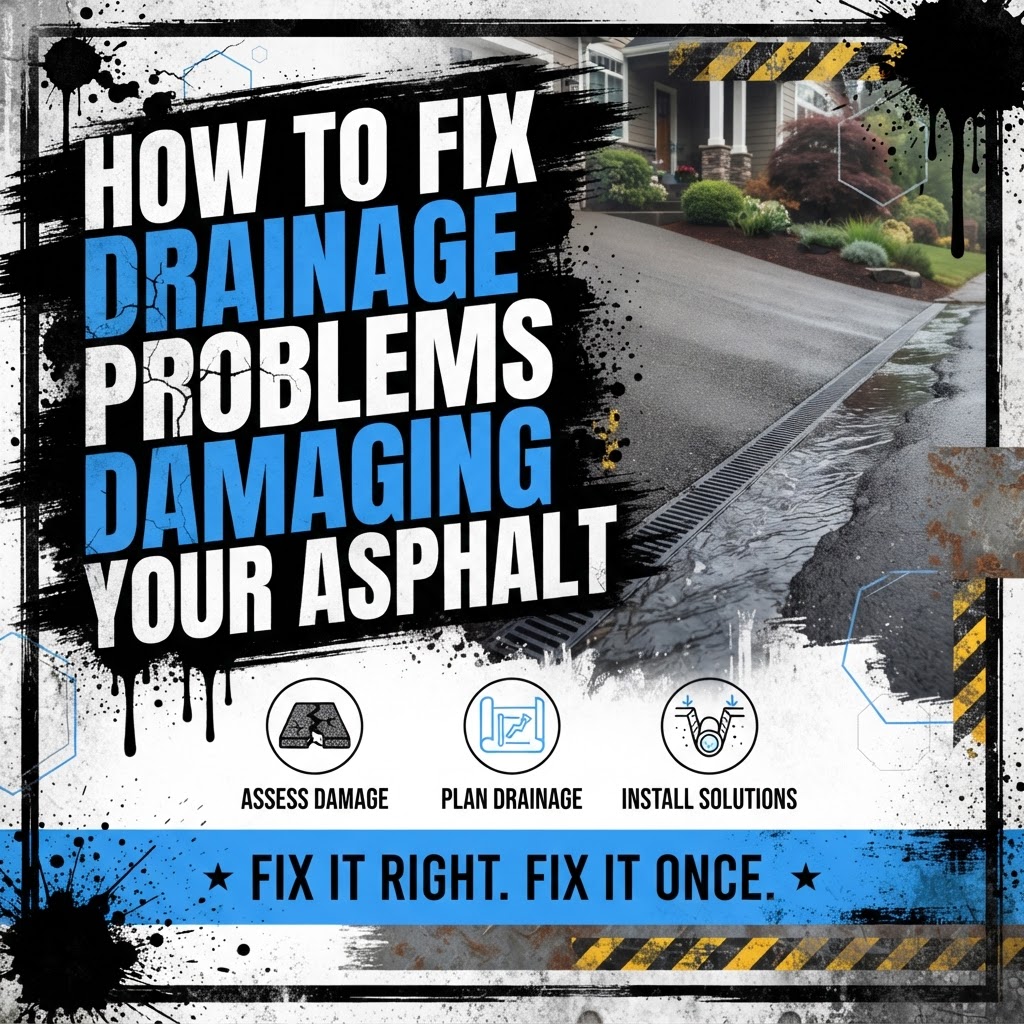
Ensure proper drainage by keeping gutters and downspouts directed away from the driveway, filling low spots where water pools, and making sure the driveway has the correct slope. Standing water is the enemy of asphalt — it seeps into every tiny opening and undermines the base from below.
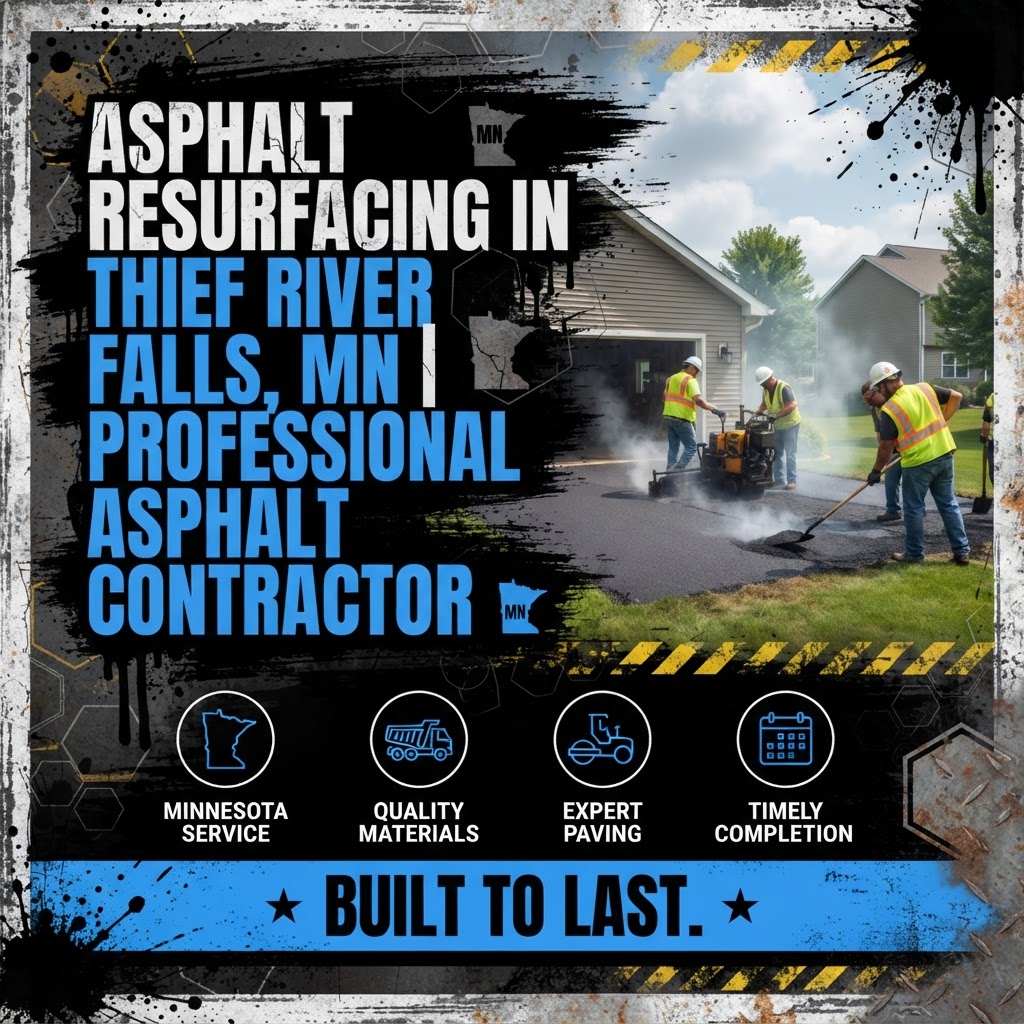
What Is Asphalt Resurfacing vs. Full Replacement?
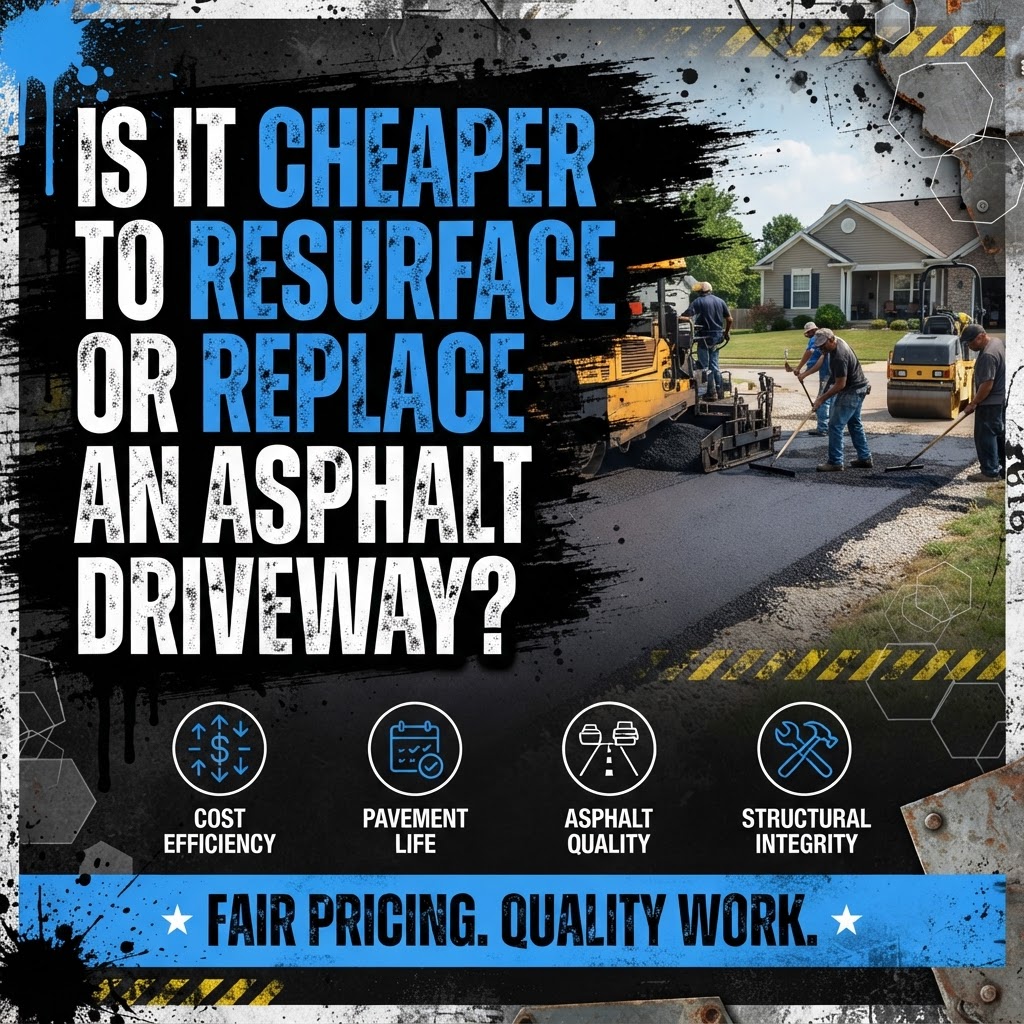
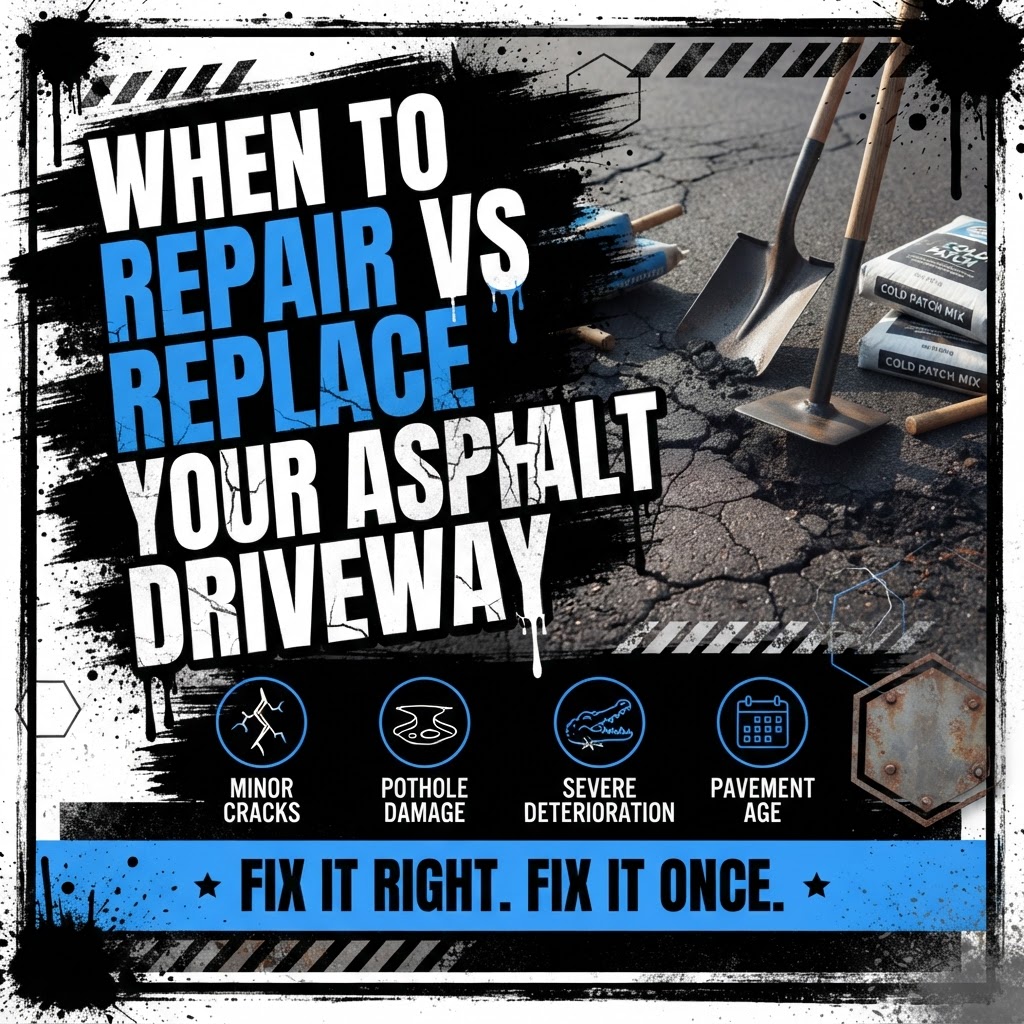
Asphalt resurfacing (also called an overlay) involves installing a new layer of asphalt over an existing driveway that is still structurally sound. Full replacement means removing the old asphalt entirely, repairing or replacing the base, and installing entirely new pavement. The right choice depends on the condition of your existing driveway.
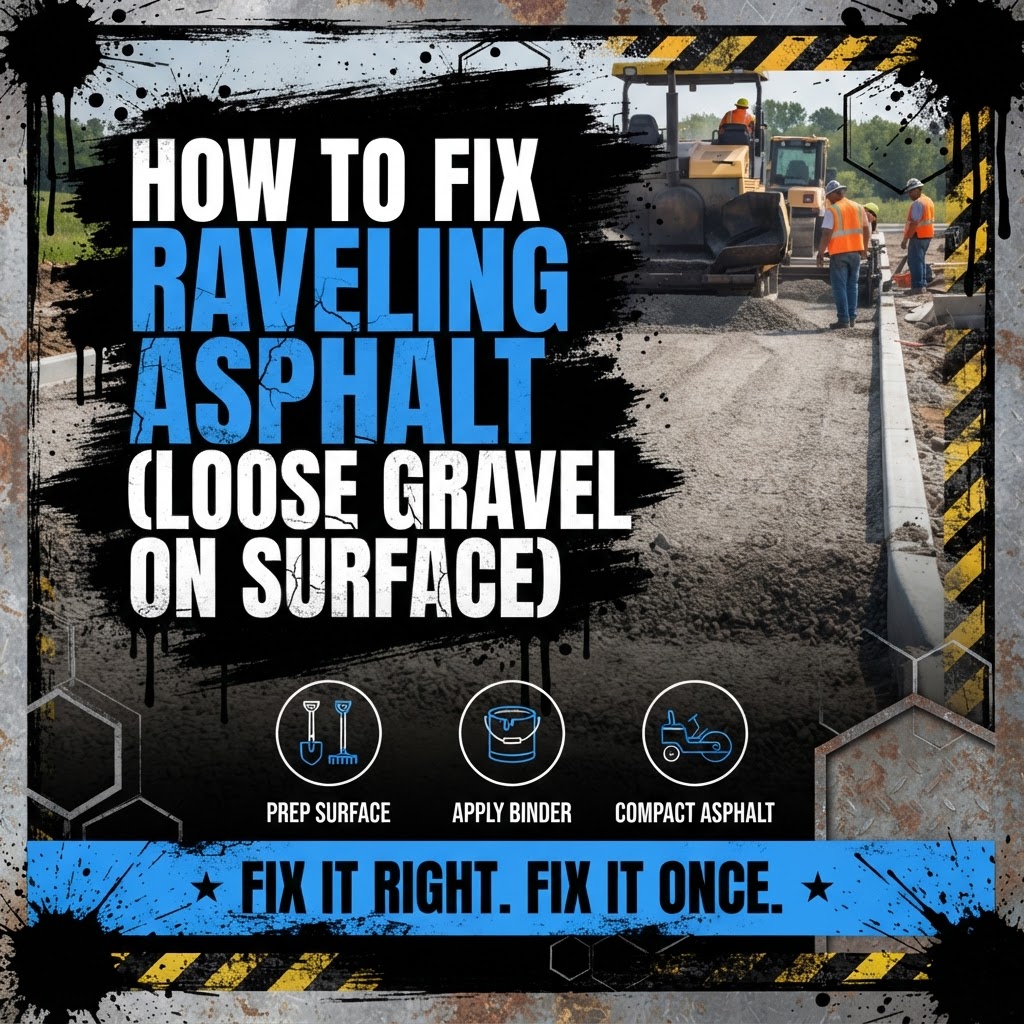
Resurfacing is appropriate when the existing asphalt has surface-level damage — fading, minor cracking, and raveling — but the base is solid and there are no significant structural issues. The existing surface is cleaned, cracks are filled, a tack coat is applied, and 1.5 to 2 inches of new asphalt is laid on top. Resurfacing costs about 40 to 60% less than full replacement.
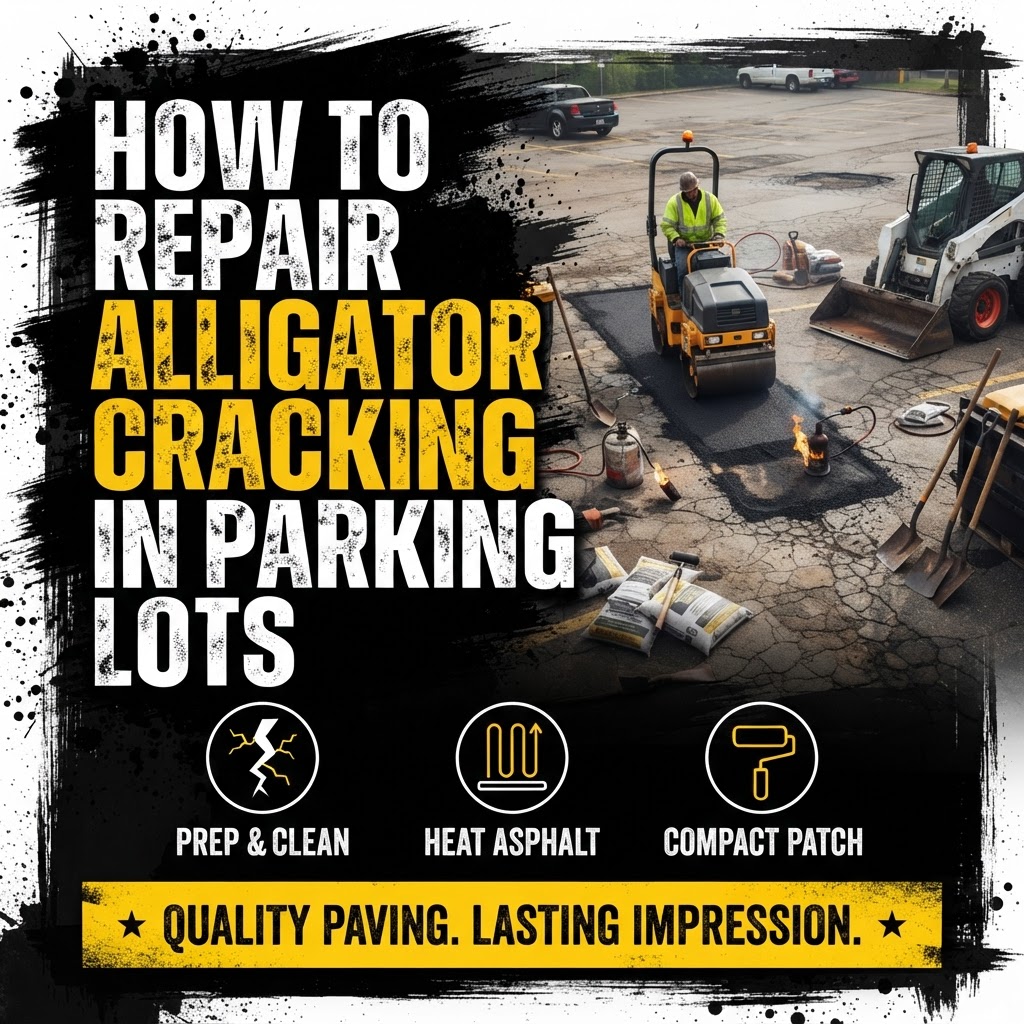
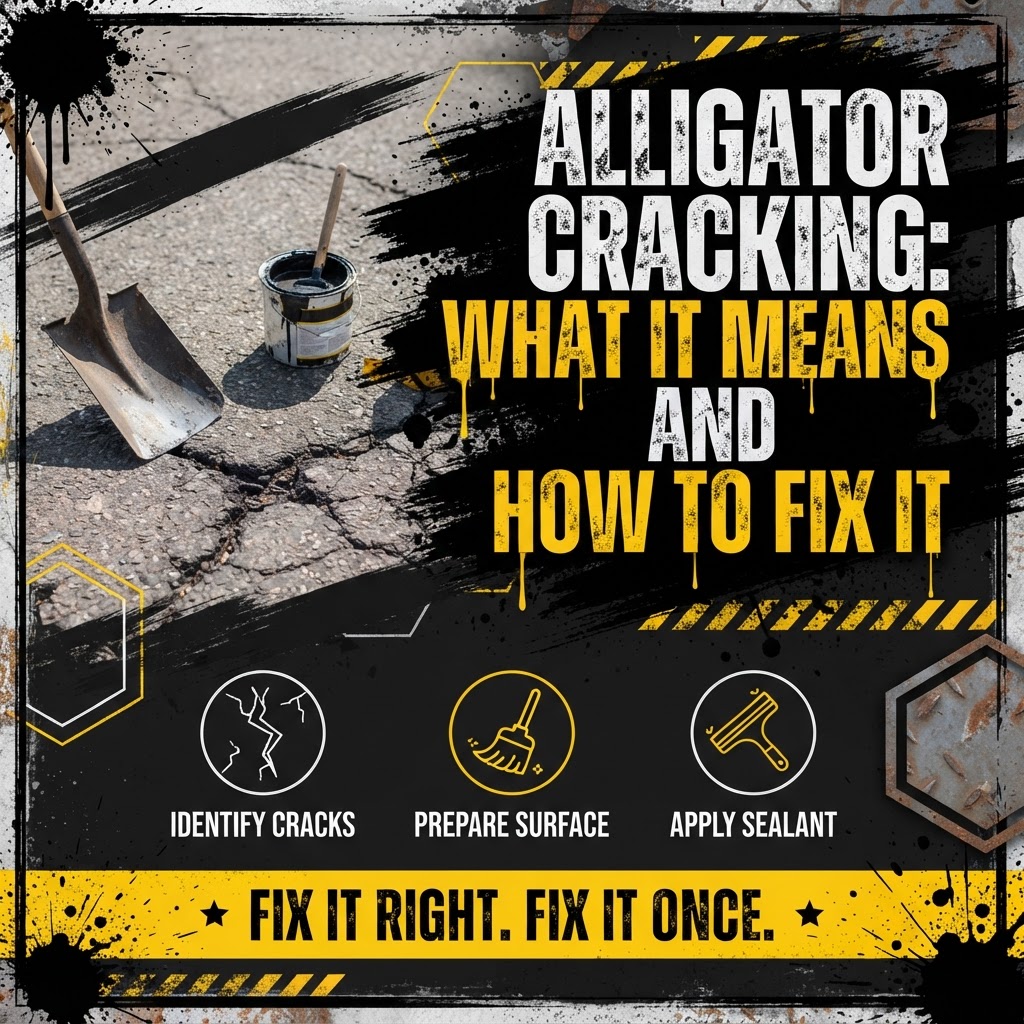
Full replacement is necessary when the driveway has extensive alligator cracking (interconnected cracks that look like reptile skin), deep potholes, significant drainage issues, or a failing base. If the base is compromised, resurfacing on top of it will only temporarily hide the problem — the new asphalt will crack and fail in the same pattern within a year or two.
A professional assessment is the only way to know for sure which option is right for your driveway. We inspect the base, evaluate drainage, check for structural damage, and give you an honest recommendation — even if that means full replacement is the better long-term investment.
How Thick Should an Asphalt Driveway Be?
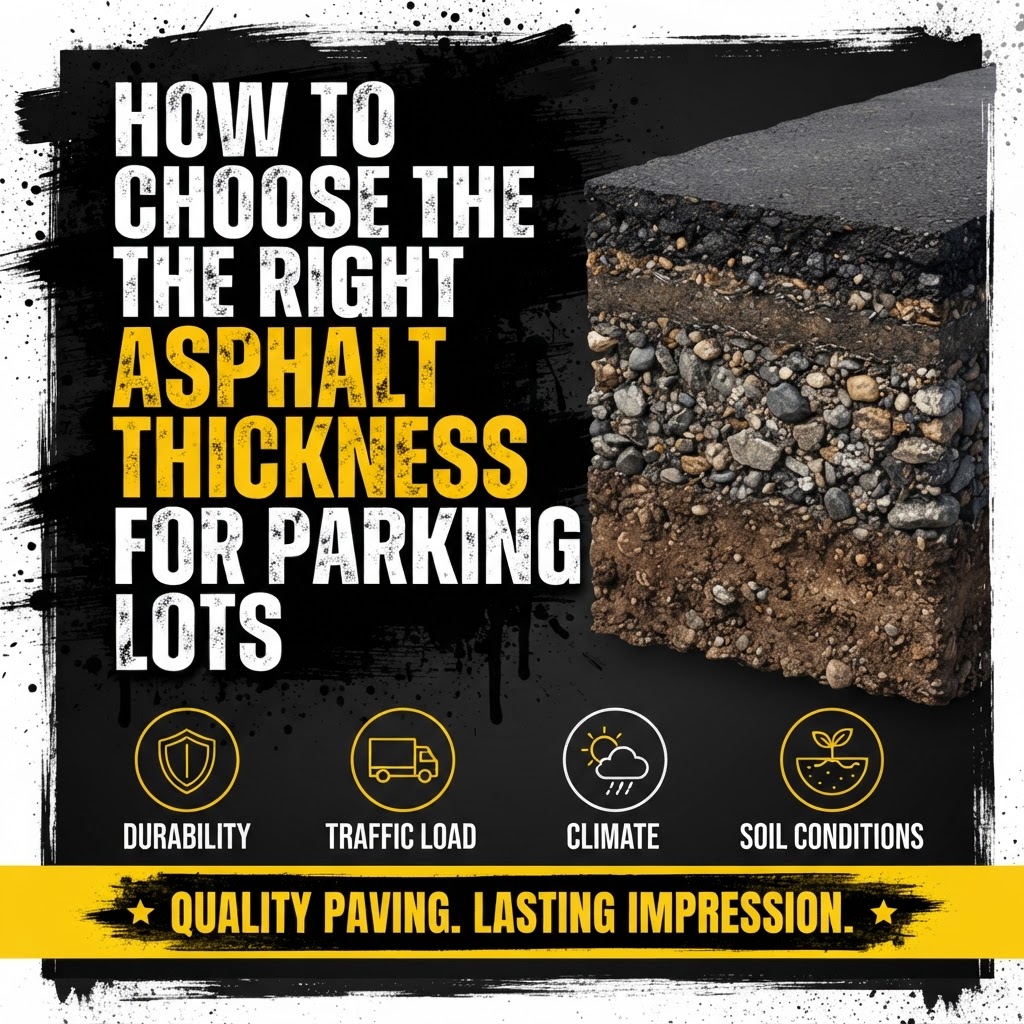
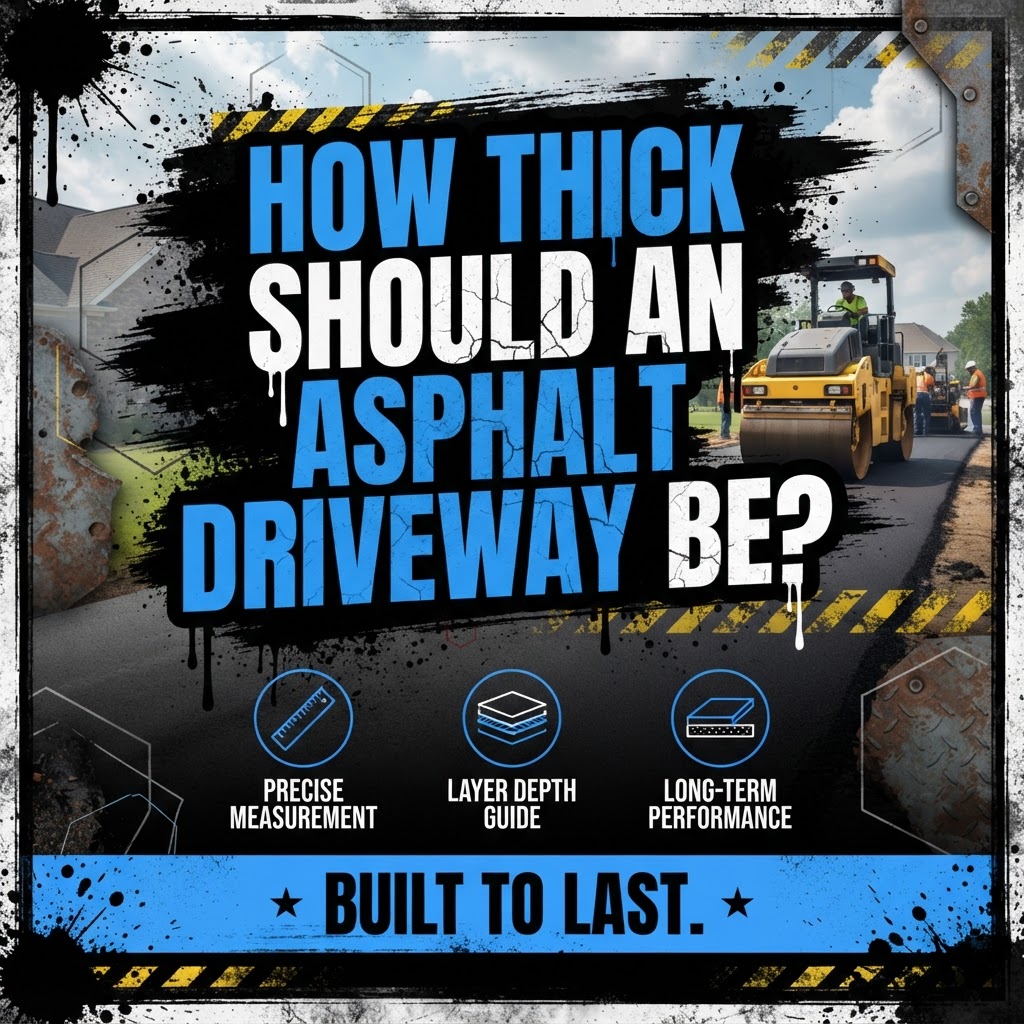
A residential asphalt driveway should have a minimum of 2 inches of compacted asphalt over 4 to 6 inches of well-compacted gravel base. For driveways that will see heavier vehicles like RVs, delivery trucks, or commercial traffic, 3 to 4 inches of asphalt is recommended.
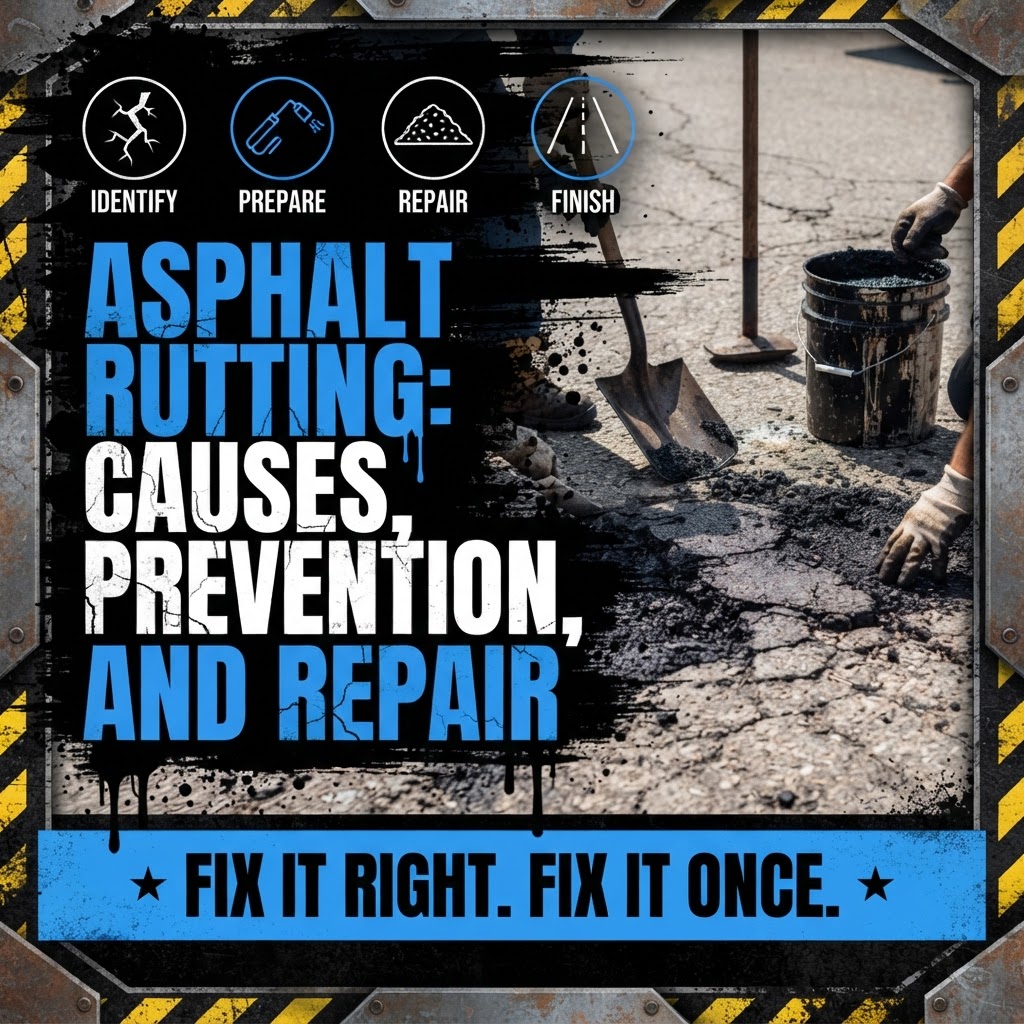
Thickness matters because it determines how well the driveway distributes weight. Too thin, and the asphalt will flex under load, eventually cracking and forming ruts. Too thick without proper base support, and you're paying for material you don't need.
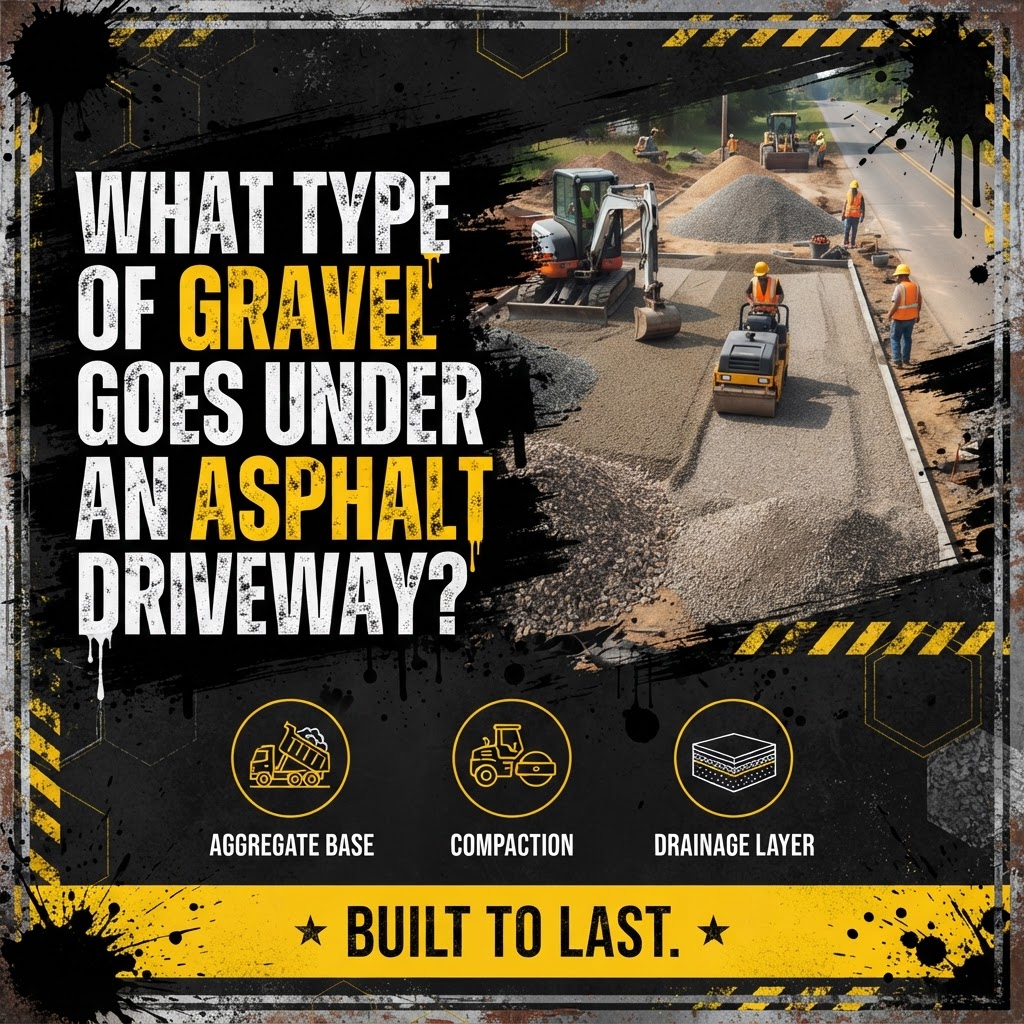
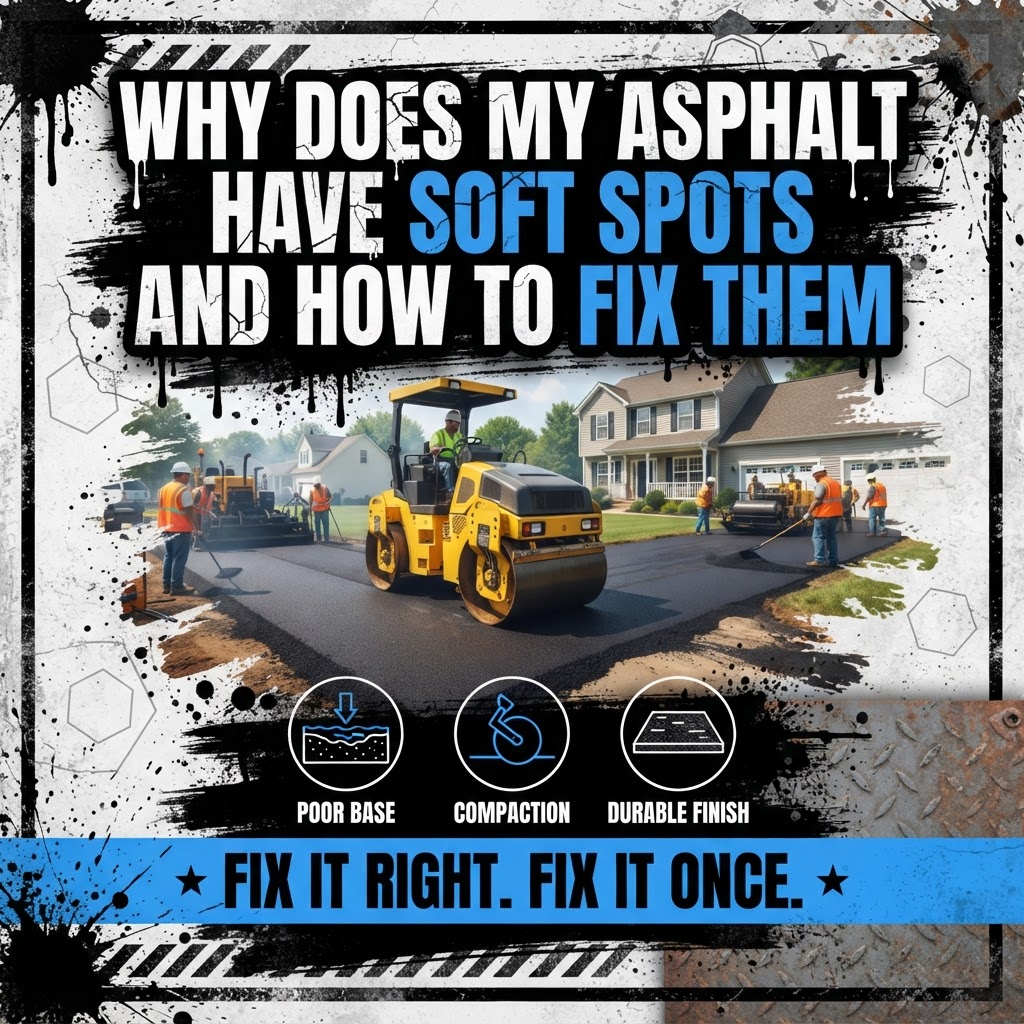
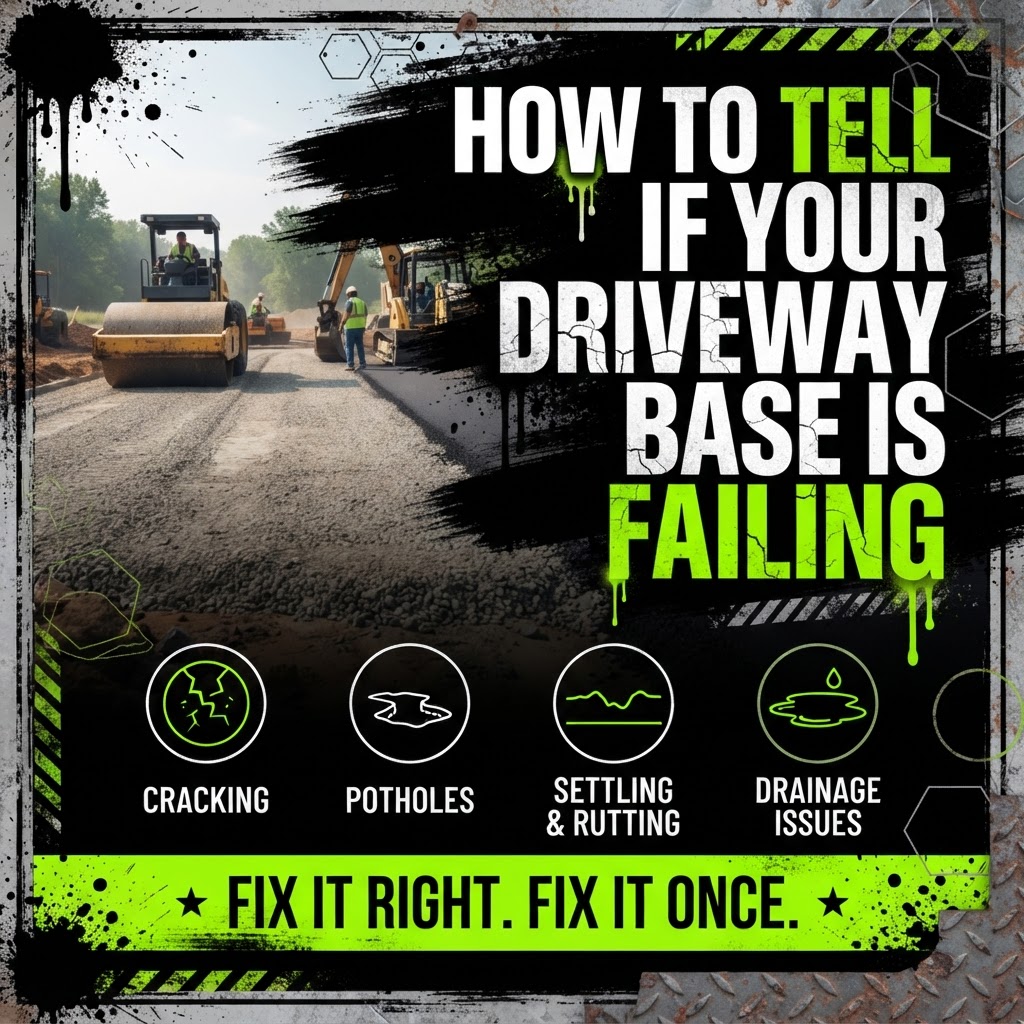
The base is just as important as the asphalt thickness. A properly prepared gravel base — typically Class 5 or crushed limestone — provides drainage and structural support. Without a solid base, even thick asphalt will fail prematurely as the ground shifts and settles beneath it.
At Minnesota's Best Asphalt, we tailor the thickness to your specific needs. We evaluate soil conditions, expected traffic, and drainage before recommending the right asphalt and base thickness for your project. This ensures your driveway is built to last, not just built to meet a minimum spec.
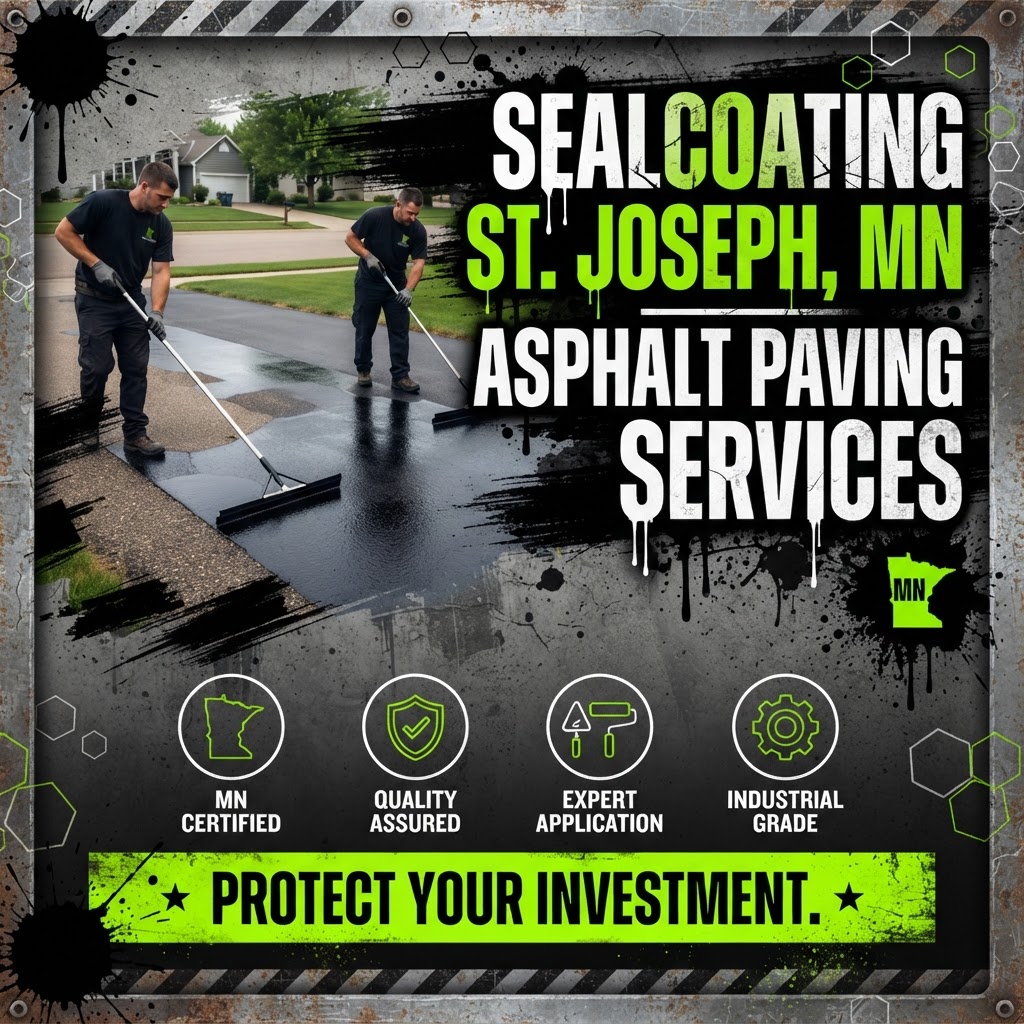
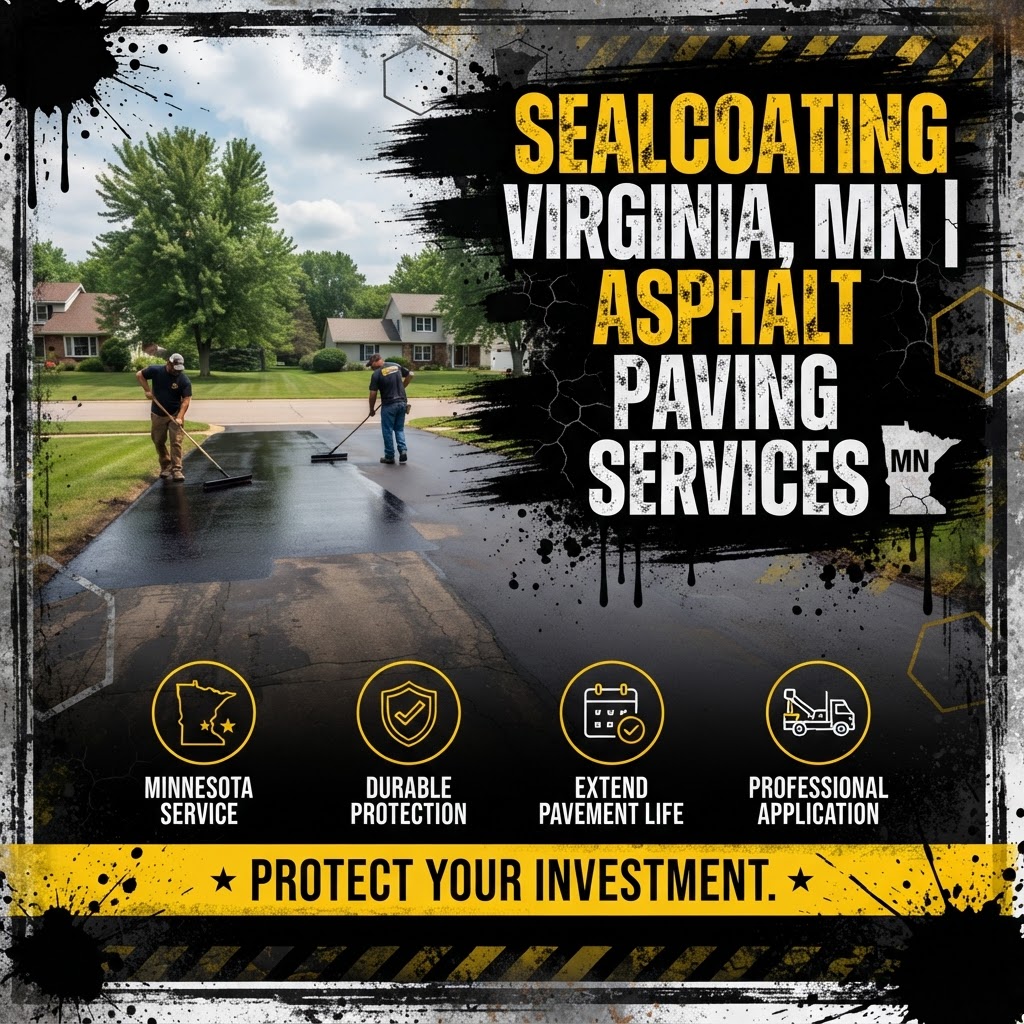
What Is Sealcoating and Why Is It Important?
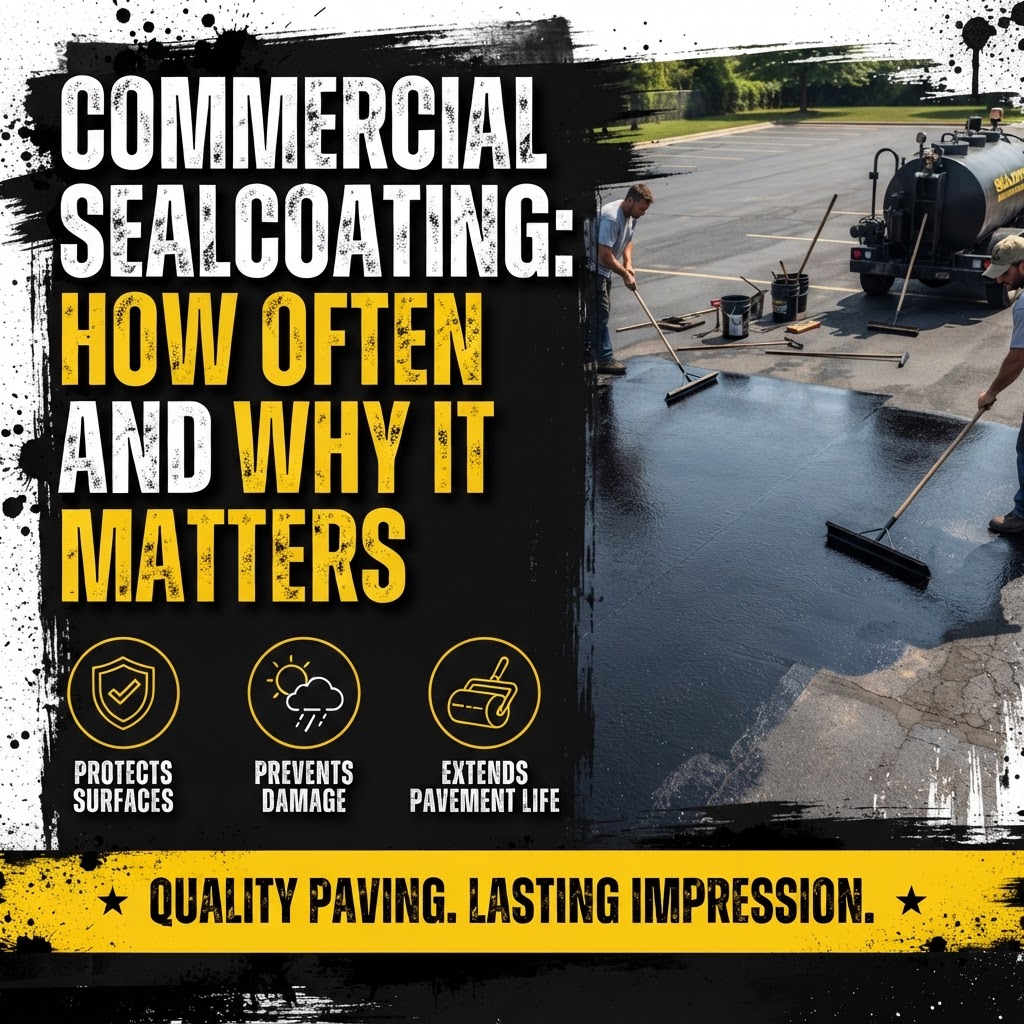
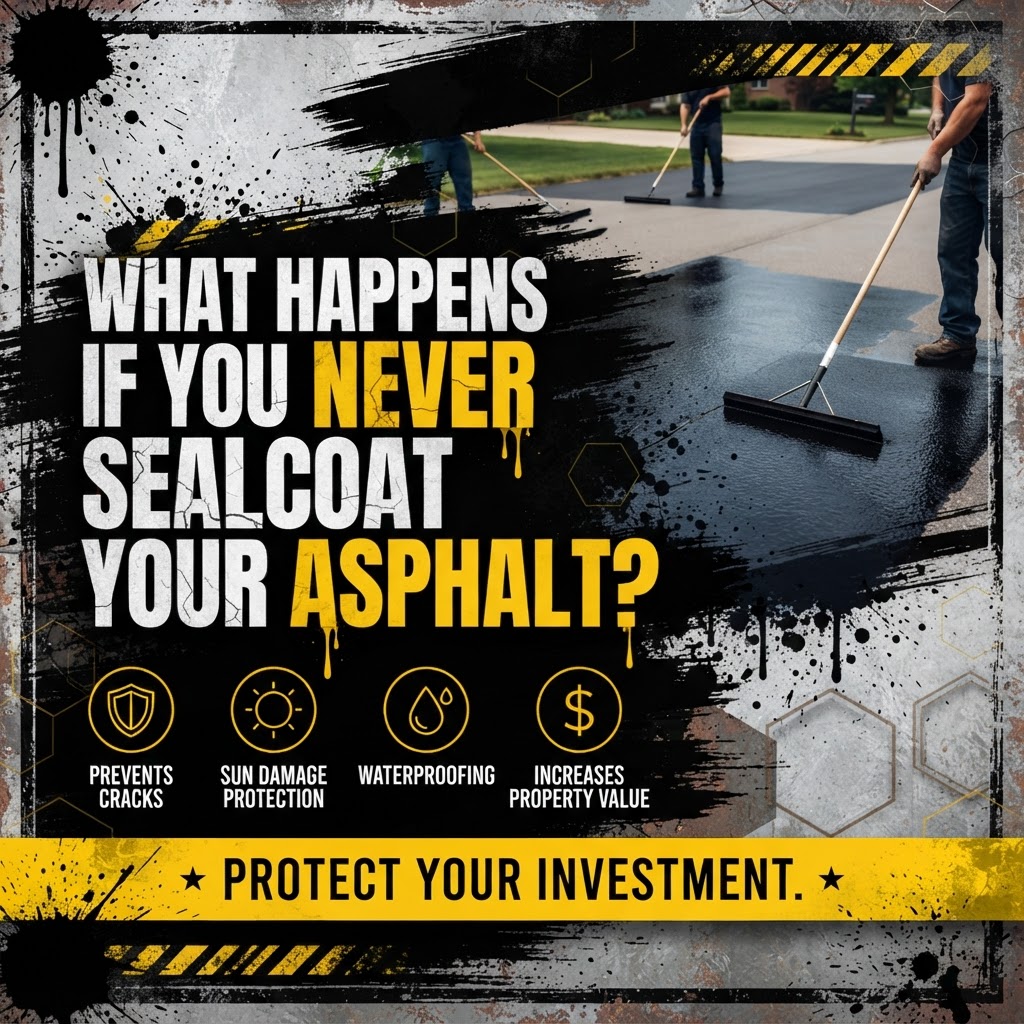
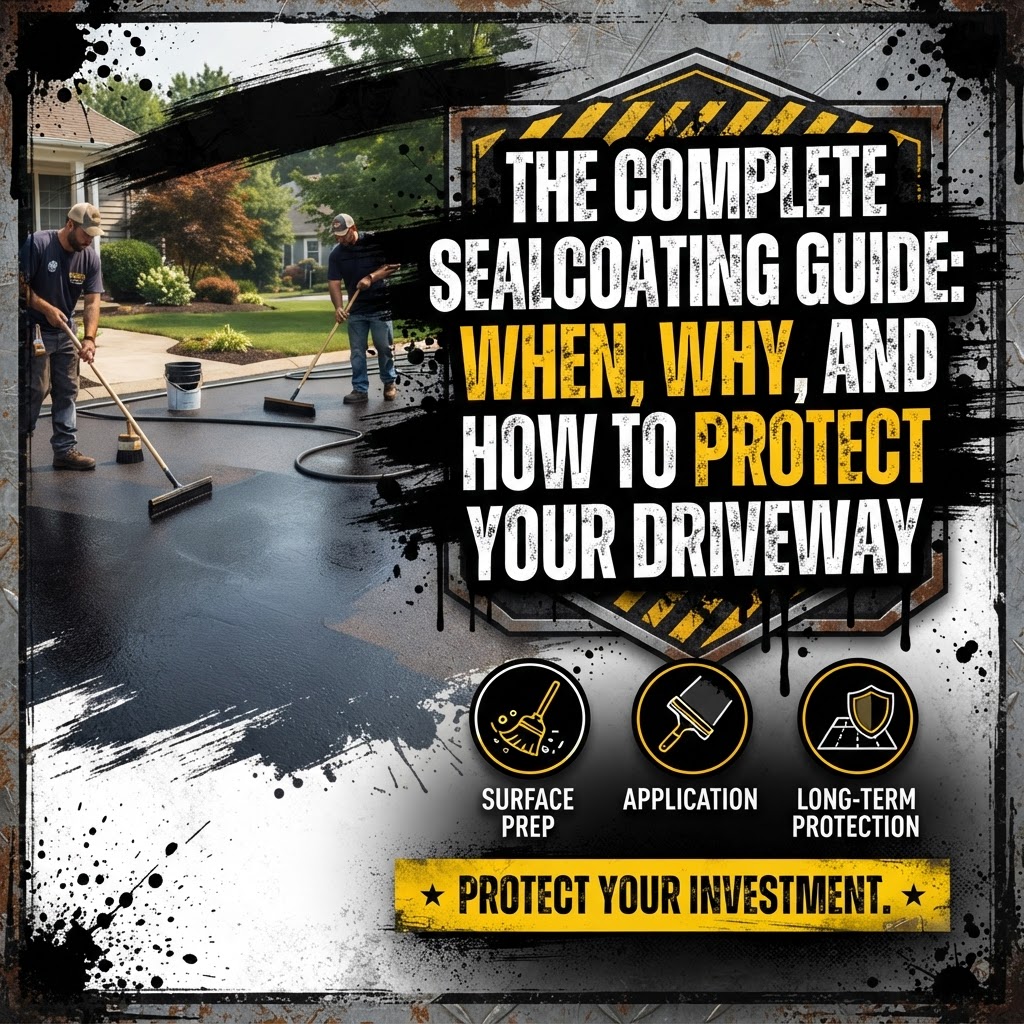
Sealcoating is the process of applying a protective layer of coal tar or asphalt emulsion sealer to the surface of an asphalt driveway or parking lot. This layer acts as a barrier against UV rays, water, oil, gas, and other chemicals that break down the asphalt binder over time.
Without sealcoating, asphalt oxidizes and becomes brittle. UV rays break down the asphalt cement, the surface turns from black to gray, and hairline cracks begin to form. Water enters those cracks, freezes in winter, and the cycle of deterioration accelerates rapidly.
Sealcoating provides three key benefits: it restores the rich black color that enhances curb appeal, it creates a smooth surface that's easier to clean and maintain, and it extends the life of the asphalt by 5 to 10 years when applied on a regular 2 to 3 year cycle.
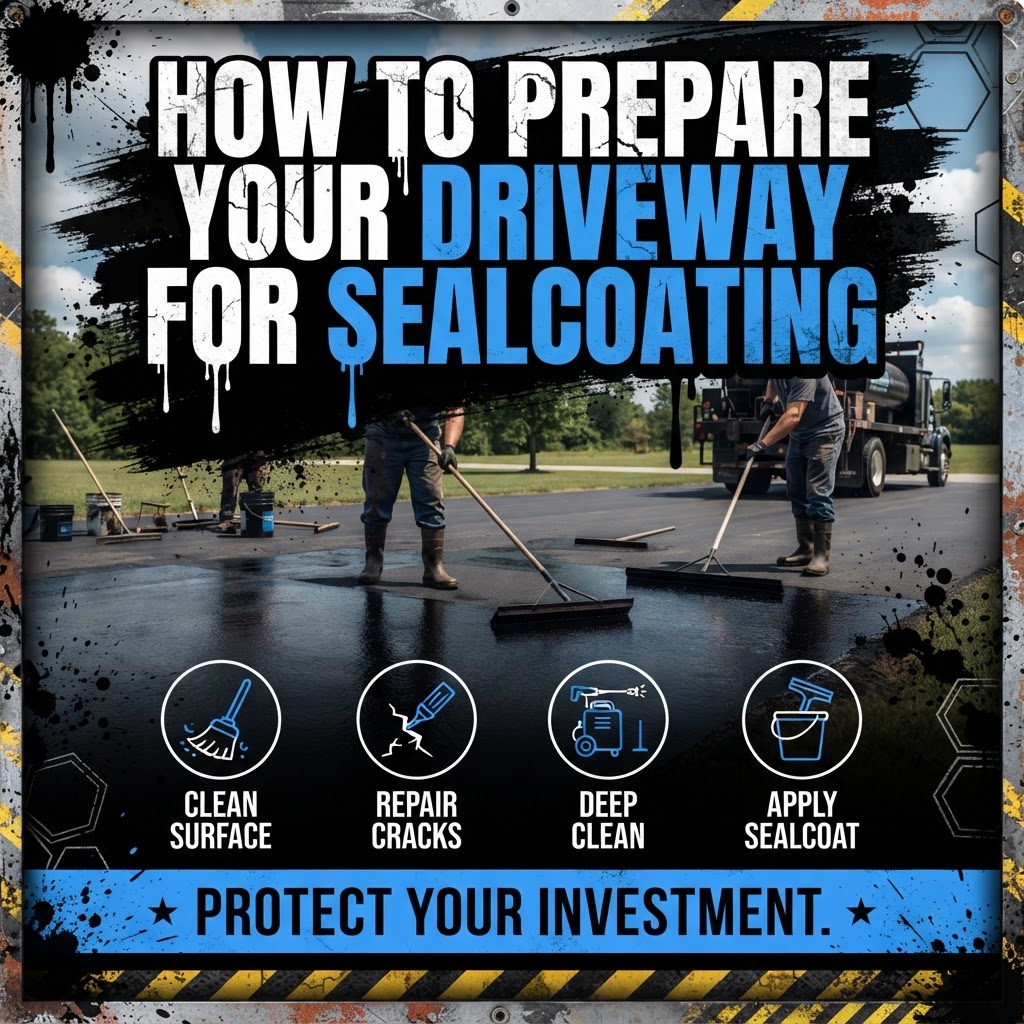
Professional sealcoating includes proper surface preparation — cleaning, crack filling, and oil spot priming — followed by an even application of high-quality sealer. The result is a uniform, protective finish that looks great and performs even better. It's the single most cost-effective maintenance investment you can make in your asphalt.
Related Links:
Can You Pave Over Existing Asphalt?
Yes, you can pave over existing asphalt — a process known as resurfacing or overlay. However, it's only a good option when the existing pavement is structurally sound. If the base is failing or there's extensive alligator cracking, paving over it will only delay the inevitable and waste your money.
Before an overlay, the existing surface must be inspected for structural integrity. Surface cracks should be filled, potholes repaired, and any drainage issues addressed. A tack coat is then applied to bond the new asphalt to the old, and 1.5 to 2 inches of new hot-mix asphalt is installed and compacted.
There are limits to how many times you can overlay. Each new layer raises the height of the driveway, which can cause issues with garage thresholds, sidewalks, and drainage. After two overlays, full replacement is usually the better option. Also, if the existing asphalt is more than 15 to 20 years old, the base may be compromised and a full replacement will provide better long-term value.
We'll always give you an honest assessment. If resurfacing makes sense, we'll tell you. If it doesn't, we'll explain why and recommend the right solution. Our goal is to provide the best long-term value, not just the quickest fix.
How Do I Prepare My Driveway for Paving?
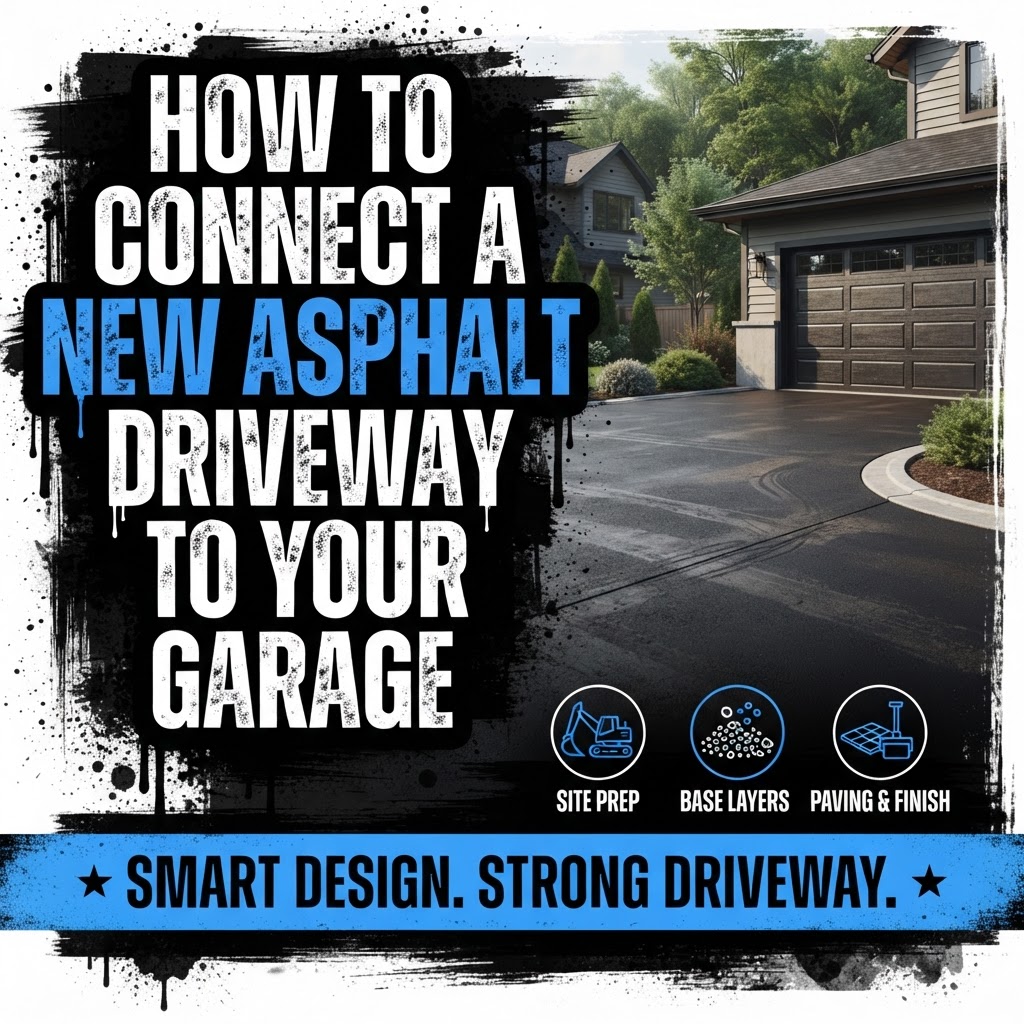
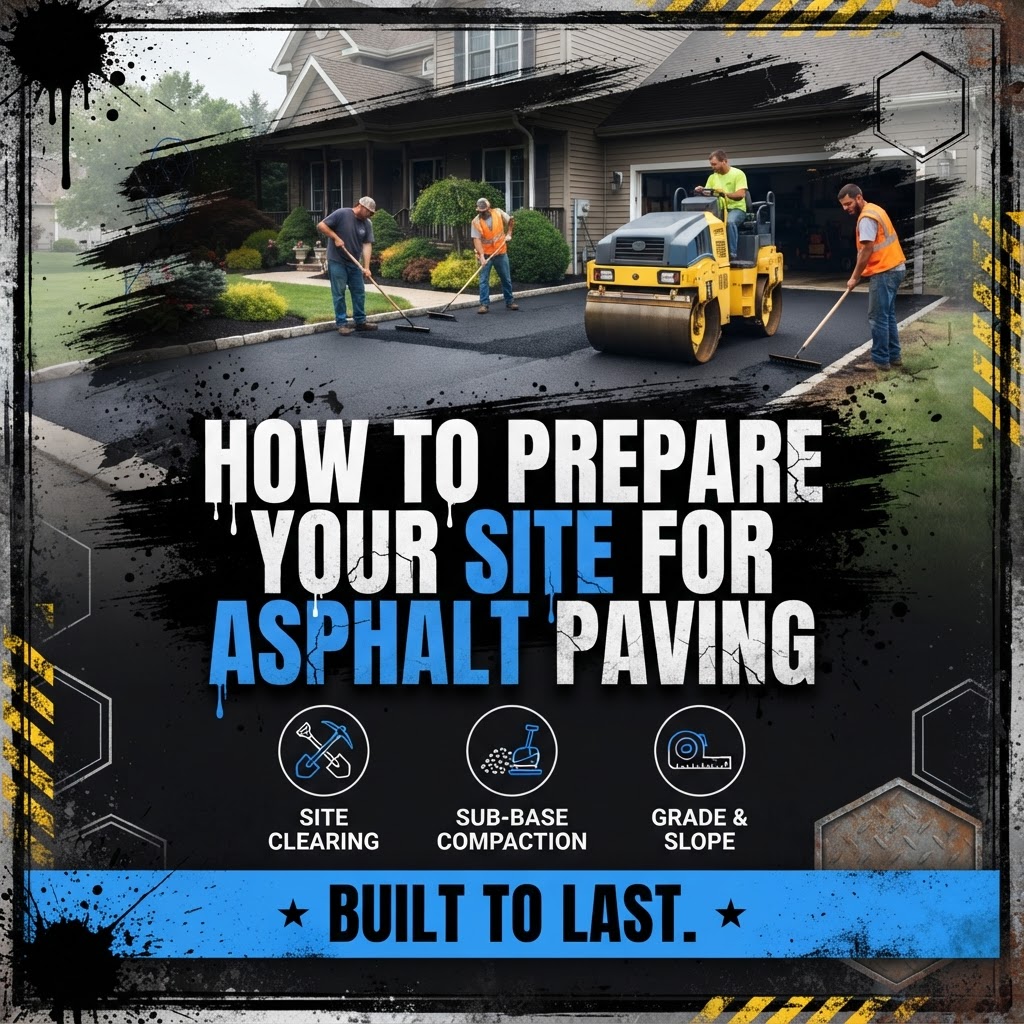
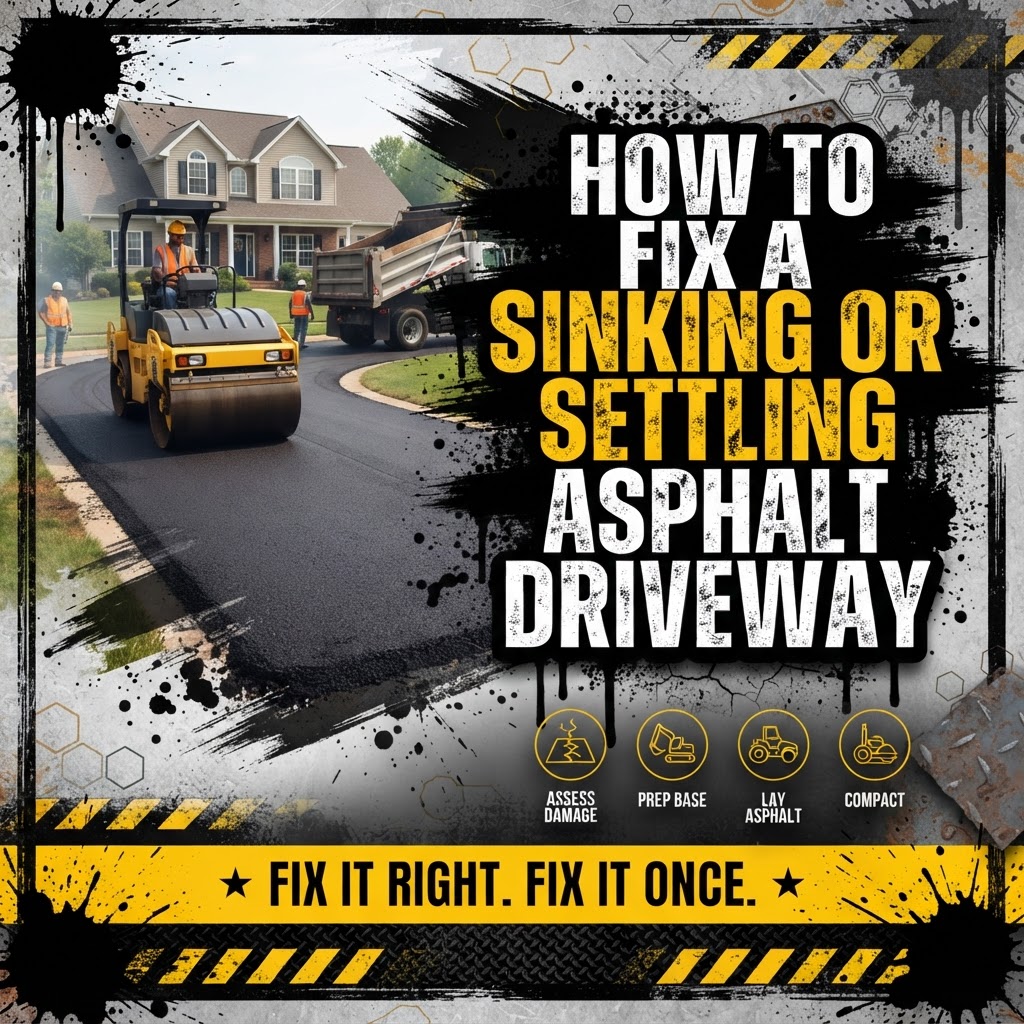
Proper site preparation is the foundation of a long-lasting asphalt driveway. The process starts with grading and excavation to establish the correct slope — typically 1 to 2% for proper drainage away from structures. Any existing pavement, sod, or topsoil is removed to reach the subgrade.
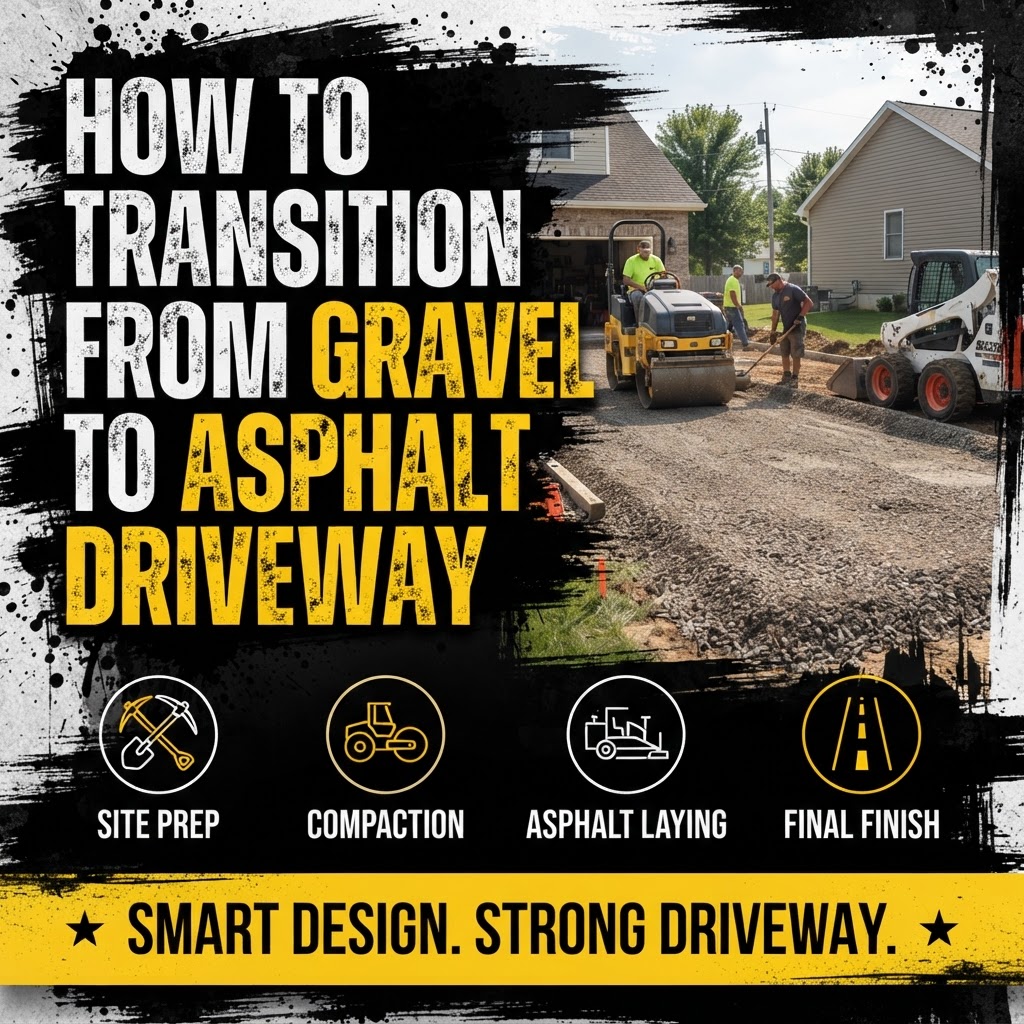
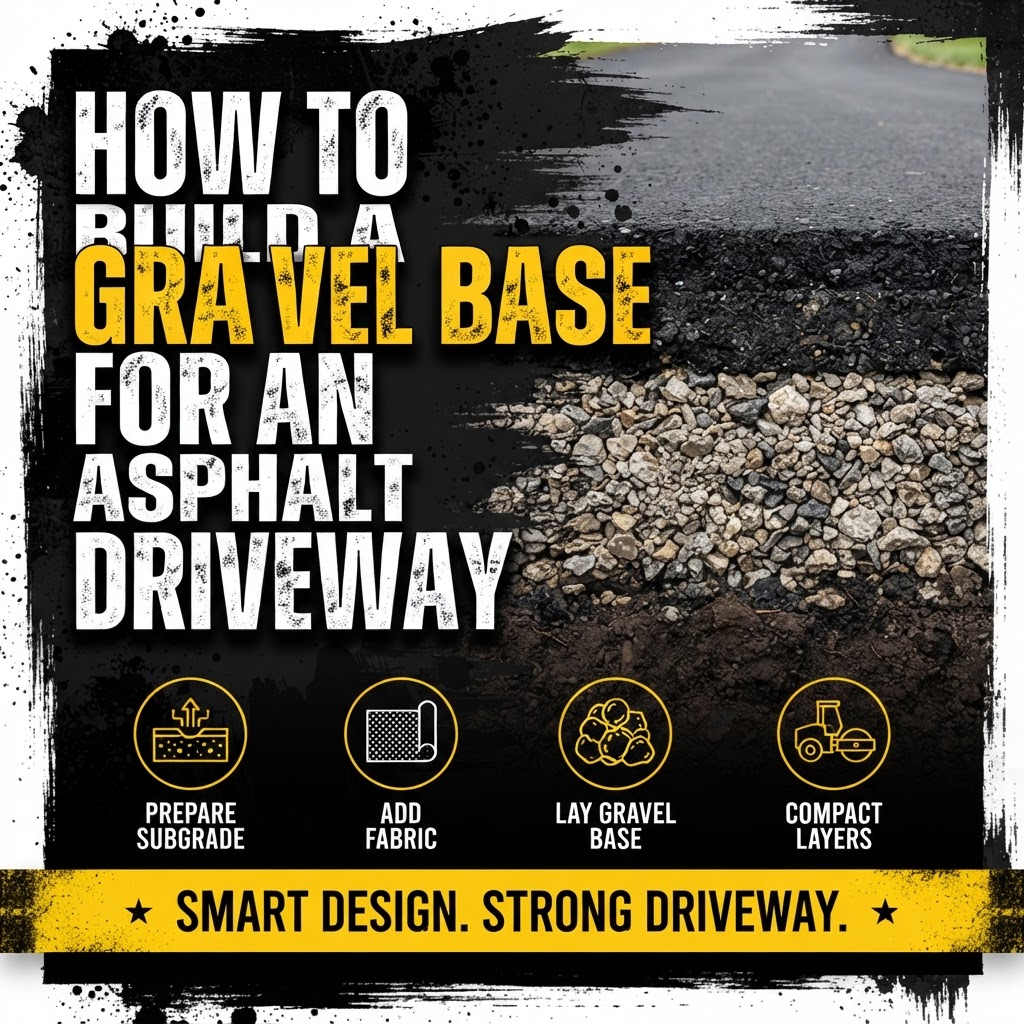
Next, a gravel base of 4 to 6 inches is installed and compacted in layers. The base material — usually Class 5 gravel or crushed limestone — is graded to the correct slope and compacted with heavy equipment to achieve the proper density. This base layer is critical: it provides drainage, structural support, and a stable platform for the asphalt.
Before paving day, make sure the site is accessible for our equipment and trucks. Remove vehicles, trailers, and obstacles from the work area. Mark any underground utilities, sprinkler heads, or invisible fence wires. Keep pets and children away from the work zone for safety.
We handle all the preparation as part of our paving service — from excavation and grading to base installation and compaction. You don't need to worry about the technical details; we take care of everything to ensure your driveway is built on a solid foundation that will last for decades.
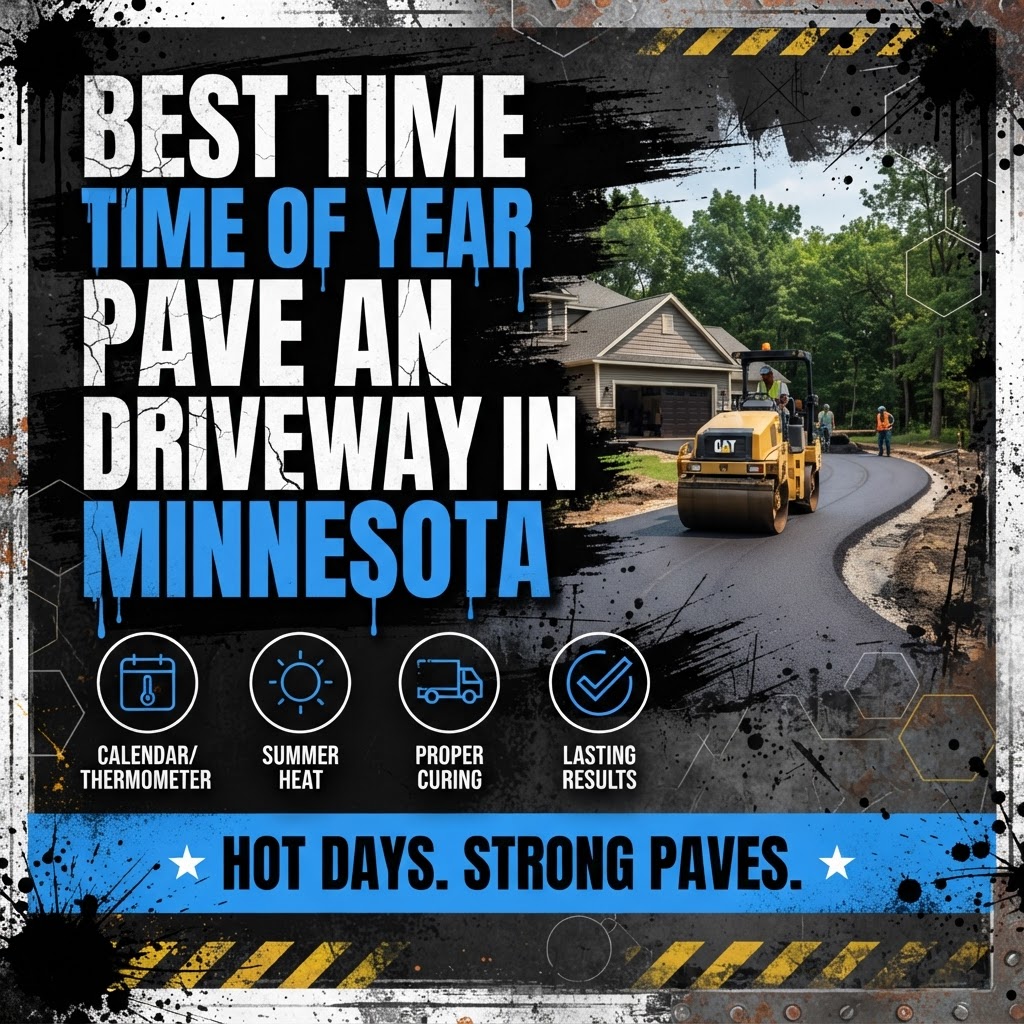
What Is the Best Time of Year to Pave in Minnesota?
The best time to pave an asphalt driveway in Minnesota is between May and October, when temperatures are consistently above 50°F. Hot-mix asphalt needs to be installed and compacted while it's still hot — typically between 275°F and 325°F — and cool weather causes it to cool too quickly for proper compaction.
Summer months (June through August) offer the most reliable paving conditions, with warm temperatures and longer days. However, this is also peak season, so scheduling in advance is important. Early fall (September and early October) is also excellent — cooler temperatures mean the asphalt cools at a more manageable rate, and scheduling is often easier.
Late spring (May) can be tricky if the ground is still thawing or if there are late frosts. We monitor ground temperatures closely and only schedule paving when conditions are right. We never pave on frozen ground or when rain is in the immediate forecast.
If you're planning a paving project, we recommend contacting us in early spring to get on the schedule. This gives you the most flexibility in choosing a date and ensures your project is completed during optimal conditions.
Related Links:
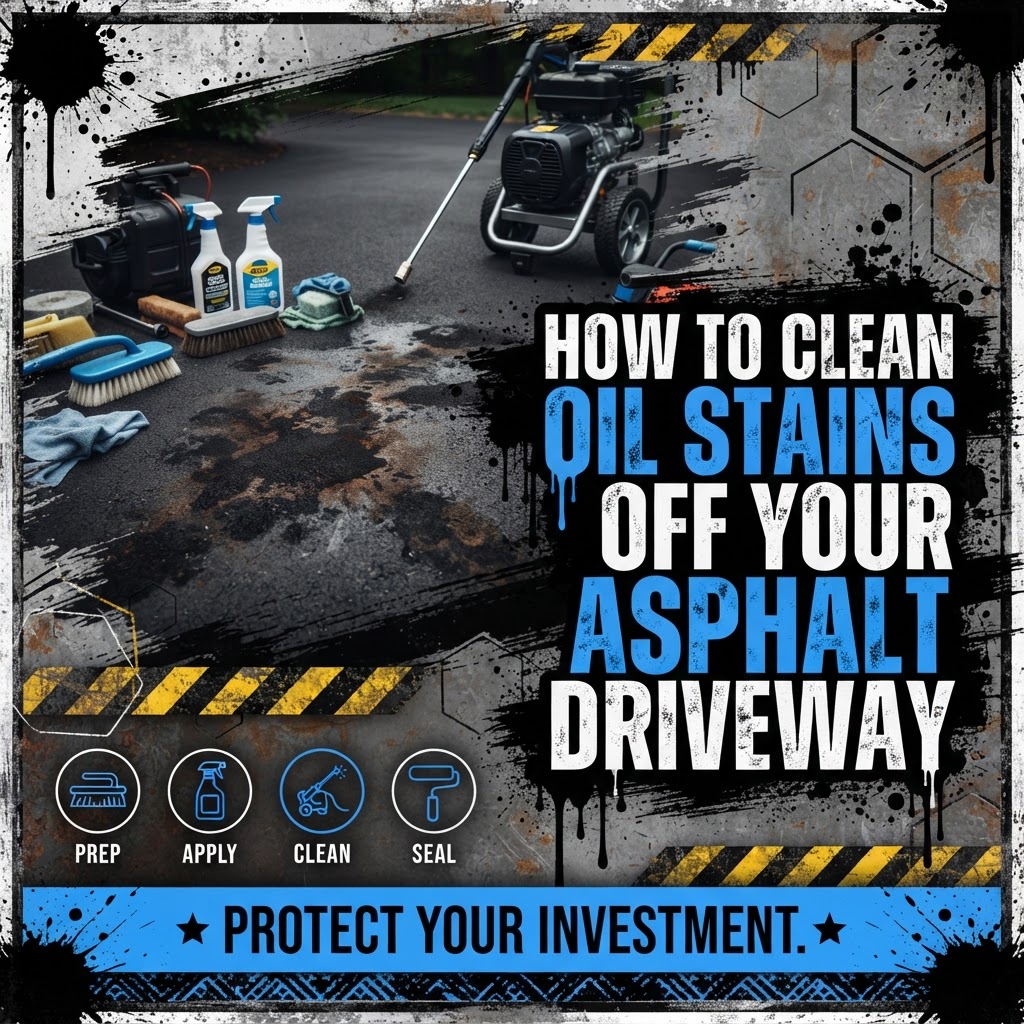
How Do I Clean Oil Stains from Asphalt?
Oil stains are more than just an eyesore — petroleum products dissolve the asphalt binder, weakening the pavement and eventually causing it to crumble. The sooner you address oil stains, the less damage they'll cause. Fresh spills are much easier to clean than stains that have had months to soak in.
For fresh spills, absorb the excess oil with kitty litter, sawdust, or a commercial oil absorbent. Sweep it up and dispose of it properly. Then apply a degreaser or dish soap, scrub with a stiff brush, and rinse with hot water. Repeat if necessary. For stubborn stains, a pressure washer can help lift the remaining oil.
For older, set-in stains, you may need a commercial asphalt cleaner or a poultice — a paste made from an absorbent material and a solvent that draws the oil out of the pavement over several hours. In severe cases, the damaged asphalt may need to be cut out and replaced.
The best prevention is to fix vehicle leaks promptly and use a drip pan under cars that leak. If you have a chronic oil spot, consider having that area sealcoated — the sealer provides a barrier that makes future spills easier to clean and causes less damage.
Related Links:
What Are Asphalt Millings and Can I Use Them?
Asphalt millings are recycled asphalt pavement that has been milled or ground up from old roads and driveways. The milling process removes the top layer of asphalt, which is then crushed and screened to create a reusable material. Millings are an eco-friendly and cost-effective alternative to gravel for driveways, parking areas, and rural roads.
Millings have several advantages over traditional gravel: they compact into a firm, semi-solid surface that resists rutting and washboarding, they produce less dust, and they're often less expensive than new gravel. Over time, the residual asphalt binder in the millings re-bonds under heat and pressure, creating a surface that's more stable than loose gravel.
For residential use, millings are a popular choice for long rural driveways, farm lanes, and temporary parking areas. They're not as smooth or durable as hot-mix asphalt, but they provide excellent value for applications where a paved surface isn't required or budget is a concern.
Proper installation is key: the millings should be spread evenly, graded for drainage, and compacted with a heavy roller. Without proper compaction, millings will remain loose and won't achieve the semi-solid surface that makes them effective. We offer milling installation as part of our gravel and base work services.
How Long Does Sealcoating Last?
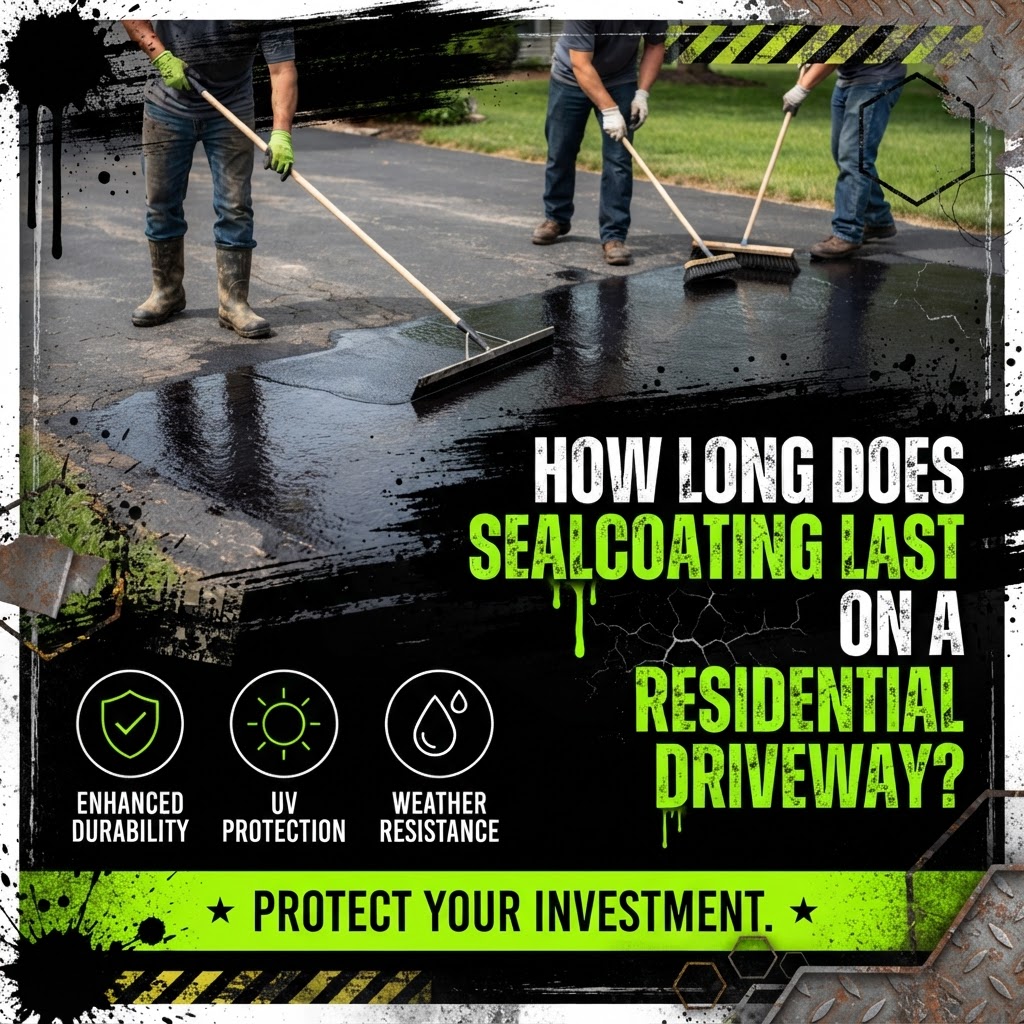
A professional sealcoating application typically lasts 2 to 3 years on a residential driveway and 1 to 2 years on a commercial parking lot with higher traffic. The exact lifespan depends on weather exposure, traffic volume, the quality of the sealer, and how well the surface was prepared before application.
Factors that shorten sealcoat life include: heavy traffic, exposure to harsh chemicals, poor drainage that allows water to sit on the surface, and application during suboptimal weather conditions. A sealcoat applied in cool or damp conditions will not cure properly and may wear off in less than a year.
To maximize the life of your sealcoat, keep the surface clean, address oil and chemical spills promptly, avoid sharp objects that can score the surface, and ensure proper drainage. When you notice the surface beginning to fade or water no longer beading, it's time for the next application.
Professional application makes a significant difference. We use commercial-grade sealer, properly prepare the surface, fill cracks before sealing, and apply the right amount of sealer for optimal coverage and durability. The result is a finish that looks better and lasts longer than DIY alternatives.
Do You Offer Warranties on Asphalt Work?
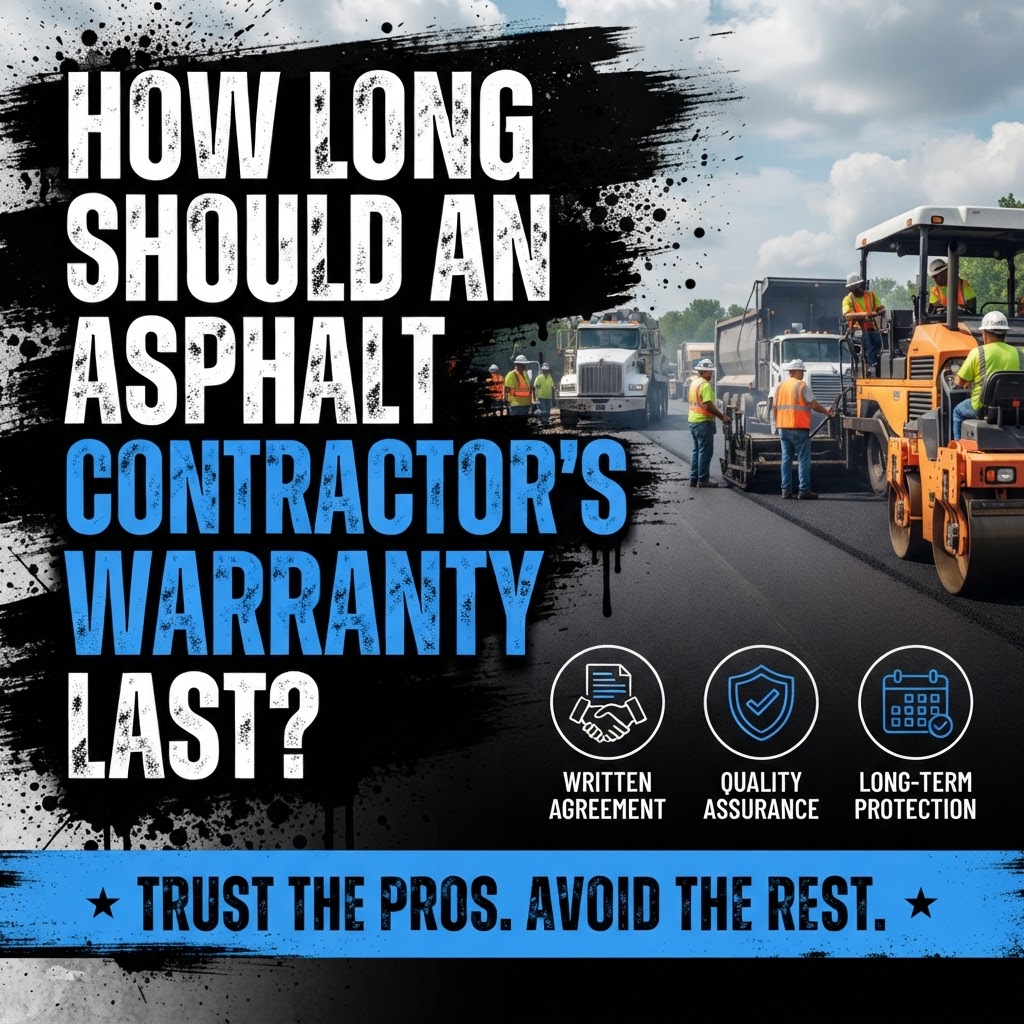
Yes. At Minnesota's Best Asphalt, we stand behind our work with comprehensive warranties on all paving projects. Our residential driveway installations come with a warranty that covers materials and workmanship, giving you peace of mind that your investment is protected.
Our warranty typically covers issues related to installation quality — such as premature cracking, drainage problems caused by improper grading, and surface defects. It does not cover damage caused by external factors like tree roots, heavy equipment, chemical spills, or natural settling beyond our control. We'll explain exactly what's covered before your project begins.
Warranty length varies by project type: residential driveways generally carry a 1 to 3 year warranty, while commercial projects may have different terms based on the scope and specifications. We also offer maintenance programs that help you keep your warranty valid by ensuring your asphalt receives the care it needs.
A warranty is only as good as the company behind it. We've built our reputation on quality work and honest service. When you hire Minnesota's Best Asphalt, you're not just getting a driveway — you're getting a partner who will be there to stand behind the work for years to come. Contact us today to discuss your project and the warranty coverage that comes with it.